TL;DR: Starting a clothing company costs $500–$50,000+ depending on your business model, with print-on-demand at the low end and traditional manufacturing at the high end.
Bottom line: Budget-conscious startups can launch for under $5,000 using low-MOQ manufacturers; established brands planning retail distribution need $50,000+.
Last updated: 2026-06-05, based on 2,000+ brand launches and industry cost surveys from VistaPrint, Printful, and Bamboo Rose.
Key Takeaways
- Print-on-demand models start at $500–$2,000 with zero inventory risk, paying only after customer orders
- Low-MOQ manufacturing enables $5,000–$15,000 launches for 100–300 units across 2–4 styles
- Traditional wholesale operations require $50,000–$200,000 for bulk production and retail space
- Hidden costs (shipping, storage, returns, taxes) add 40–60% to initial budget estimates
- Marketing should consume 20–30% of total launch budget to drive customer acquisition
Startup Cost Breakdown by Business Model
Your production approach, inventory commitment, and risk exposure determine how much it costs to start a clothing company. The answer depends entirely on which of four primary business models you choose.
Direct answer: Clothing company startup costs range from $500 for print-on-demand to $50,000+ for traditional manufacturing, determined by your production model, inventory strategy, and distribution channels.
Print-on-demand platforms like Printful require only website setup and marketing funds because you pay production costs after customers order. Dropshipping adds supplier fees but maintains zero inventory. Low-MOQ manufacturing demands $5,000–$15,000 for small production runs of 50–500 units per style. Traditional wholesale with physical retail space pushes costs to $50,000–$200,000 for bulk inventory and storefront operations.
| Business Model | Startup Cost Range | Inventory Risk | Best For |
|---|---|---|---|
| Print-on-Demand | $500–$2,000 | Zero (pay per order) | First-time founders testing concepts |
| Dropshipping | $1,000–$3,000 | Zero (supplier holds stock) | E-commerce operators with no warehouse |
| Low-MOQ Manufacturing | $5,000–$15,000 | Low (50–500 units) | Startups validating product-market fit |
| Traditional Wholesale | $50,000–$200,000+ | High (1,000+ units) | Established brands with retail distribution |
The decision framework centers on capital availability and risk tolerance. First-time founders with under $5,000 typically choose print-on-demand to validate designs before committing to inventory. Founders with $10,000–$20,000 often select low-MOQ partners to control quality and branding while minimizing overstock risk.
Essential Startup Expenses: What Actually Costs Money
Successful clothing startups budget for design, sampling, production, branding, website, marketing, and operational overhead across seven critical expense categories.
Direct answer: Successful clothing company launches allocate funds across design ($500–$2,000), sampling ($1,000–$3,000), production ($2,000–$15,000), branding ($1,000–$5,000), website ($500–$2,000), marketing ($1,000–$10,000), and legal setup ($500–$1,500).
Design & Tech Pack Development ($500–$2,000)
Professional tech packs translate your vision into production-ready specifications. DIY design using Canva or Procreate costs $10–$100 in software subscriptions. Hiring freelance designers on Upwork runs $500–$1,500 per garment. Full-service design agencies charge $2,000–$5,000 for complete collections. Tech packs prevent costly production errors by documenting measurements, materials, construction details, and trim specifications that manufacturers need.
Sampling & Prototyping ($1,000–$3,000)
Sample iterations cost $200–$600 per garment depending on complexity and manufacturer location. Budget for 3–5 rounds of revisions across your initial lineup. Brands that skip sampling to save money waste $10,000+ on unusable bulk inventory. Quality sampling catches fit issues, fabric problems, and construction flaws before mass production.
Initial Production Run ($2,000–$15,000)
Production costs vary dramatically by model. Print-on-demand charges $15–$30 per unit with no minimums. Low-MOQ manufacturers typically require 50–200 pieces per style at $20–$50 per garment depending on category. Traditional bulk orders of 1,000+ units drop per-unit costs to $8–$25 but demand $15,000–$50,000 upfront. According to VistaPrint’s 2025 analysis, most successful startups begin with 100–300 total units across 2–4 styles.
Branding & Packaging ($1,000–$5,000)
Logo design costs $100–$500 on Fiverr or $1,000–$3,000 from professional agencies. Custom hang tags, woven labels, and poly mailers add $0.50–$2.00 per unit. Premium packaging with custom boxes and tissue paper pushes costs to $3–$5 per order. Brand identity work (color palettes, typography, style guides) runs $500–$2,000 for DIY templates or $3,000–$10,000 for agency development.
E-commerce Website ($500–$2,000)
Shopify or WooCommerce subscriptions cost $29–$299 monthly. Domain registration adds $10–$50 annually. Template themes run $0–$300. Custom development starts at $2,000 for basic functionality. Photography for product listings costs $200–$1,000 depending on whether you shoot in-house or hire professionals. Budget $500–$800 for a functional launch site using templates.
Marketing & Launch ($1,000–$10,000)
Social media content creation demands $200–$1,000 for photography and videography. Influencer partnerships range from $100 product seeding to $5,000+ for macro-influencers. Paid advertising on Meta or TikTok requires $1,000–$5,000 minimum for meaningful testing. Email marketing platforms cost $0–$100 monthly. Allocate 20–30% of total budget to customer acquisition.
Legal, Licenses & Insurance ($500–$1,500)
Business registration costs $50–$500 depending on entity type and state. Trademark filing runs $250–$750 per class through the USPTO. General liability insurance costs $300–$1,000 annually for small operations. Sales tax permits are typically free but require ongoing compliance work.
Realistic Funding Ranges by Brand Ambition Level
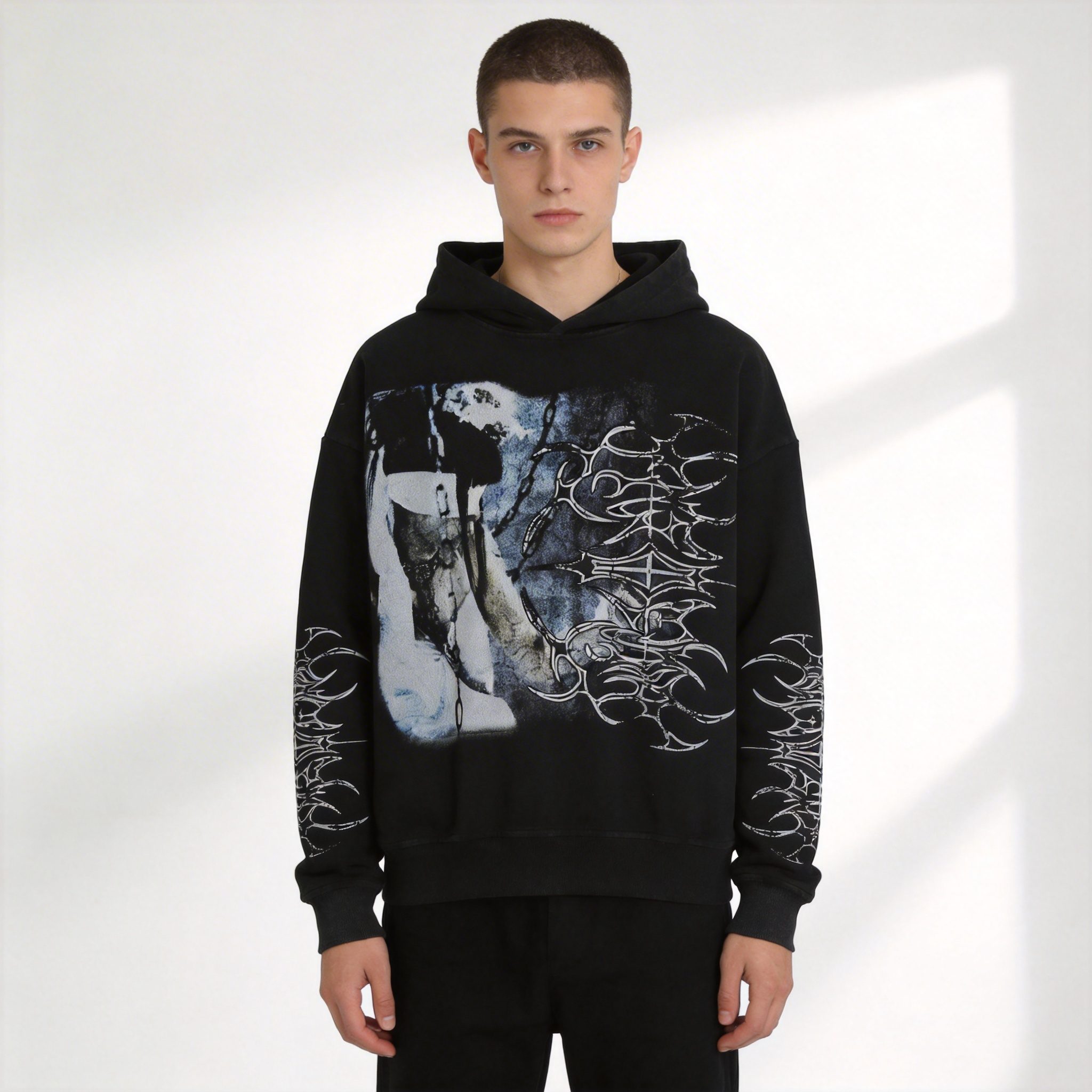
Investment level aligns with growth ambition and operational complexity when determining how much it costs to start a clothing company.
Direct answer: Clothing company funding requirements scale across three tiers: minimal ($5,000–$15,000) for print-on-demand launches, moderate ($15,000–$50,000) for small-batch manufacturing, and substantial ($50,000–$200,000+) for traditional wholesale operations.
- $5,000–$15,000 — Print-on-demand or dropshipping model with basic branding, website setup, and limited initial marketing budget (VistaPrint 2025)
- $15,000–$50,000 — Small-batch custom manufacturing with professional branding, comprehensive marketing launch, and 100–500 unit inventory (Modaknits 2025)
- $50,000–$200,000+ — Traditional wholesale with retail space, mass production capabilities, full brand development, and extensive distribution (BrandsGateway 2025)
- $600,000–$1.2M — Full-scale fashion startup operations including design team, showroom, trade show presence, and multi-channel distribution (Bamboo Rose 2025)
- $5,000 for 5-item line — MOQ-based production starting with 50–200 units per style through flexible manufacturers (Reddit streetwear community 2024)
The gap between minimal and substantial budgets reflects operational complexity. Print-on-demand eliminates inventory risk but caps profit margins at 20–30%. Small-batch manufacturing improves margins to 40–60% while introducing inventory management. Traditional wholesale achieves 50–70% margins but demands significant capital for bulk orders and retail overhead.
How Low-MOQ Manufacturing Reduces Startup Risk
Low-MOQ (minimum order quantity) manufacturing allows startups to produce 50–500 units per style, dramatically reducing inventory risk and capital requirements compared to traditional 1,000+ unit minimums.
Direct answer: Low-MOQ manufacturing enables clothing startups to launch with $5,000–$15,000 instead of $50,000+ by accepting smaller production runs of 50–500 units per style, letting founders test products, validate demand, and scale gradually without overcommitting capital to untested inventory.
Traditional manufacturers require 1,000–3,000 unit minimums per style because setup costs (pattern grading, cutting, quality control) spread across larger runs. Low-MOQ partners accept higher per-unit costs in exchange for flexibility. A hoodie costing $18 at 1,000 units might cost $28 at 100 units—but you invest $2,800 instead of $18,000 upfront.
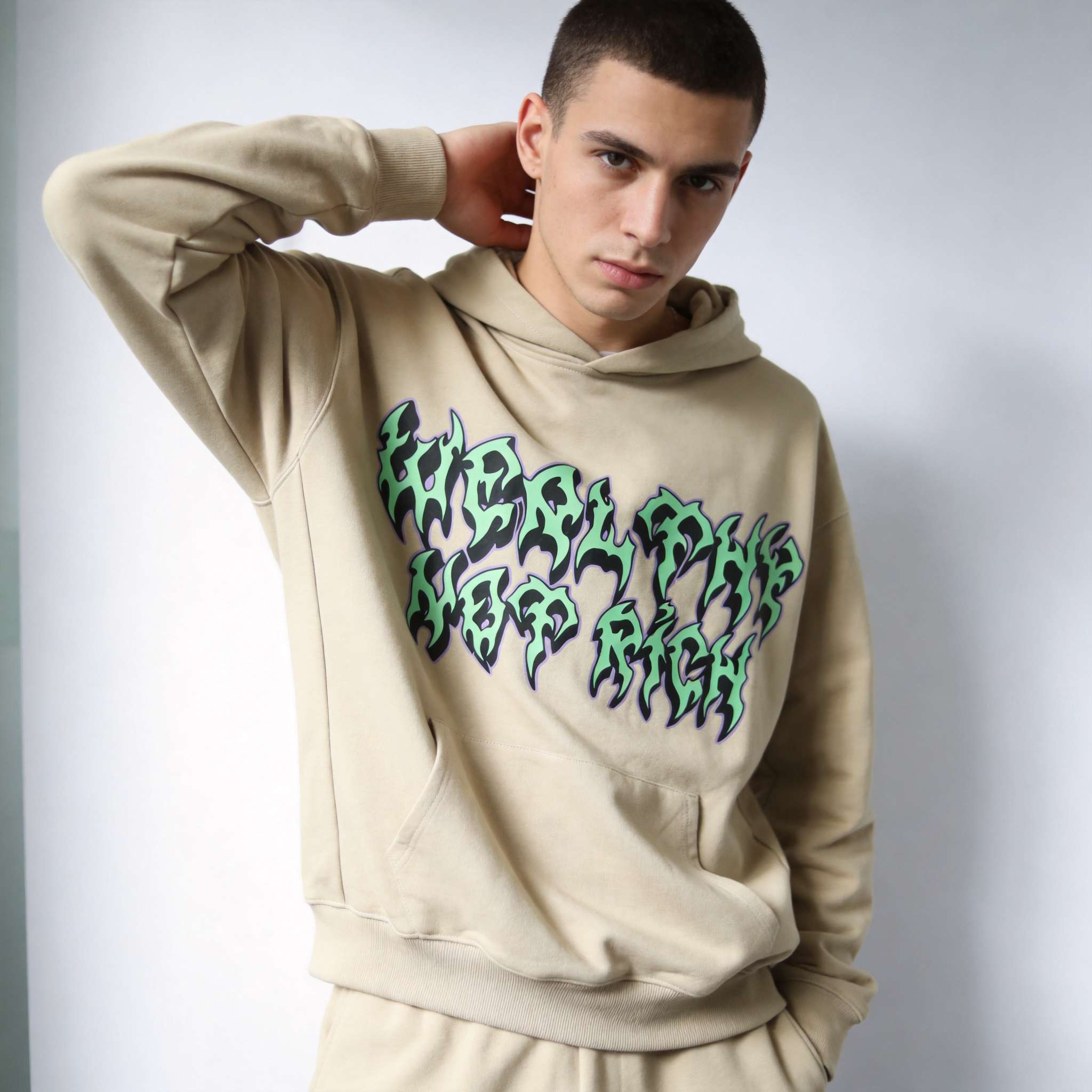
The startup advantage compounds across risk dimensions. Product testing becomes affordable—launch with 2–4 styles instead of committing to a full collection. Market validation happens before major capital deployment. Cash flow improves because you’re not sitting on $30,000 of unsold inventory. Iteration speed accelerates since you can adjust designs between smaller production runs.
Brands launching with low-MOQ partners typically invest $5,000–$8,000 for initial production versus $15,000–$25,000 for traditional manufacturing. The per-unit cost premium of $8–$12 gets offset by eliminated waste—most first collections see 30–40% of styles underperform, meaning traditional bulk orders leave founders with $10,000+ in dead stock.
Start with 100–200 units split across 2–3 hero styles. Allocate 40% of budget to production, 30% to marketing, 20% to branding and website, 10% to contingency. Reorder winners at higher volumes after validating demand. This approach turns clothing launches from $50,000 capital bets into $10,000 market tests.
Hidden Costs & Common Budget Mistakes
Most founders budget only for obvious expenses while ignoring operational overhead that drains 40–60% more capital than expected when calculating how much it costs to start a clothing company.
Direct answer: Most clothing startups underestimate total costs by 40–60% by forgetting shipping, storage, returns, customer service, and contingency reserves that consume cash flow after production completes.
Underestimating Shipping & Logistics Costs
Domestic shipping runs $5–$15 per order depending on weight and speed. International fulfillment adds $15–$40. Inbound freight from manufacturers costs $200–$1,000 depending on order size and origin. Customs duties and import taxes add 5–20% to international production costs. A $5,000 production order incurs $800–$1,500 in shipping and duties that founders forget to budget.
Neglecting Inventory Storage & Warehousing

Self-storage units cost $50–$200 monthly but lack climate control and insurance. Third-party logistics (3PL) providers charge $200–$500 monthly minimums plus $2–$5 per unit stored. Brands producing 500 units face $100–$250 monthly storage fees that persist until inventory sells. Over 12 months, storage adds $1,200–$3,000 to operating costs.
Skipping Quality Control & Returns Buffer
Returns average 15–30% for online apparel sales. Processing returns costs $5–$10 per item in labor and shipping. Quality issues requiring replacements consume 5–10% of production runs. Budget 20% of revenue for returns and replacements—a $10,000 launch should reserve $2,000 for this expense.
Forgetting Business Registration & Tax Setup
Quarterly estimated taxes for self-employed founders run 25–35% of net profit. State sales tax compliance costs $50–$200 annually per state. Bookkeeping software runs $10–$50 monthly. Annual tax preparation costs $500–$2,000 for small businesses. These recurring costs add $2,000–$5,000 annually that founders overlook in launch budgets.
Underbudgeting Marketing & Customer Acquisition
Customer acquisition costs (CAC) for fashion brands average $25–$75 per customer. Achieving 100 sales requires $2,500–$7,500 in marketing spend. Organic social media takes 6–12 months to build traction. Paid advertising demands ongoing investment—pausing campaigns stops sales. Founders budgeting $1,000 for marketing discover they need $5,000–$10,000 to reach profitability.
No Contingency Reserve (10–15% of budget)
Production delays, fabric shortages, quality issues, and website problems create unexpected costs. Brands without reserves face cash flow crises when manufacturers demand payment before shipping or marketing campaigns underperform. Reserve 10–15% of total budget as contingency—a $15,000 launch needs $1,500–$2,250 buffer to absorb surprises without halting operations.
FAQ
Q1: Can I start a clothing brand with $1,000?
Yes, but only with print-on-demand or dropshipping models where you pay per item sold. Traditional manufacturing requires minimum $5,000–$15,000 for low-MOQ production. A $1,000 budget limits you to branding, website setup, and initial marketing—no inventory investment. Platforms like Printful let you launch with $500–$800 for Shopify subscription, domain, and basic social media ads.
Q2: What’s the cheapest way to launch a clothing line?
Print-on-demand platforms require only $500–$2,000 for website, branding, and initial marketing according to Printful’s 2026 cost analysis. You pay production costs only after customers order, eliminating upfront inventory risk. The tradeoff is lower profit margins (20–30% versus 50–60% for direct manufacturing) and less control over quality and fulfillment speed.
Q3: How much should I budget for sampling before production?
Budget $1,000–$3,000 for 3–5 sample iterations across your initial lineup. Quality sampling prevents costly production mistakes—skipping this step often costs more in wasted bulk inventory than the sampling investment itself. Each sample costs $200–$600 depending on garment complexity. Brands save $10,000+ in unusable inventory by catching fit and construction issues during sampling.
Q4: Is $10,000 enough to start a real clothing brand?
$10,000 works for a small-batch launch producing 100–300 units across 2–4 styles using low-MOQ manufacturers. Allocate $4,000 to production, $2,000 to sampling, $2,000 to branding and website, $2,000 to marketing. This leaves no buffer for mistakes—plan for 6–9 months before profitability. Print-on-demand stretches $10,000 further by eliminating inventory costs but caps growth potential.
Q5: What percentage of startup costs should go to marketing?
Allocate 20–30% of your launch budget for marketing and customer acquisition. For a $15,000 startup, that’s $3,000–$4,500 to social media content, influencer partnerships, and paid advertising—otherwise even great products won’t sell. Customer acquisition costs average $25–$75 per customer for fashion brands, meaning you need substantial marketing investment to reach break-even sales volume.
Q6: Do I need inventory financing or can I bootstrap?
Bootstrapping works for print-on-demand and dropshipping since you pay production costs after customer orders. Traditional manufacturing requires upfront capital—consider inventory financing, personal savings, or pre-order campaigns to fund production without external investment. Some low-MOQ manufacturers offer net-30 or net-60 payment terms that improve cash flow for established brands.
Sources
- VistaPrint — How Much Does It Cost to Start a Clothing Brand — 2025, $500–$10,000 startup range
- Modaknits Apparel — Starting a Clothing Brand from Scratch — 2025, $5,000–$50,000 custom manufacturing costs
- Printful — Cost of Starting a Clothing Line — 2026, print-on-demand model analysis
- Bamboo Rose — The True Cost of Running a Fashion Startup — 2025, $600,000–$1.2M full-scale operations
- BrandsGateway — How to Calculate Startup Costs for a Clothing Store — 2025, wholesale and retail cost breakdown
Written by Alin Zeng (27 Years of Master Craftsmanship & Pattern Making, Global OEM & Streetwear Customization Excellence, End-to-End Supply Chain & One-Stop Production, High-Efficiency Cost Control (“Quality + Affordability”), Incubating 2,000+ Fashion Brands from Scratch). Last reviewed 2026-06-05.