Custom Buttons That Elevate Your Apparel Brand Identity
ZORWILD manufactures custom buttons in snap, shank, and specialty styles for hoodies, jackets, custom shirts, and outerwear—starting from 50-piece orders with full branding customization and in-house apparel production.
Custom Button Styles & Finishes
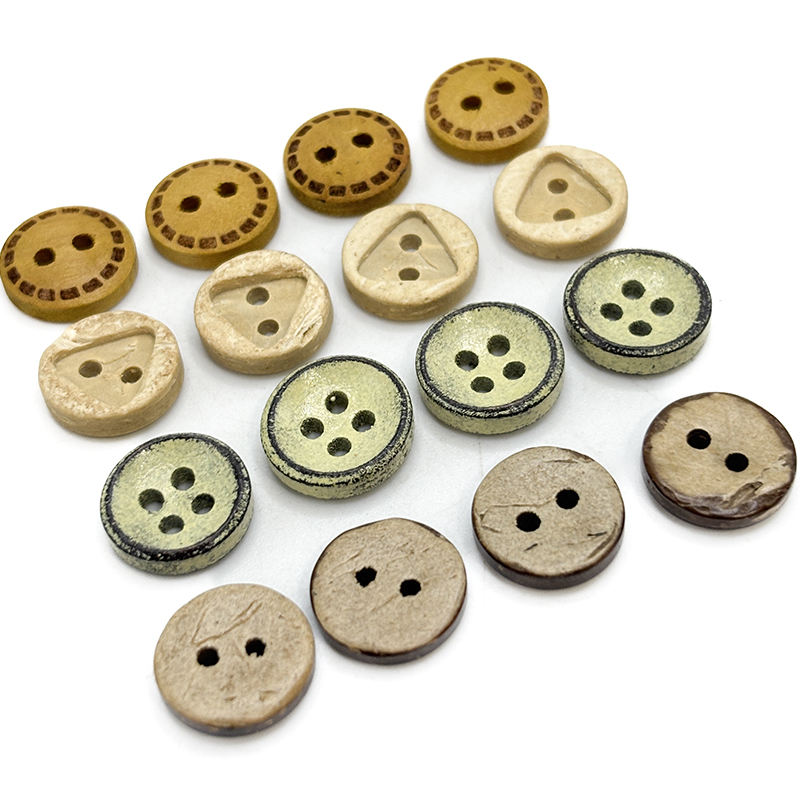
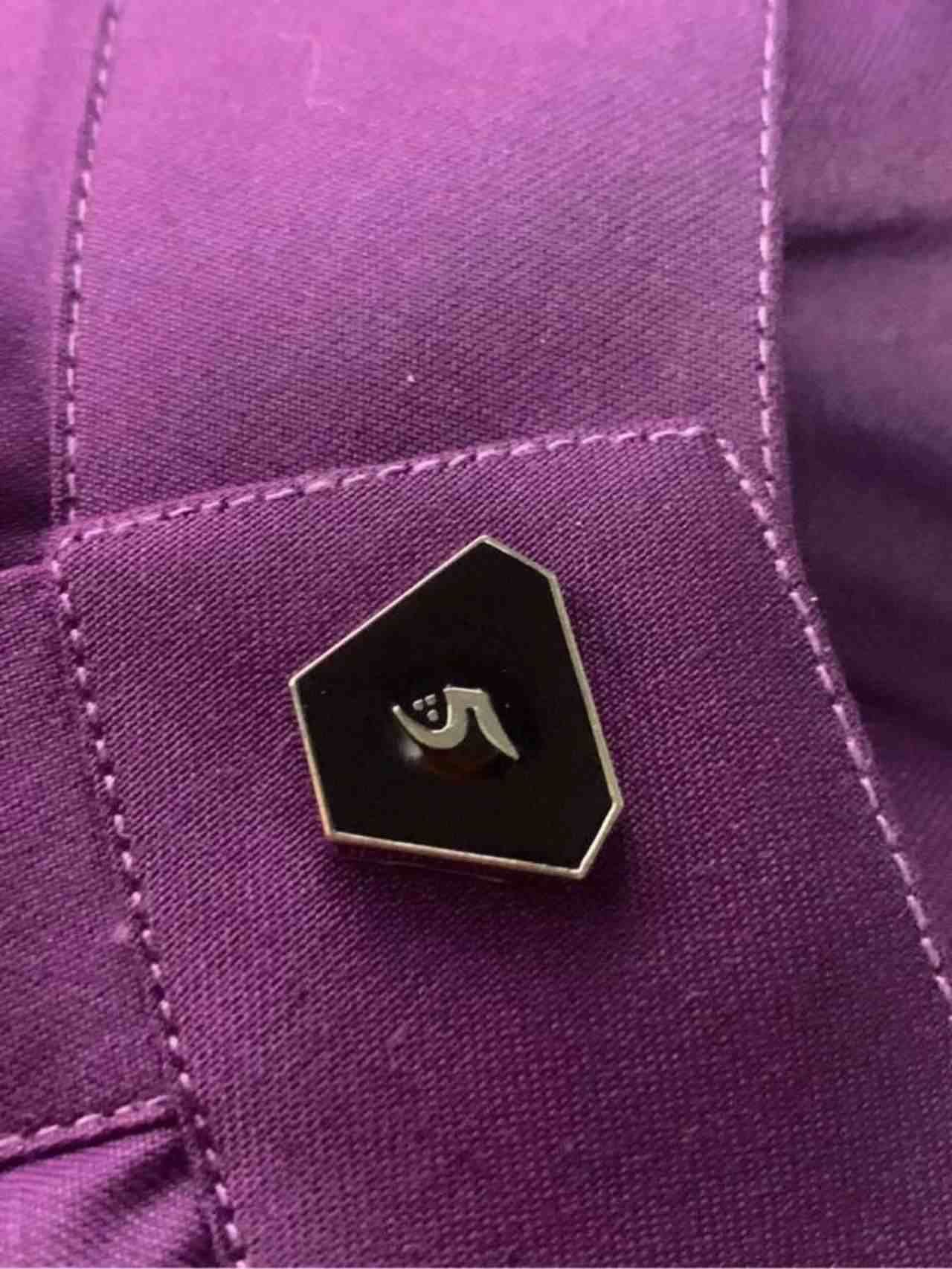
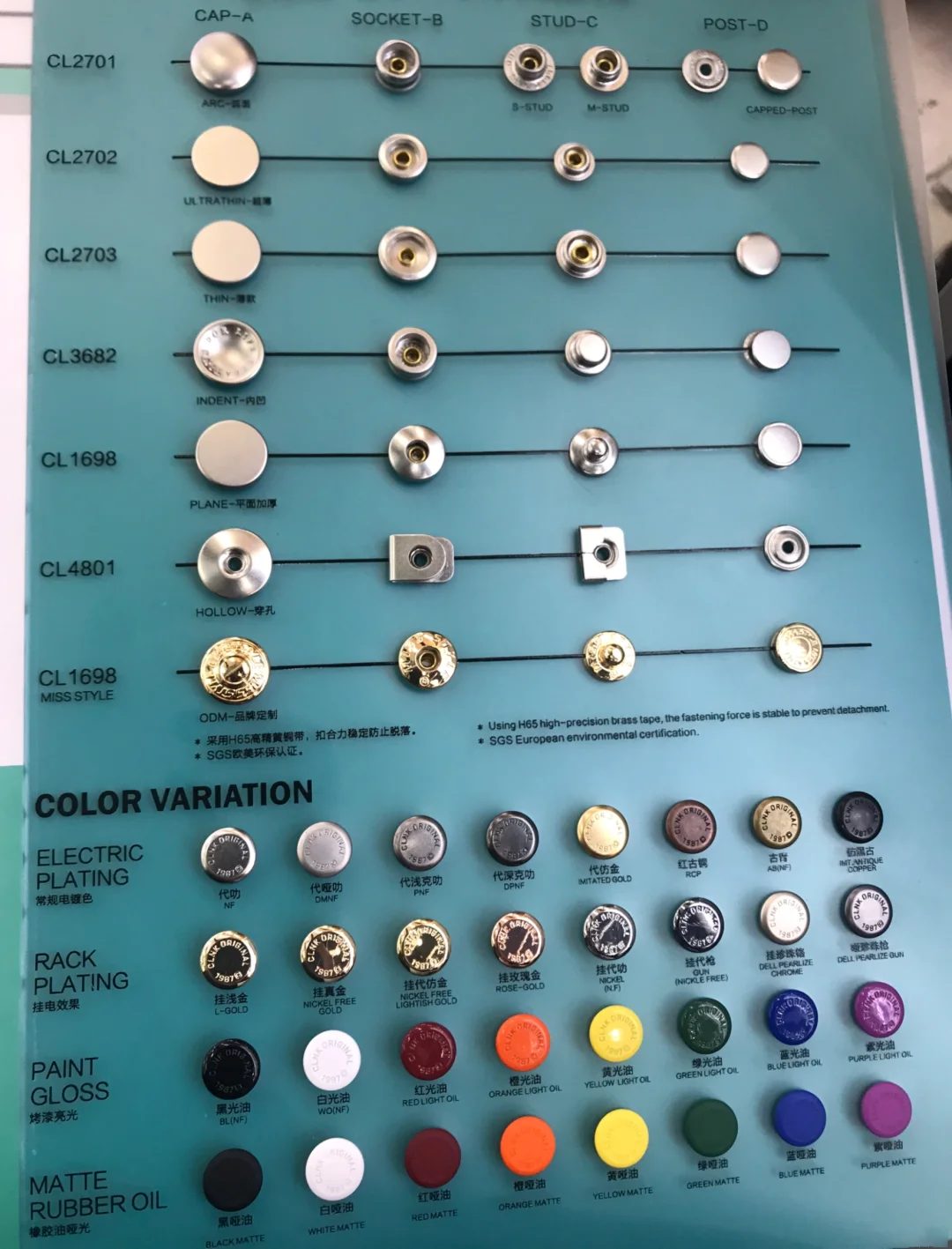
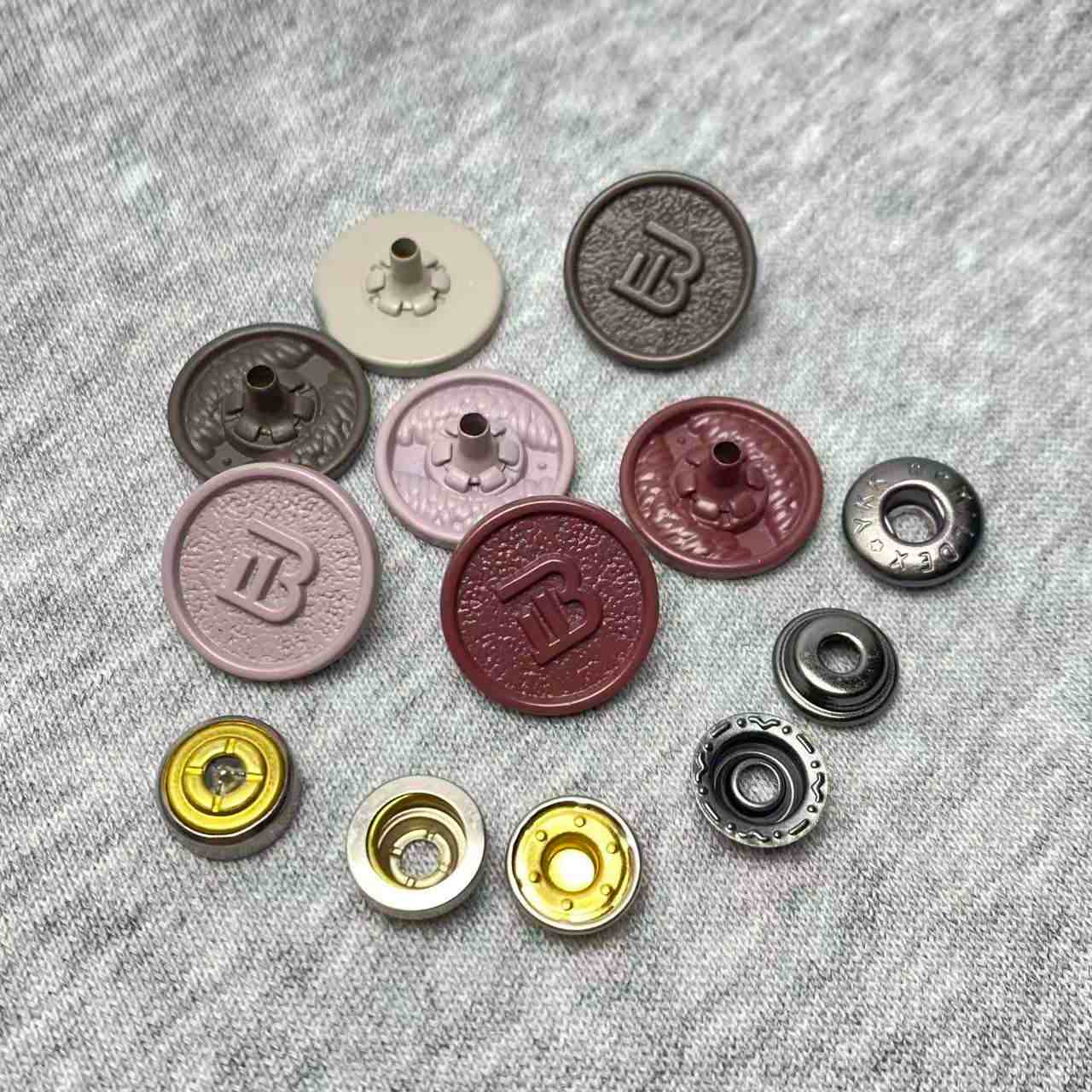
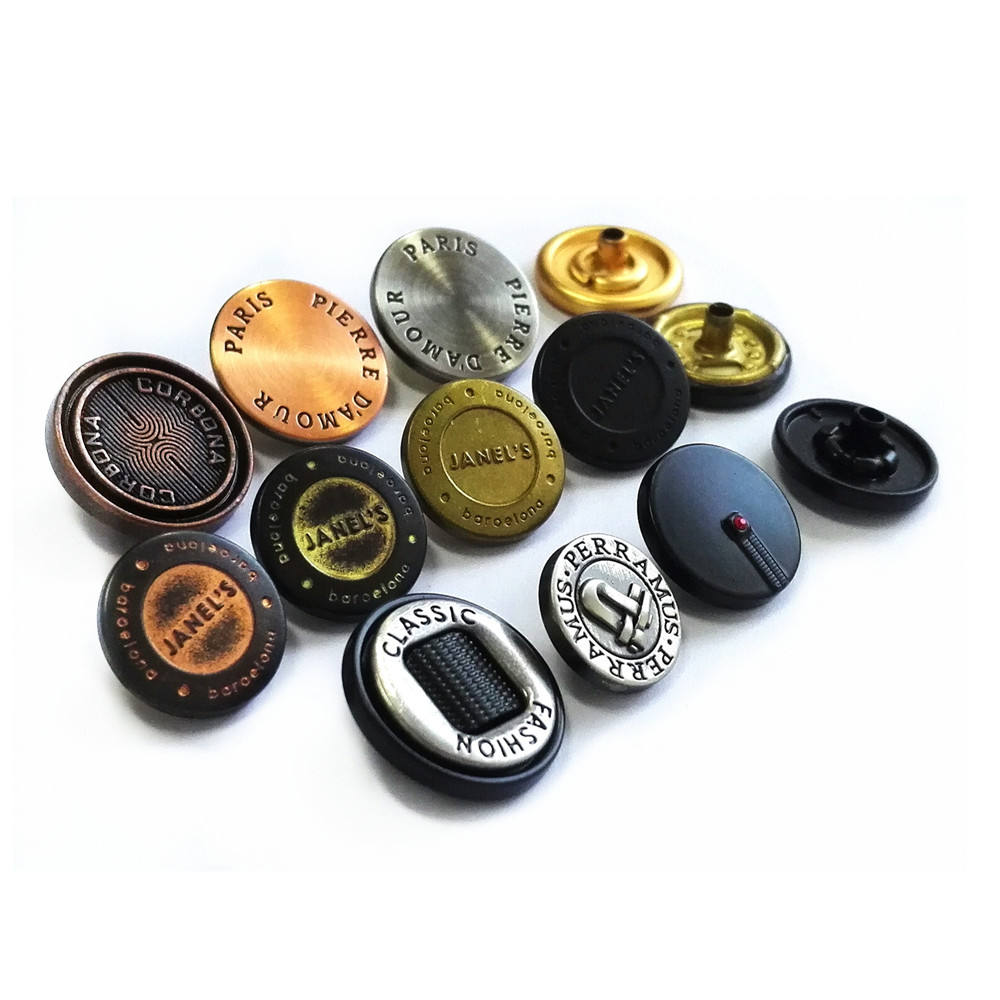
Why Custom Buttons Matter for Your Brand
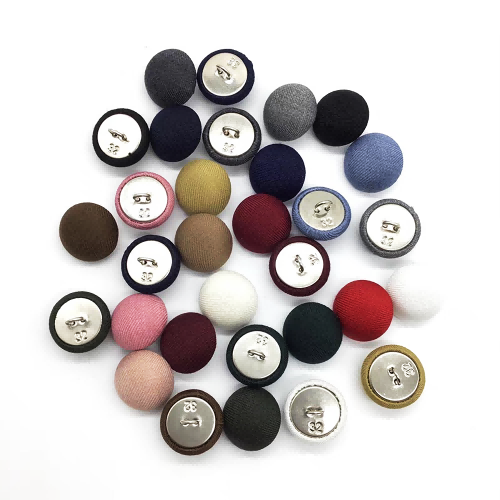
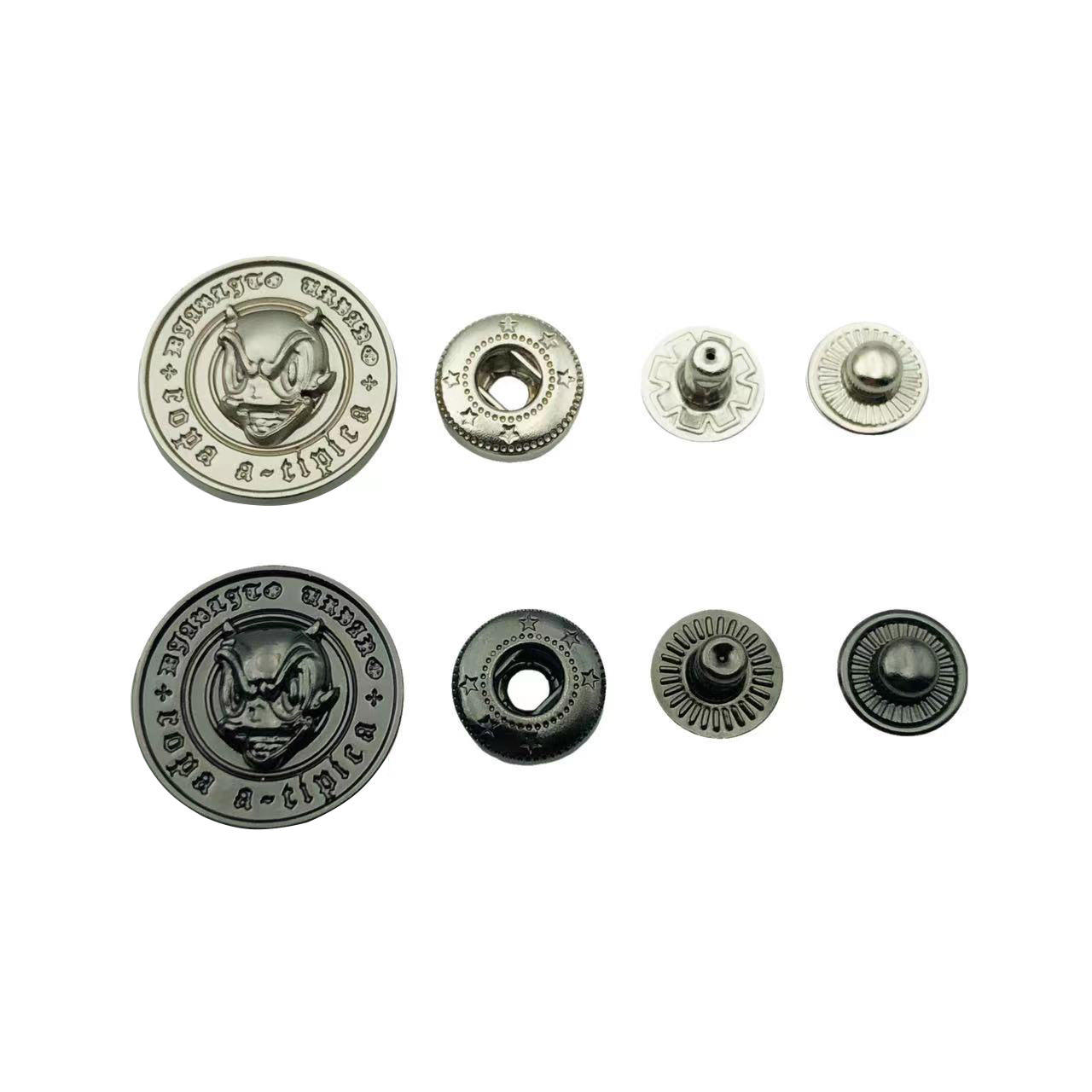
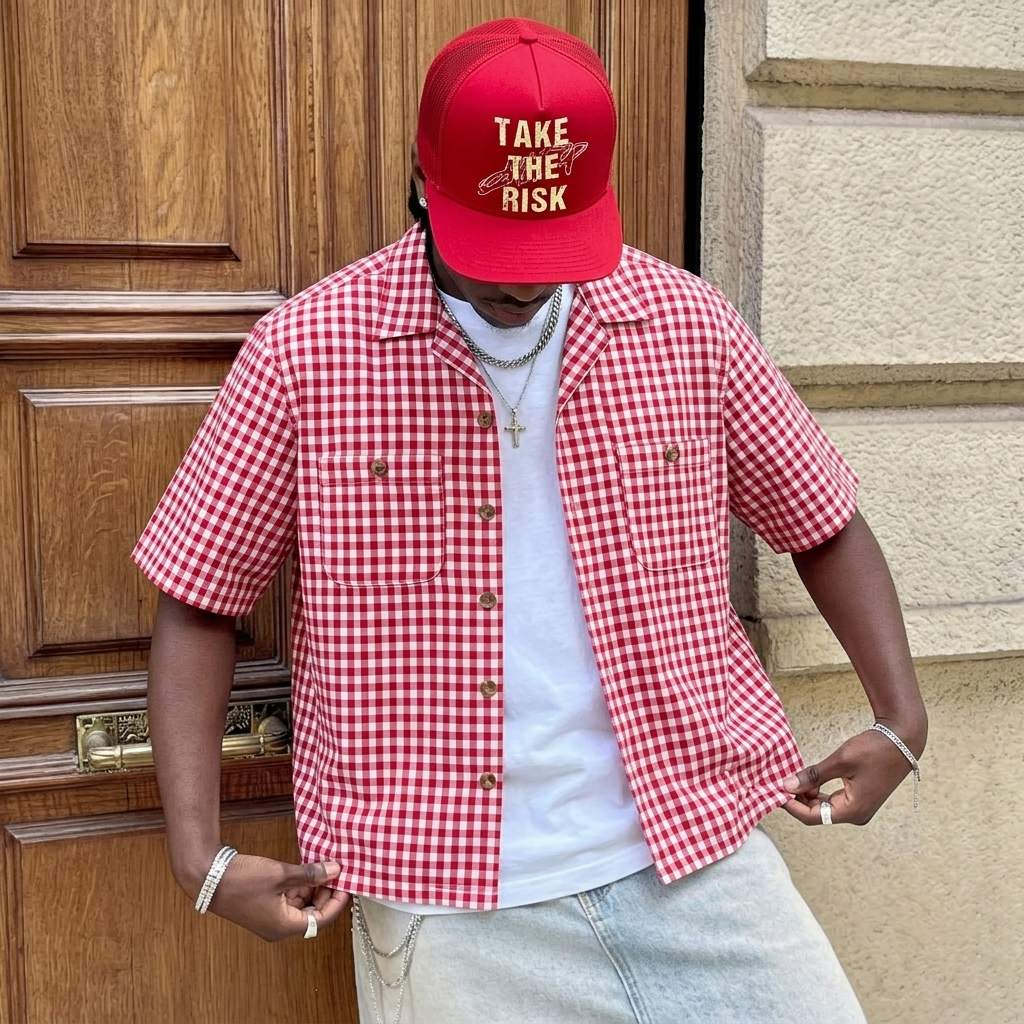
From snap buttons to engraved shanks, custom buttons elevate brand identity across custom hoodies, custom t-shirts, custom jackets, and wholesale apparel through thoughtful design and proven durability.
Instant Brand Recognition
Custom buttons transform standard garments into signature pieces. Logo engraving, unique finishes, and branded details create visual differentiation that customers recognize and remember.
Premium Perception at Every Touch
Quality buttons signal quality construction. Metal shanks, engraved logos, and specialty finishes communicate professionalism and elevate perceived value across your entire collection.
Wash-Tested Durability Guaranteed
Our custom buttons endure repeated wash cycles without fading, cracking, or loosening. Tested through ZORWILD’s rigorous quality control system for long-lasting garment performance.
Seamless Design Integration
Custom buttons complement embroidery, printing, and garment wash effects. Our team ensures button placement, sizing, and finish align perfectly with your overall design vision.
Low MOQ Button Customization
Start custom button orders from just 50 pieces. Test new designs, launch capsule collections, and refine branding details without large inventory commitments or financial risk.
Fast Sampling and Production
Receive button samples quickly to evaluate quality, finish, and fit. Once approved, our Humen Dongguan factory integrates custom buttons efficiently into your custom apparel manufacturing timeline with 95%+ decoration techniques in-house.
Complete Your Garment with Precision Hardware
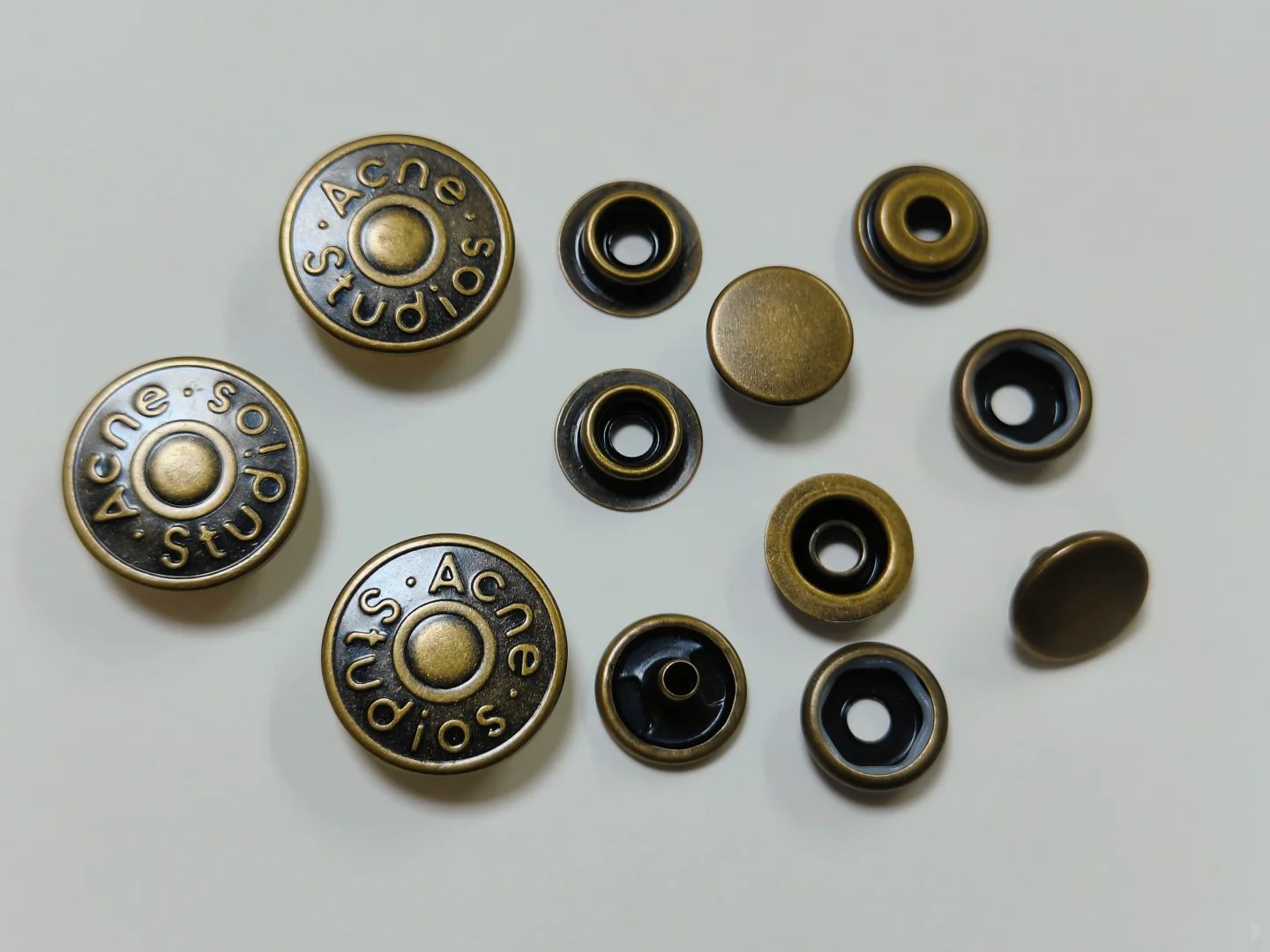
Garment Accessories & Trims
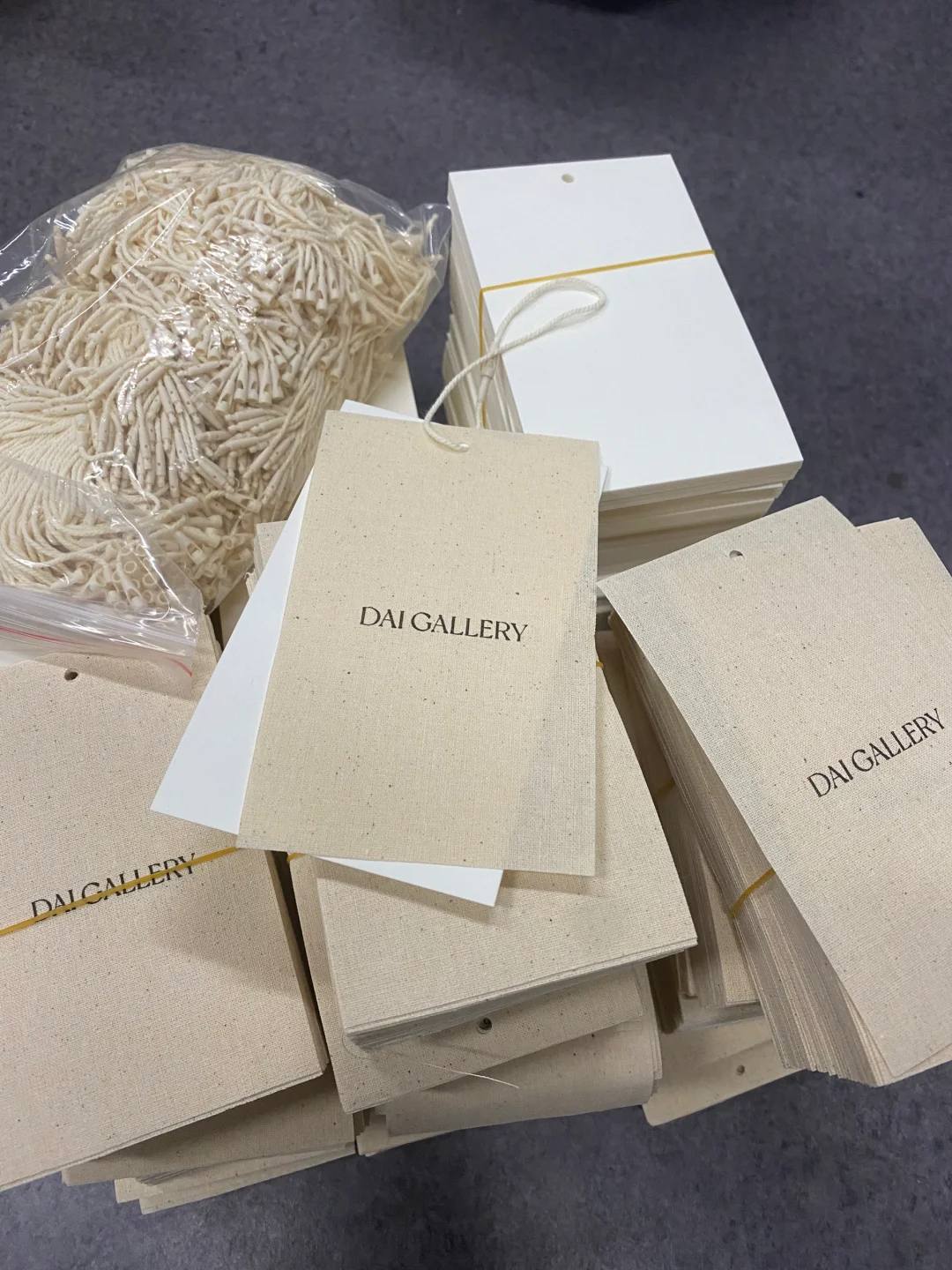
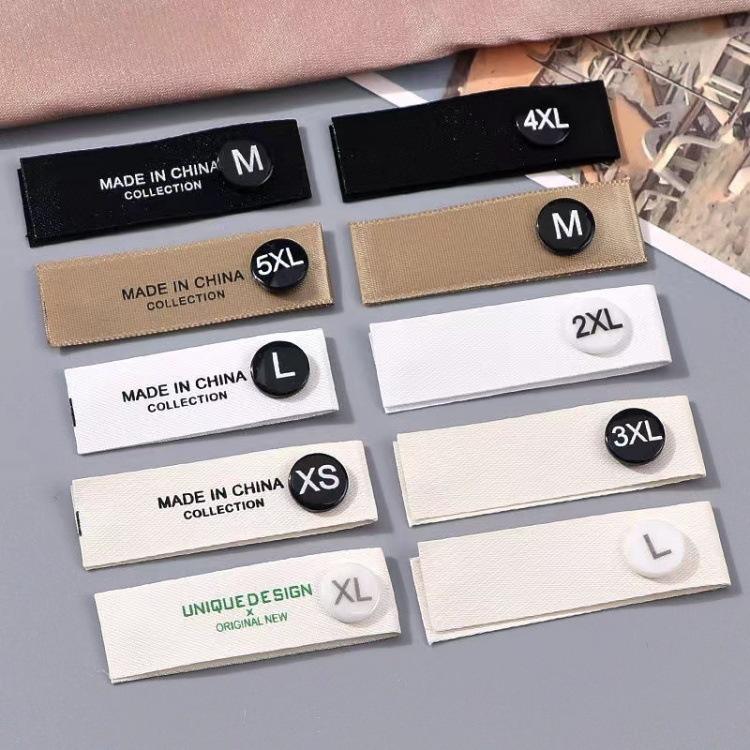
Full-service custom garment accessories and trims including woven labels, printed labels, hang tags, silicon labels, rubber patches, metal logos, branded tape, and packaging materials. ZORWILD coordinates all branding elements to create cohesive product identity across your collection with consistent quality standards applied throughout production.
Get a Quote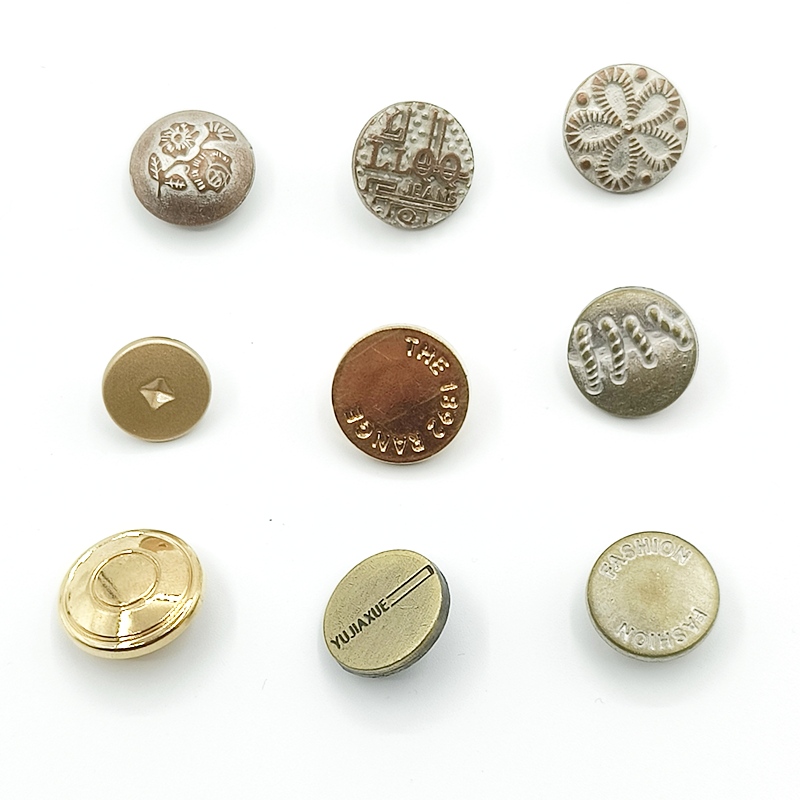
Snap Buttons
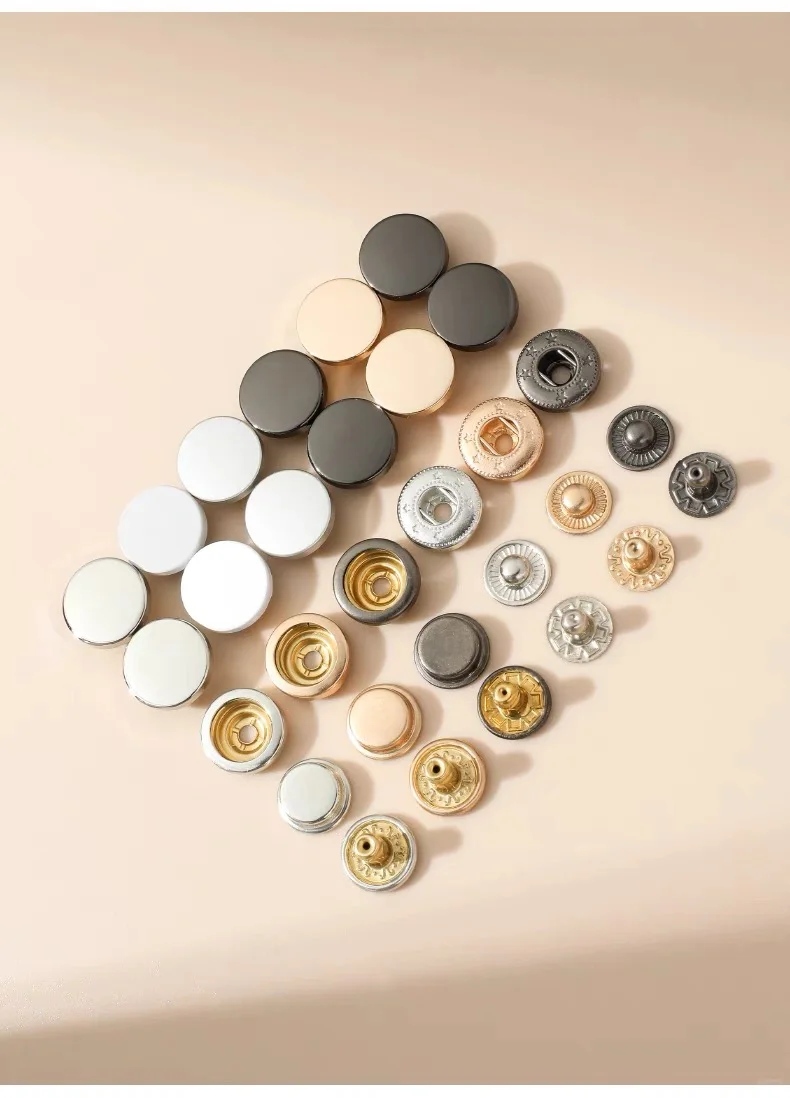
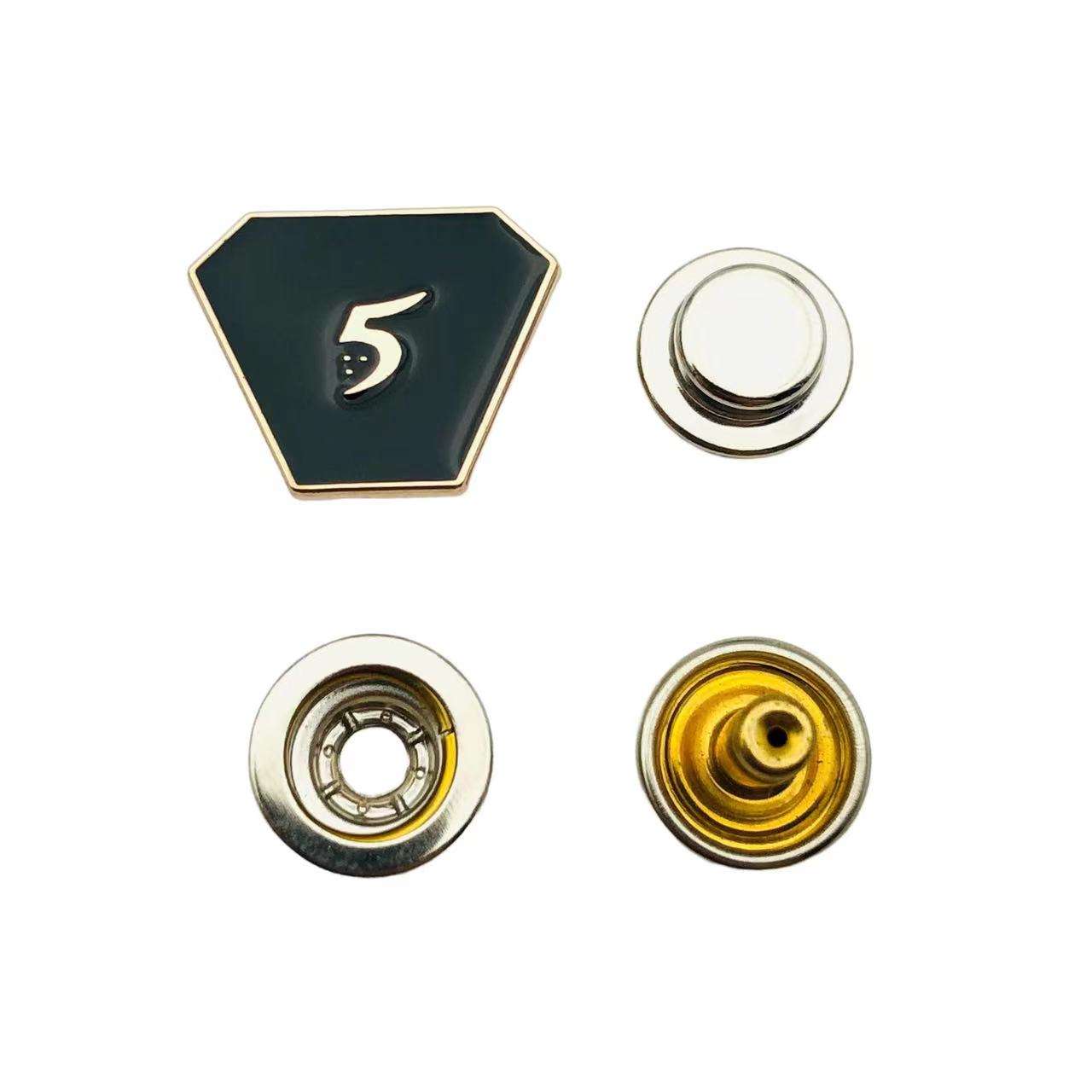
Custom snap buttons in metal, resin, and plastic finishes for jackets, shirts, and casualwear. Available in multiple sizes, colors, and styles including pearl snaps, hidden snaps, and decorative snaps. Precision application ensures secure closure and long-term durability across repeated wear and washing cycles.
Get a Quote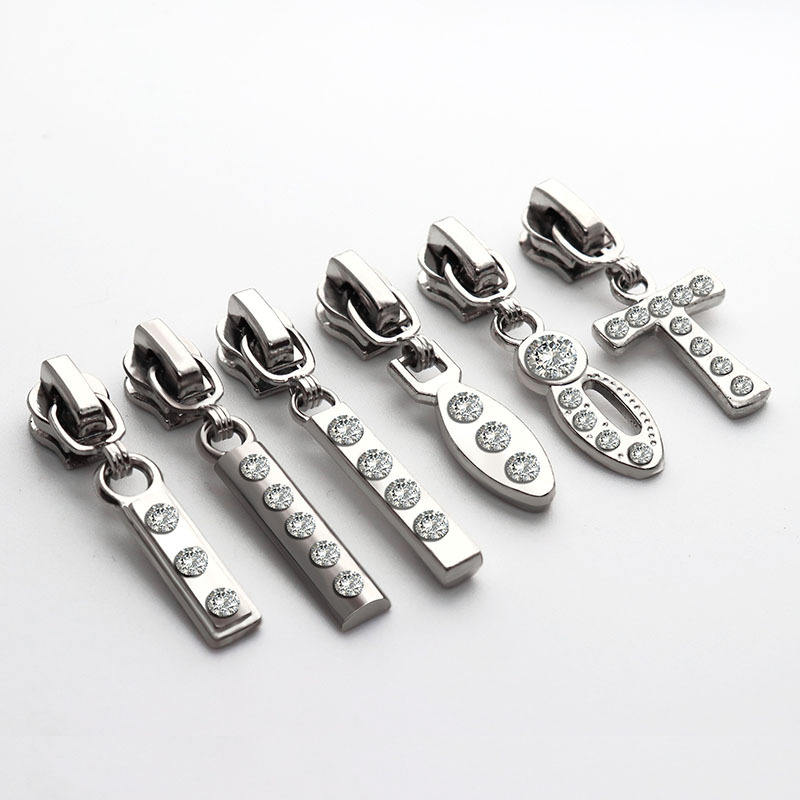
Custom Zippers
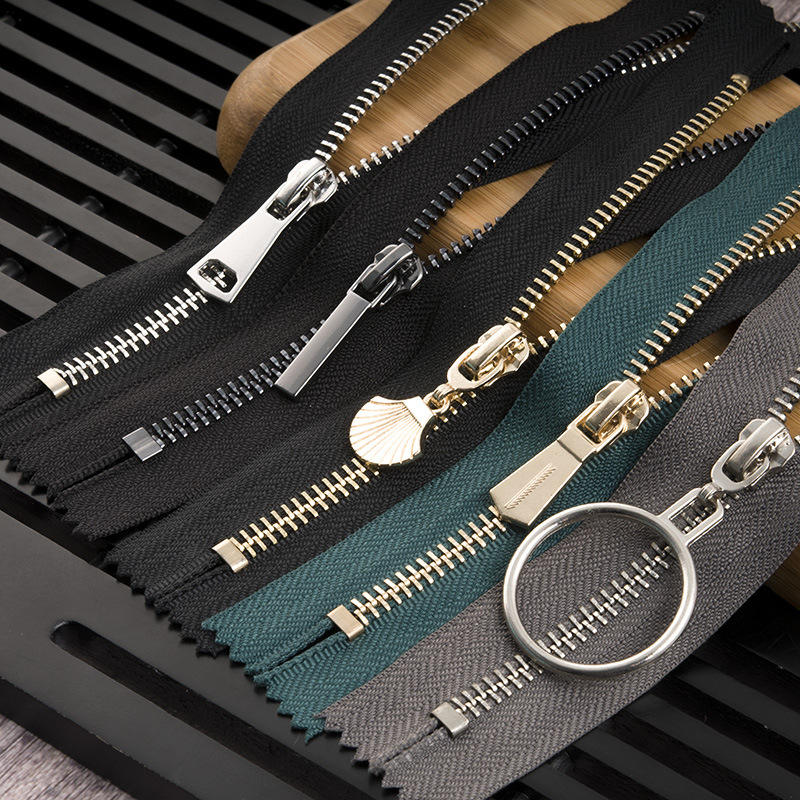
Custom zippers including YKK zippers, metal zippers, nylon coil zippers, waterproof zippers, and two-way zippers for hoodies, jackets, outerwear, and sportswear. Available in custom colors, lengths, and finishes with branded zipper pulls. Technical application ensures smooth operation and garment longevity.
Get a Quote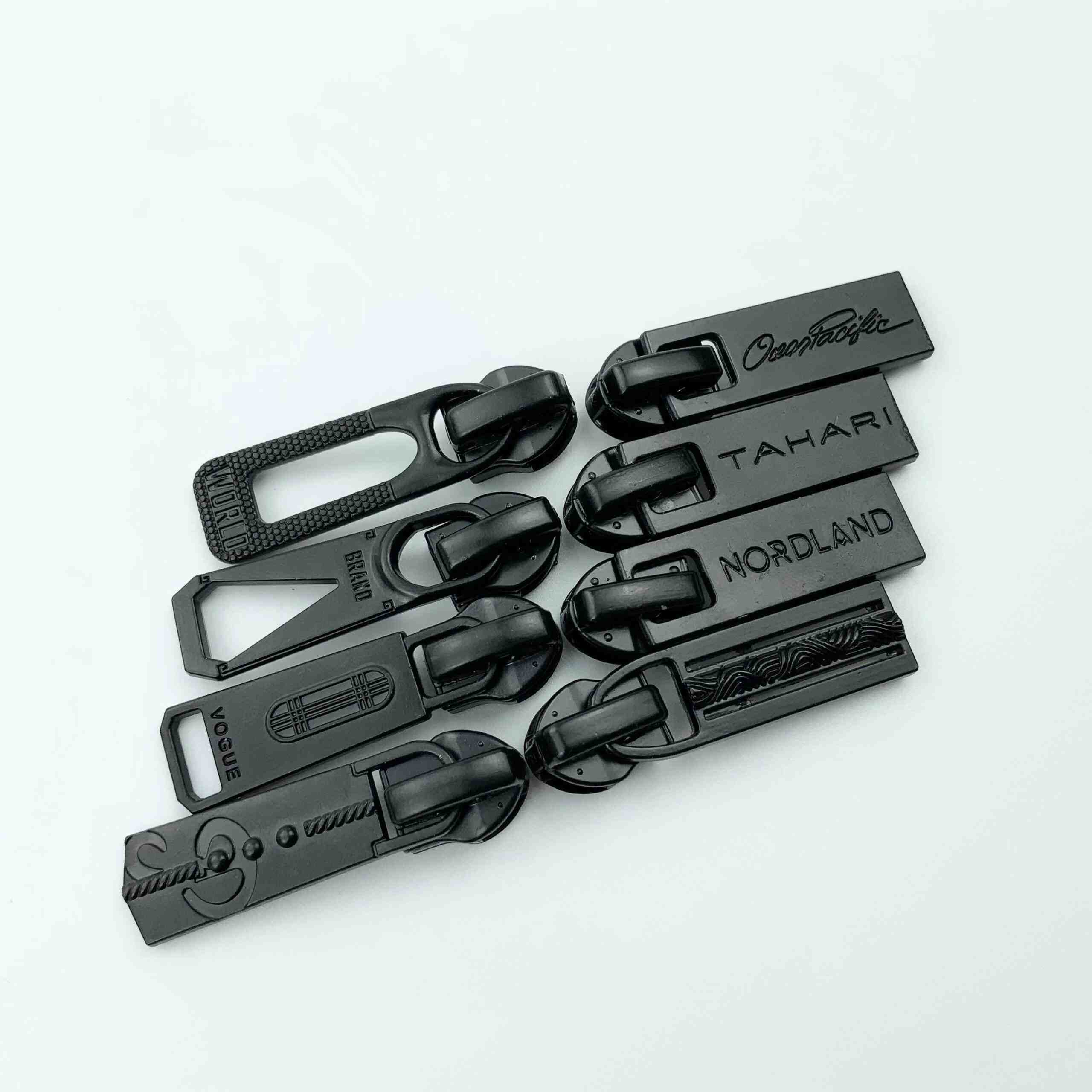
Zipper Pulls
Custom zipper pulls in metal, rubber, silicone, and leather materials featuring brand logos, embossed text, or unique shapes. Enhances brand recognition on hoodies, varsity jackets, puffer jackets, and technical outerwear. Available in multiple finishes including brushed metal, matte black, antique brass, and custom Pantone colors.
Get a Quote
Eyelets & Grommets
Custom eyelets and grommets in metal finishes for hoodies, lace-up details, drawstring reinforcement, and decorative applications. Available in standard and oversized diameters with finishes including silver, gold, gunmetal, antique brass, and custom colors. Reinforced application prevents fabric tearing and maintains structural integrity.
Get a Quote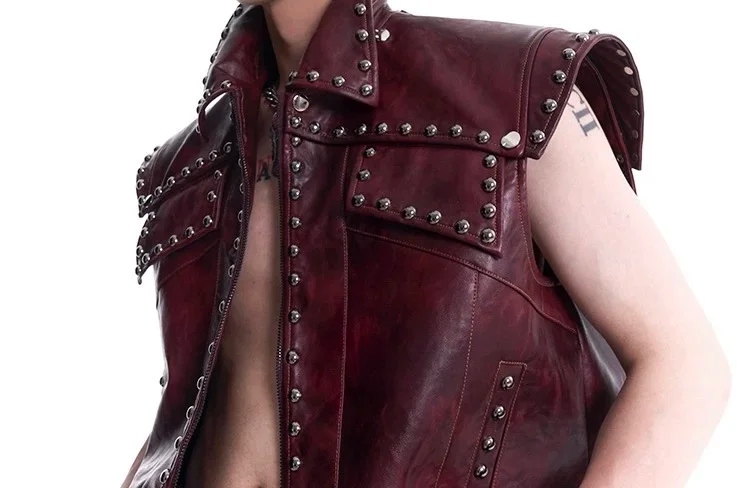
Rivets
Custom rivets in copper, brass, and steel for denim, workwear jackets, cargo pants, and utility apparel. Functional and decorative applications include pocket reinforcement, belt loops, and branding details. Available in multiple head styles, sizes, and finishes to match your garment aesthetic and durability requirements.
Get a Quote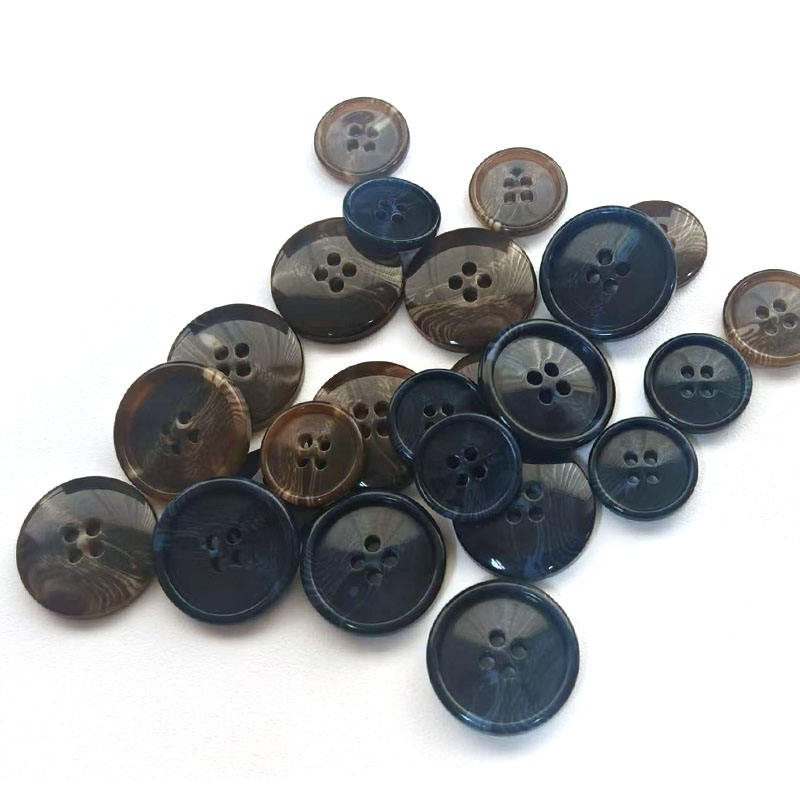
Drawstrings
Custom drawstrings and drawcords in cotton, polyester, nylon, and blended materials for hoodies, sweatpants, joggers, windbreakers, and athletic wear. Available in flat, round, and tubular constructions with custom colors, widths, and branded aglets. Options include reflective drawstrings, printed drawstrings, and metal-tipped finishes.
Get a Quote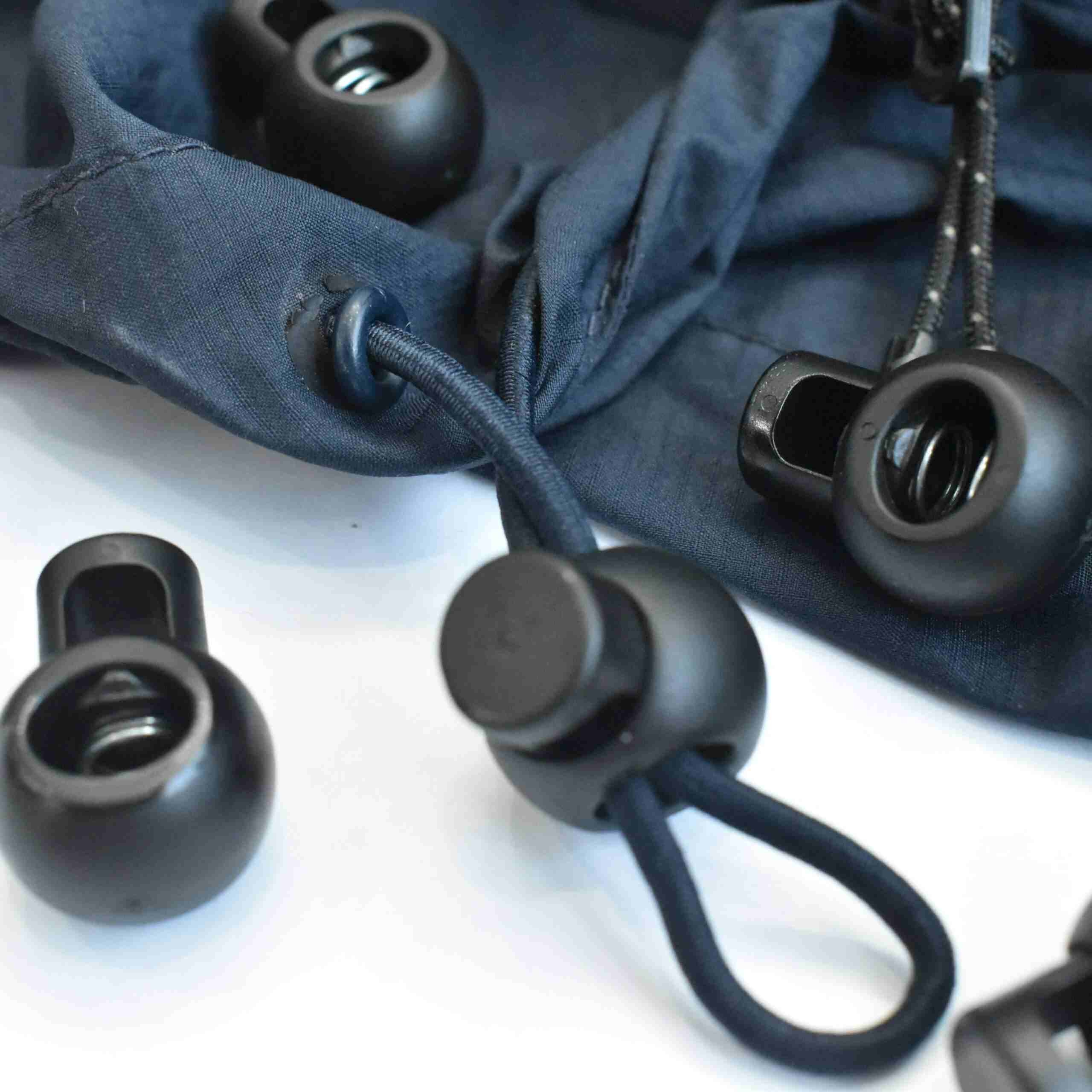
Cord Locks & Stoppers
Custom cord locks and stoppers in plastic, metal, and silicone materials for hoodies, outerwear, activewear, and technical apparel. Available in spring-loaded, barrel, and toggle styles with single-hole or dual-hole configurations. Custom colors and logo embossing available to reinforce brand identity on functional garment details.
Get a Quote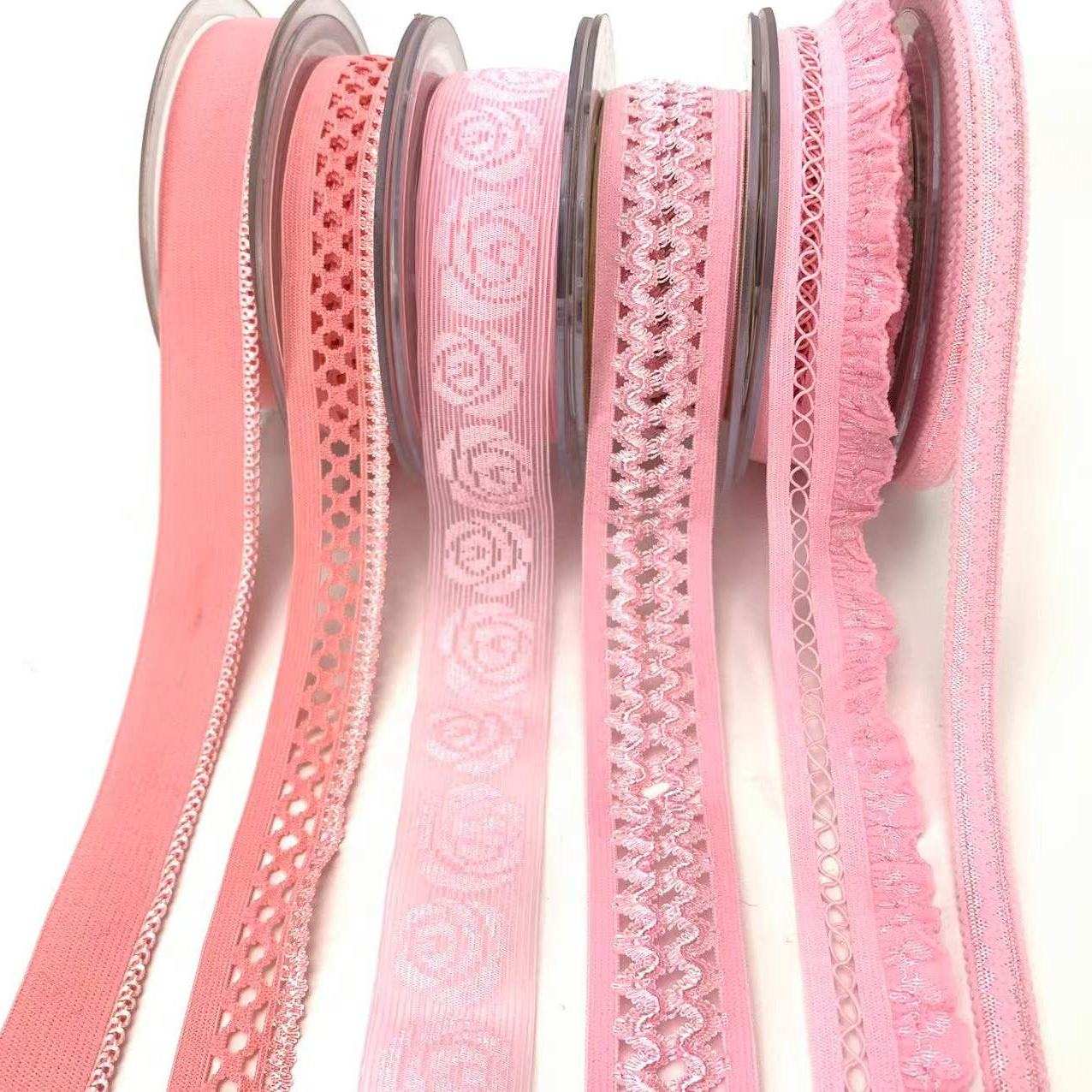
Elastic Bands
Custom elastic bands and waistbands in woven, knitted, and braided constructions for sweatpants, joggers, shorts, activewear, and underwear. Available in multiple widths, stretch levels, and recovery performance with options for jacquard branding, printed logos, and custom Pantone color matching for premium finishing.
Get a QuoteCustom Buttons Backed by 27 Years
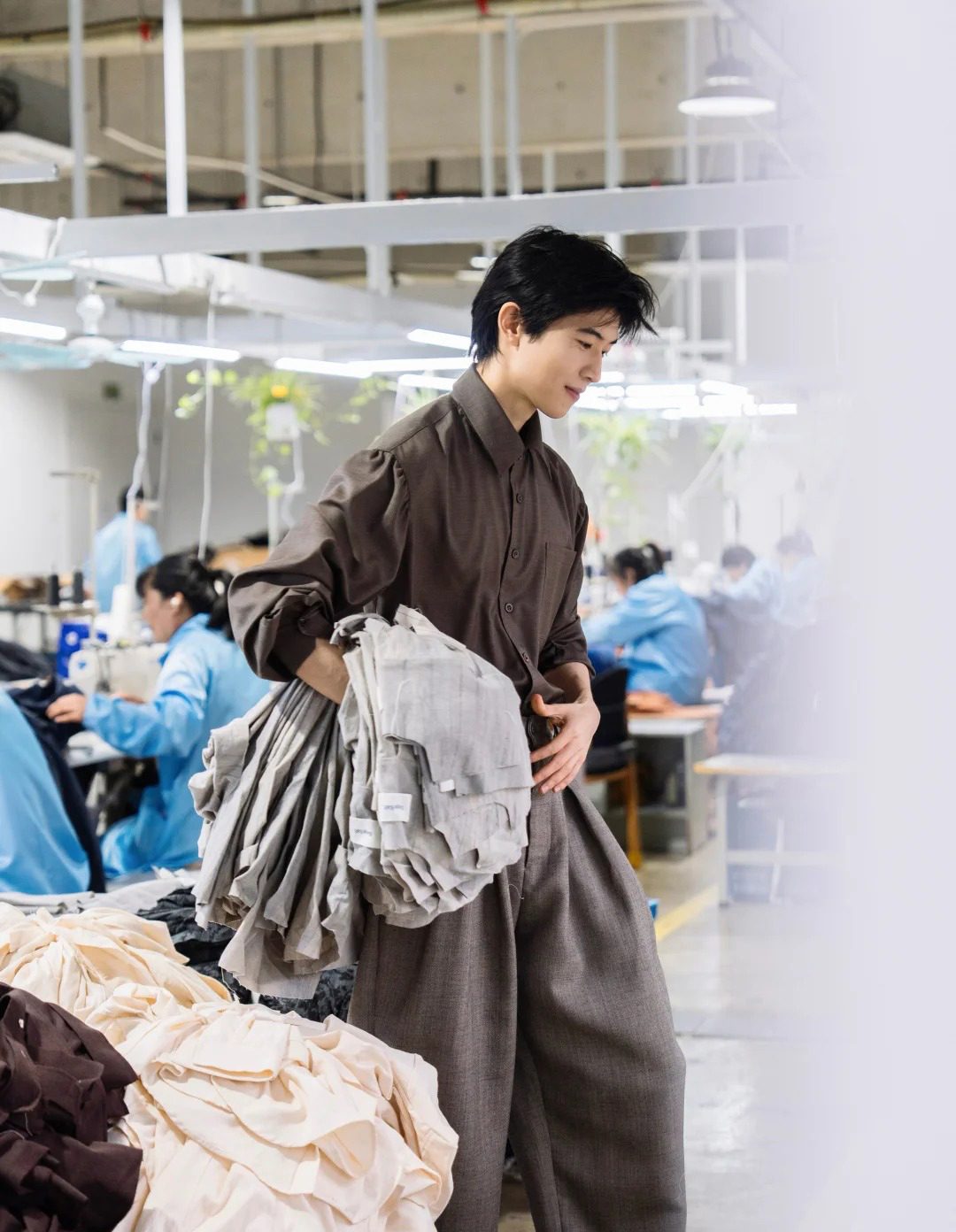
ZORWILD is a professional Chinese apparel manufacturer based in Humen, Dongguan, with over 27 years of experience producing custom buttons and complete garment accessories for fashion brands worldwide. Founded in 1998, we’ve grown from a small family workshop into a modern full-category manufacturer serving more than 2,000 clothing brands across the United States, Europe, Australia, the Middle East, and Southeast Asia.
Our 200-plus skilled workers operate advanced button sourcing and application systems capable of handling snap buttons, shank buttons, metal buttons, resin buttons, engraved buttons, logo buttons, and specialty fasteners for shirts, jackets, dresses, and outerwear. With monthly production capacity exceeding 100,000 units and MOQ starting at just 50 pieces, we support startup brands and established labels alike with flexible, scalable custom button solutions.
Every custom button order benefits from our six-stage quality control system covering raw material inspection, in-line production checks, and final garment finishing. With 95%+ decoration techniques in-house—including custom embroidery, screen printing, DTG printing, and garment wash services—ZORWILD ensures your custom buttons enhance brand identity, improve garment functionality, and deliver the premium quality your customers expect.
Custom Button Production Craftsmanship
Material Selection and Finishing Options
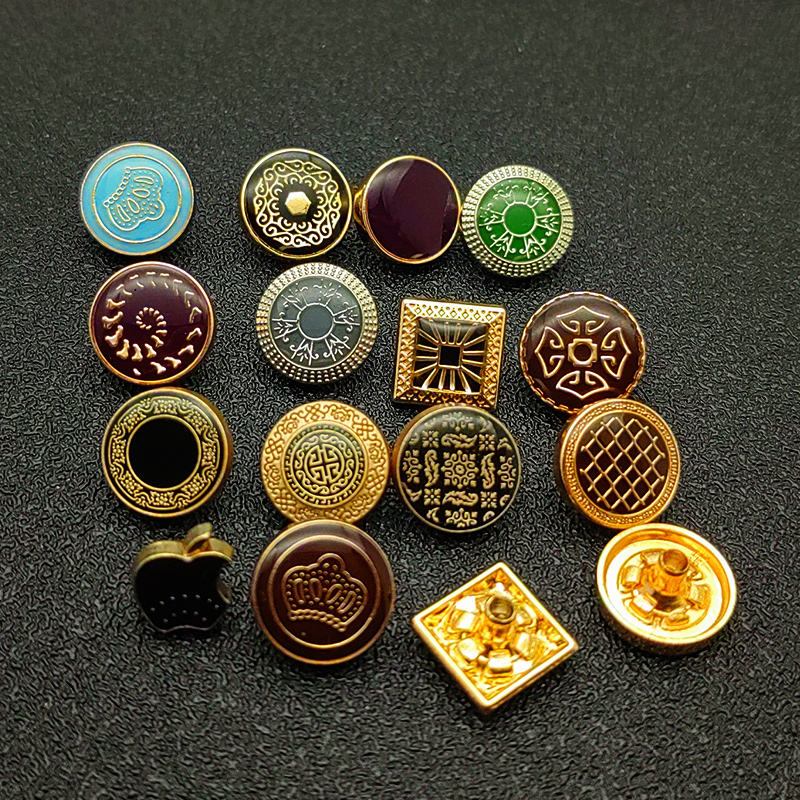
ZORWILD sources premium button materials including metal alloys, resin, natural shell, horn, wood, and coated plastics. Each custom button undergoes specialized finishing processes such as electroplating, powder coating, laser engraving, and enamel application to match your brand aesthetic and durability requirements.
- Metal buttons with gold, silver, antique brass, and gunmetal plating finishes
- Resin and polyester buttons with custom color matching and pattern embedding
- Natural materials including shell, horn, coconut, and sustainable wood options
- Advanced surface treatments: brushed, polished, matte, textured, and embossed finishes
Precision Hole Drilling and Shank Attachment
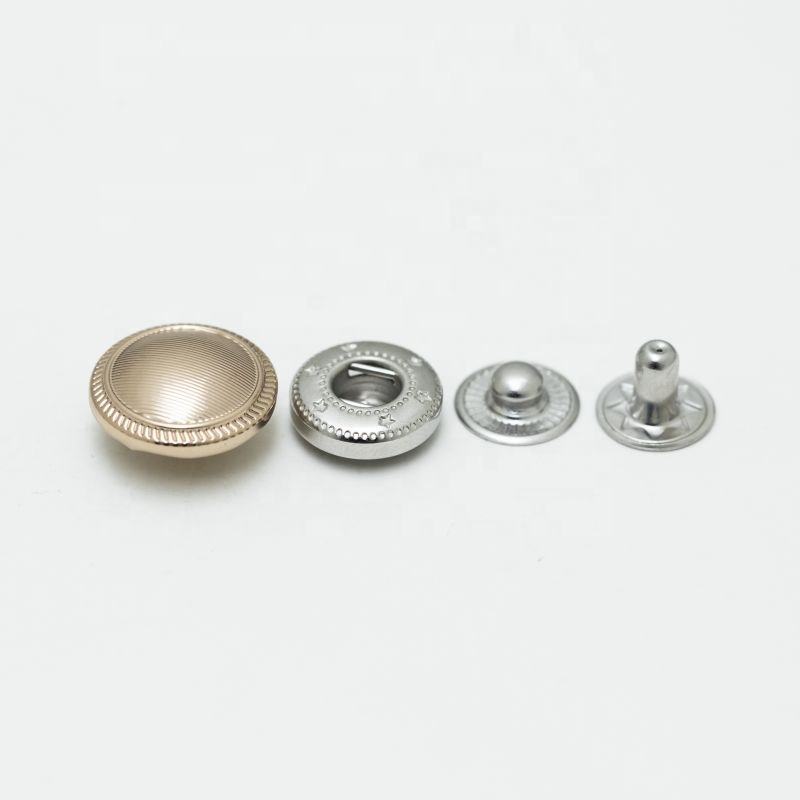
Custom snap buttons in metal, resin, and plastic finishes for custom jackets, custom shirts, and casualwear. Available in multiple sizes, colors, and styles including pearl snaps, hidden snaps, and decorative snaps. Precision application ensures secure closure and long-term durability across repeated wear and washing cycles.
- 2-hole and 4-hole sew-through configurations with reinforced edges
- Metal and plastic shank attachment with stress-tested joint strength
- Consistent hole diameter and spacing for uniform stitching results
- Quality inspection of every button for structural integrity before attachment
Durability Testing and Quality Control
Every custom button batch passes through ZORWILD’s 6-stage quality control system including pull-strength testing, wash durability assessment, colorfastness verification, and dimensional accuracy checks. We simulate real-world garment wear conditions to ensure buttons withstand repeated washing, drying, and daily use without cracking or finish degradation.
- Pull-strength testing to meet international garment safety standards
- Wash cycle simulation including hot water, detergent, and tumble drying
- Colorfastness testing for plating and coating longevity under UV exposure
- Dimensional inspection ensuring size consistency across production batches
Attachment Method Engineering and Application
ZORWILD supports multiple custom button attachment methods tailored to garment type and brand positioning. Our production teams apply sew-through buttons with reinforced bar tacks, install shank buttons with proper thread tension, and attach snap buttons with industrial-grade press equipment for secure, long-lasting fastening performance.
- Sew-through application with bartack reinforcement for shirts and outerwear
- Shank button installation with proper thread wrapping and knot security
- Snap button press attachment with precise alignment and force calibration
- Custom button placement planning based on garment design and functional requirements
Custom Buttons vs. Other Fastening Accessories
Understanding how custom buttons compare to zippers, snaps, and drawcords helps you choose the right fastening solution for custom hoodies, custom t-shirts, wholesale apparel, and your overall garment design and production goals.
← 左右滑动查看 →
How Custom Buttons Are Produced
ZORWILD’s streamlined custom button production process ensures precision, quality, and fast turnaround from material selection to final six-stage quality inspection, supporting custom apparel brands with low MOQ starting at 50 pieces.
Material Sourcing & Selection
Raw materials including metal alloys, resin, wood, or shell are sourced from trusted suppliers and inspected for durability, color consistency, and suitability for the desired finish and garment application.
Design Digitizing & Mold Preparation
Custom button designs, logos, or patterns are digitized and precision molds or dies are prepared to ensure accurate shape, engraving depth, and brand detail reproduction for stamping or casting.
Stamping, Molding & Shaping
Buttons are formed through stamping, injection molding, or casting processes under controlled pressure and temperature to achieve consistent size, thickness, and structural integrity across every piece in the production run.
Surface Finishing & Decoration
Buttons undergo polishing, electroplating, powder coating, laser engraving, or painting to achieve the desired surface texture, color, metallic sheen, or custom branding, with strict control over finish uniformity and adhesion.
Hole Drilling & Attachment Prep
Buttonholes are drilled or shanks are attached with precision equipment to ensure correct hole diameter, spacing, and alignment, enabling secure stitching and smooth attachment during garment assembly without fabric damage.
Quality Inspection & Testing
Every batch undergoes dimensional inspection, color matching verification, pull strength testing, surface finish evaluation, and durability checks to meet ZORWILD’s strict accessory quality standards before approval for packaging and shipment.
Packaging & Delivery
Approved custom buttons are counted, organized by size or color, packed in protective bags or boxes with brand labeling, and prepared for shipment alongside garment orders or as standalone accessory shipments.
How to Add Custom Buttons to Your Order
ZORWILD makes integrating custom buttons into your custom hoodies, custom t-shirts, wholesale apparel, and full garment production seamless. Follow these four simple steps to enhance your collection with branded button details.
Submit Your Button Design
Share your button specifications including material, size, color, finish, logo engraving, and any reference images. Our team will confirm feasibility and sourcing options.
Confirm Placement on Garment
Indicate where custom buttons will be applied on your apparel—shirts, jackets, pants, or outerwear. We’ll incorporate button specs into your tech pack and sampling.
Produce Alongside Main Order
Custom buttons are sourced and applied during your main production run. No separate orders needed—everything is coordinated within your apparel manufacturing timeline.
Final Quality Control Inspection
Our six-stage quality control system inspects button attachment strength, alignment, finish consistency, and overall garment integrity before packaging and shipment to you.
Customer Success Stories: Custom Buttons in Action
We added engraved metal buttons to our varsity jackets and saw a 34% increase in customer comments about premium quality. The buttons survived 50+ wash cycles with zero tarnishing—exactly what our brand needed for durability.
ZORWILD delivered custom snap buttons with our logo for 200 bomber jackets—on time and flawless. Our retail partners specifically mentioned the button detailing as a key selling point, helping us secure three new wholesale accounts.
The custom horn buttons on our linen shirts elevated our brand perception immediately. We tracked a 28% boost in repeat purchases, and customers called out the button quality in 40+ five-star reviews within two months.
Custom Buttons FAQ
What materials are available for custom buttons and garment accessories?
Can I customize the size and color of custom buttons?
How durable are custom buttons after washing?
What file formats do you need for custom button artwork?
Do custom buttons add extra lead time to production?
Can I order custom buttons separately or only with garments?
What types of custom buttons work best for jackets and outerwear?
Can custom buttons match other branding accessories like labels and hang tags?
Are there design limitations for custom button logos?
The Complete Buyer’s Guide to Custom Buttons for Your Brand
1. What Are Custom Buttons and Why They Matter
Custom buttons are branded fasteners and embellishments engineered to reflect a brand’s identity through material, shape, engraving, color, and finish. Unlike generic stock buttons sourced from commodity suppliers, custom buttons carry logos, brand names, unique patterns, or proprietary hardware designs that transform a functional closure into a brand touchpoint visible to end customers and retail buyers alike.
Fashion labels, uniform suppliers, promotional merchandise companies, and private-label manufacturers rely on custom buttons to reinforce brand recognition and elevate perceived value. A logo-engraved metal button or a contrast-color resin snap signals attention to detail that generic alternatives cannot deliver, directly influencing purchase decisions in competitive retail environments and wholesale negotiations.
Generic buttons undermine premium positioning by creating visual inconsistency and signaling cost-cutting to discerning buyers. Brands targeting mid-tier and luxury segments risk losing credibility when hardware details fail to match garment quality, fabric weight, or brand storytelling. Custom buttons solve this by aligning every garment component with brand standards, from snap buttons on heavyweight hoodies to engraved shell buttons on resort shirts.
The investment in customization versus stock buttons pays dividends in brand differentiation, customer retention, and wholesale pricing power. ZORWILD supports custom button integration across shirts, jackets, hoodies, and uniform collections with low MOQ production starting from 50 pieces, enabling startup brands and established labels to maintain hardware consistency without inventory risk or excessive upfront tooling costs.
2. The Evolution of Custom Buttons in Branding
Military uniforms in the 18th and 19th centuries popularized engraved brass and pewter buttons bearing regimental crests, transforming fasteners into identity markers. By the early 20th century, European couture houses such as Chanel and Dior commissioned signature buttons with house logos cast in metal, establishing buttons as permanent brand assets rather than interchangeable components.
Streetwear brands in the 1990s adopted logo buttons and custom snap fasteners to differentiate hoodies, varsity jackets, and denim pieces in a crowded market. Traditional metal stamping and die-casting required minimum order quantities of 5,000 to 10,000 units and tooling fees exceeding $500, restricting custom buttons to established labels with deep inventory budgets.
Digital printing, laser engraving, and resin molding technologies emerged in the 2010s, enabling manufacturers to produce custom buttons in runs as low as 50 to 100 pieces without tooling investment. ZORWILD leverages these on-demand decoration techniques alongside partnerships with specialized trims suppliers in Dongguan to offer startup brands and influencers access to branded snap buttons, logo shank buttons, and engraved metal buttons at accessible MOQs.
Today’s buyers expect buttons that reinforce brand identity through color matching, logo clarity, and finish consistency while meeting durability standards for repeated laundering and wear. The shift from high-MOQ stamping to flexible digital customization has democratized access, allowing emerging streetwear labels, online boutiques, and social media brands to deploy custom buttons as cost-effective brand touchpoints across hoodies, shirts, jackets, and casualwear collections.
3. Types of Custom Buttons for Different Applications
Custom buttons are classified by attachment method and functional role. Understanding construction types helps brands match hardware to garment category—from custom hoodies and custom t-shirts to wholesale jackets and custom dress shirts—ensuring optimal weight, aesthetic, and durability.
Sew-Through Buttons
Sew-through buttons feature two or four visible holes punched through the button face. Thread passes directly through these holes to attach the button to fabric.
Shirts, blouses, casual jackets, and lightweight garments use sew-through buttons because they distribute tension evenly and lie flat against fabric. Brands choose this style for clean minimalist aesthetics and easy replacement during repairs.
Shank Buttons
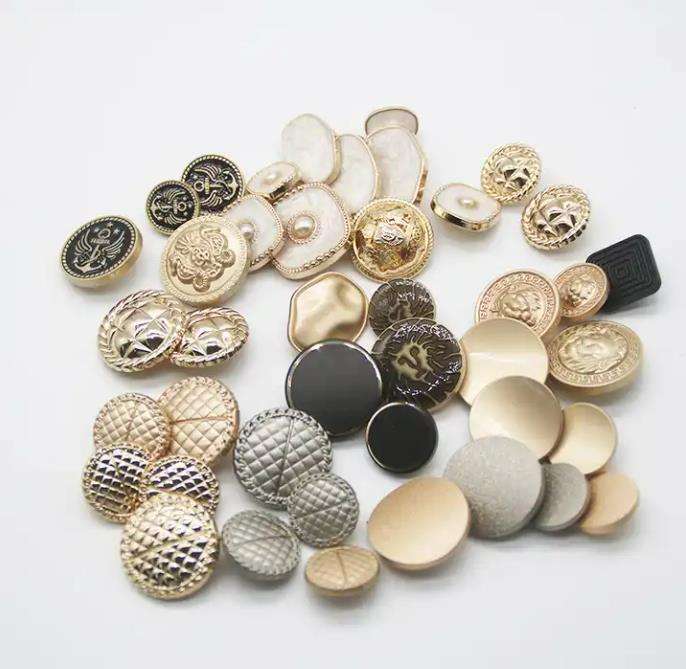
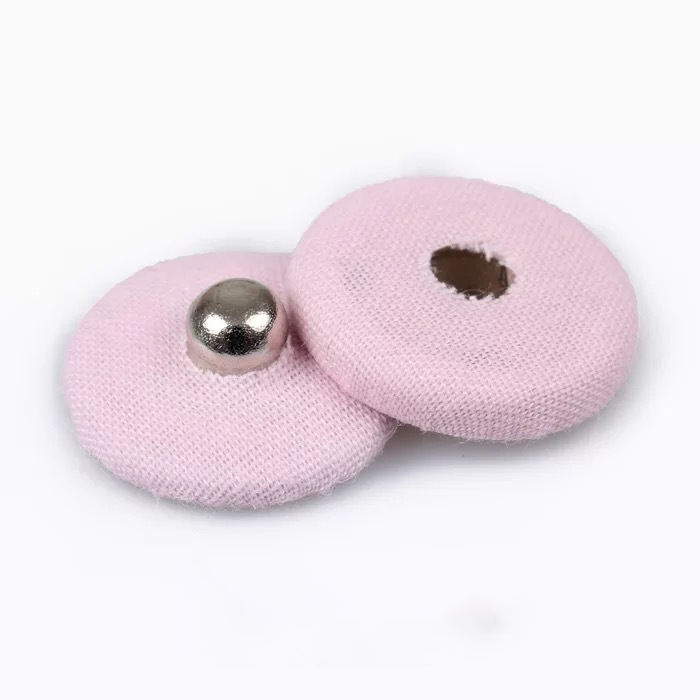
Shank buttons have a raised loop or stem on the back instead of surface holes. The shank creates space between button and fabric, accommodating thicker material layers.
Coats, blazers, heavy outerwear, and tailored garments require shank buttons to handle bulk at closure points. The elevated attachment prevents fabric bunching and maintains drape in structured garments.
Snap Buttons
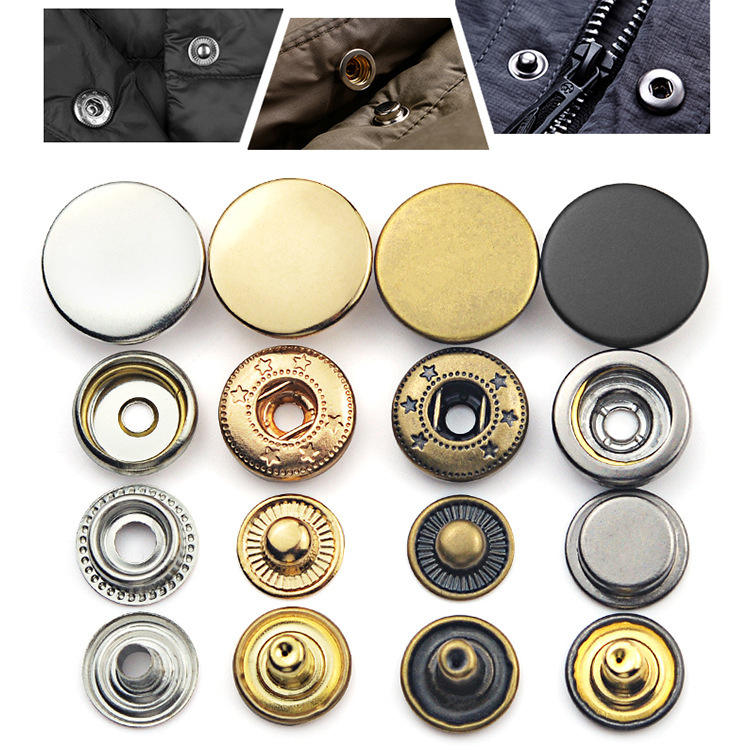
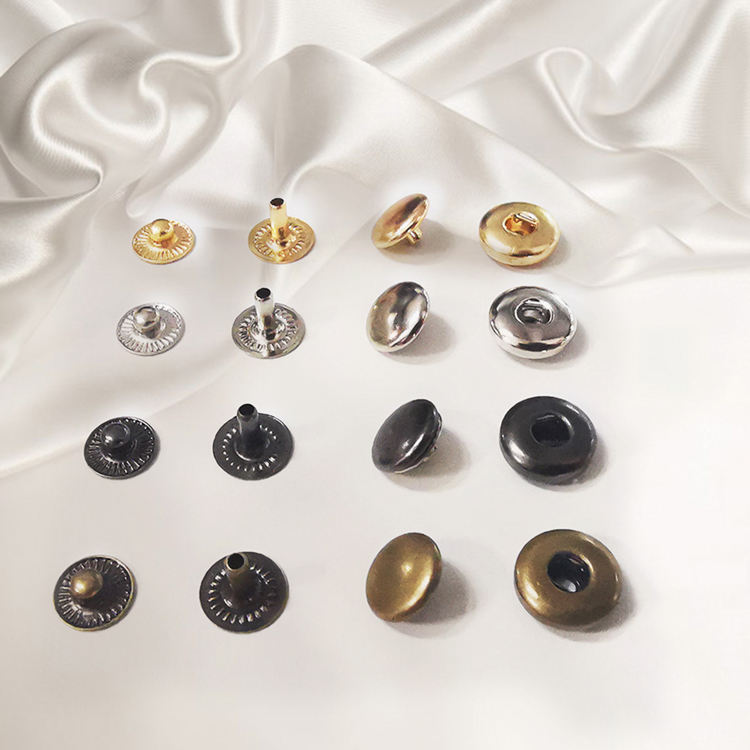
Snap buttons consist of two interlocking metal or plastic components: a male stud and female socket. Pressure secures the closure without sewing thread.
Denim jackets, workwear, baby clothing, and sportswear use snap buttons for quick on-off functionality. Brands select snaps when speed and durability outweigh traditional tailoring aesthetics.
Magnetic Buttons
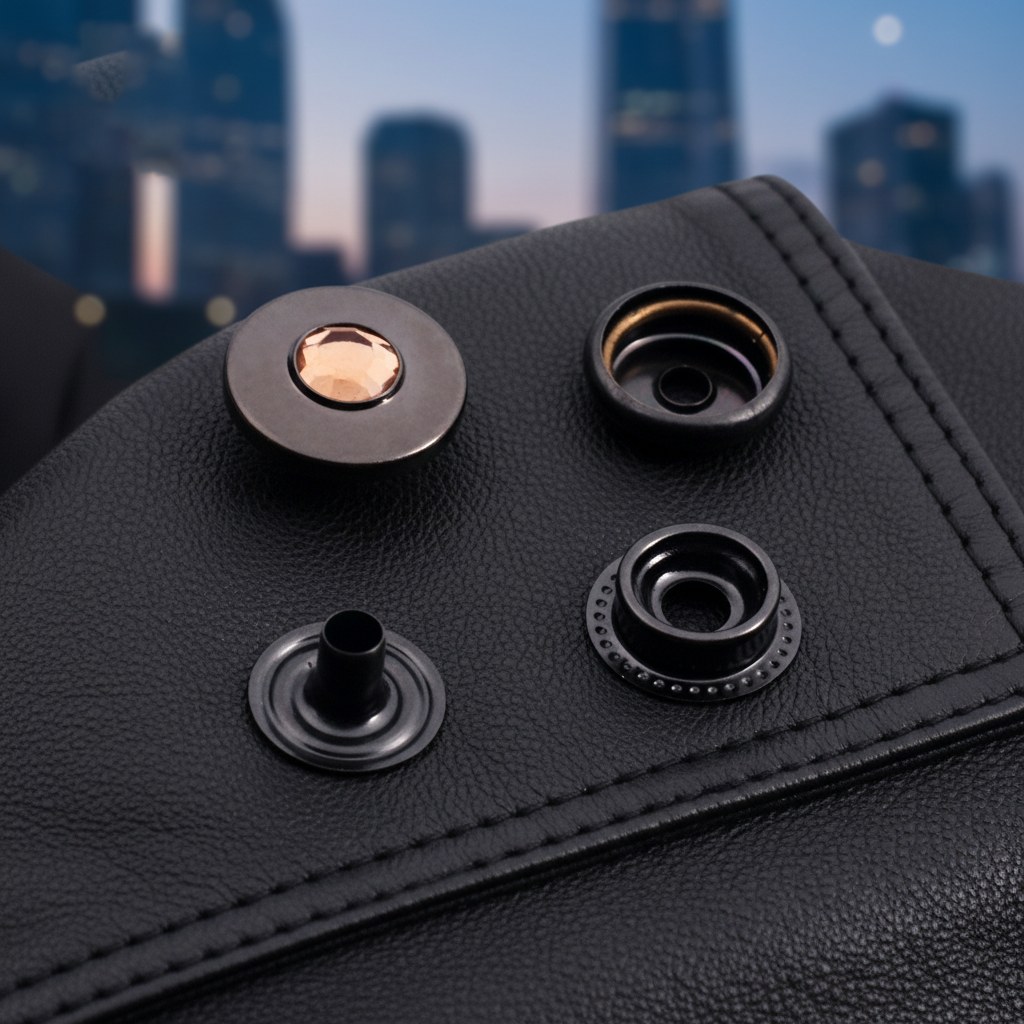
Magnetic buttons embed rare-earth magnets inside button housings, creating invisible closures. No manual dexterity is required to fasten.
Adaptive clothing, luxury handbags, and high-end outerwear incorporate magnetic buttons for accessibility and seamless design. Brands targeting elderly customers or premium markets choose magnets to combine function with refined appearance.
Decorative Non-Functional Buttons
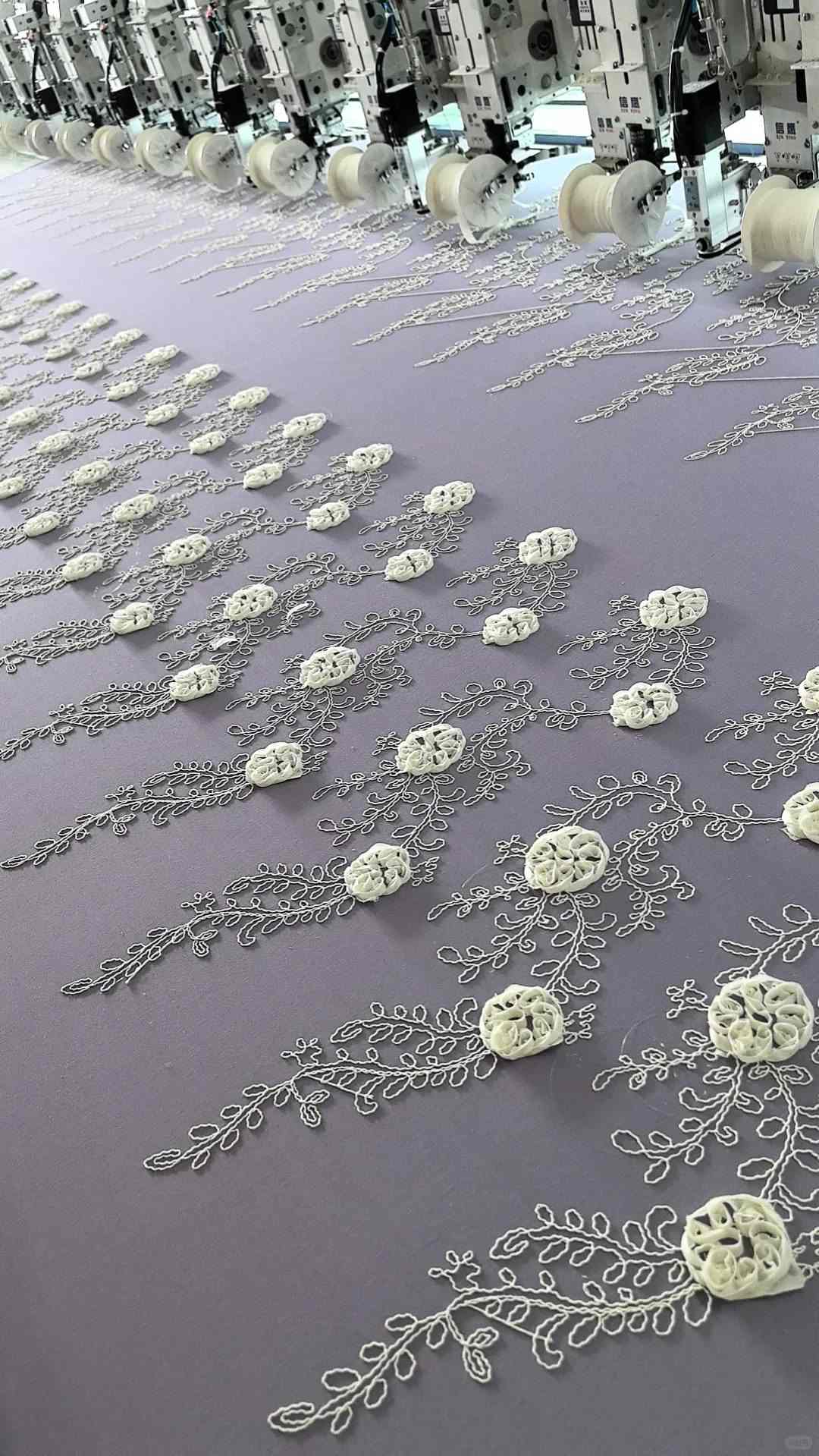
Decorative buttons are sewn or glued onto garments purely for visual impact. They do not open or close any seam.
Fashion dresses, streetwear hoodies, and embellished jackets use decorative buttons to enhance branding or create design accents. Brands add these elements when aesthetic storytelling matters more than utilitarian closure.
4. Materials and Finishes for Custom Buttons
Material choice determines button performance, brand perception, and cost structure. ZORWILD sources custom buttons across four material families, each offering distinct trade-offs in durability, weight, price, and sustainability for fashion brands at every tier.
| Material | Durability (Wash Cycles) | Price Range (USD) | Best Use Case |
|---|---|---|---|
| Brass / Zinc Alloy | 50+ | $0.08–$0.45 | Denim, outerwear, heritage brands |
| Stainless Steel | 100+ | $0.20–$0.60 | Activewear, technical jackets |
| Polyester Resin | 30–40 | $0.02–$0.10 | Casual shirts, fast fashion |
| Corozo (Tagua Nut) | 25–35 (dry clean) | $0.15–$0.35 | Sustainable luxury, resort wear |
| Mother-of-Pearl | 20–30 (delicate) | $0.25–$0.80 | Bridal, evening wear |
Metal Buttons: Brass, Zinc Alloy, and Stainless Steel
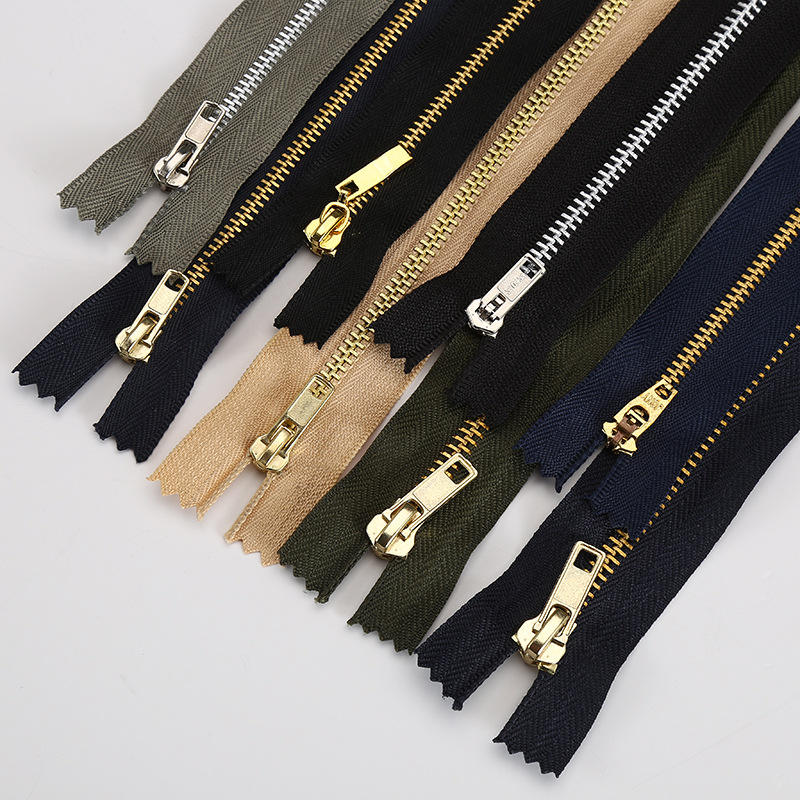
Brass buttons deliver premium weight and patina aging, ideal for denim, outerwear, and heritage brands. Zinc alloy offers excellent moldability for complex logos and 3D designs at mid-tier pricing. Stainless steel provides maximum corrosion resistance for activewear and coastal collections.
Metal buttons range from $0.08 to $0.45 per unit depending on plating (nickel, antique brass, gunmetal, gold) and engraving depth. Durability exceeds 50 wash cycles with proper attachment, though weight (2–8 grams) requires reinforced stitching on lightweight fabrics.
Plastic Buttons: Polyester, Acrylic, and ABS
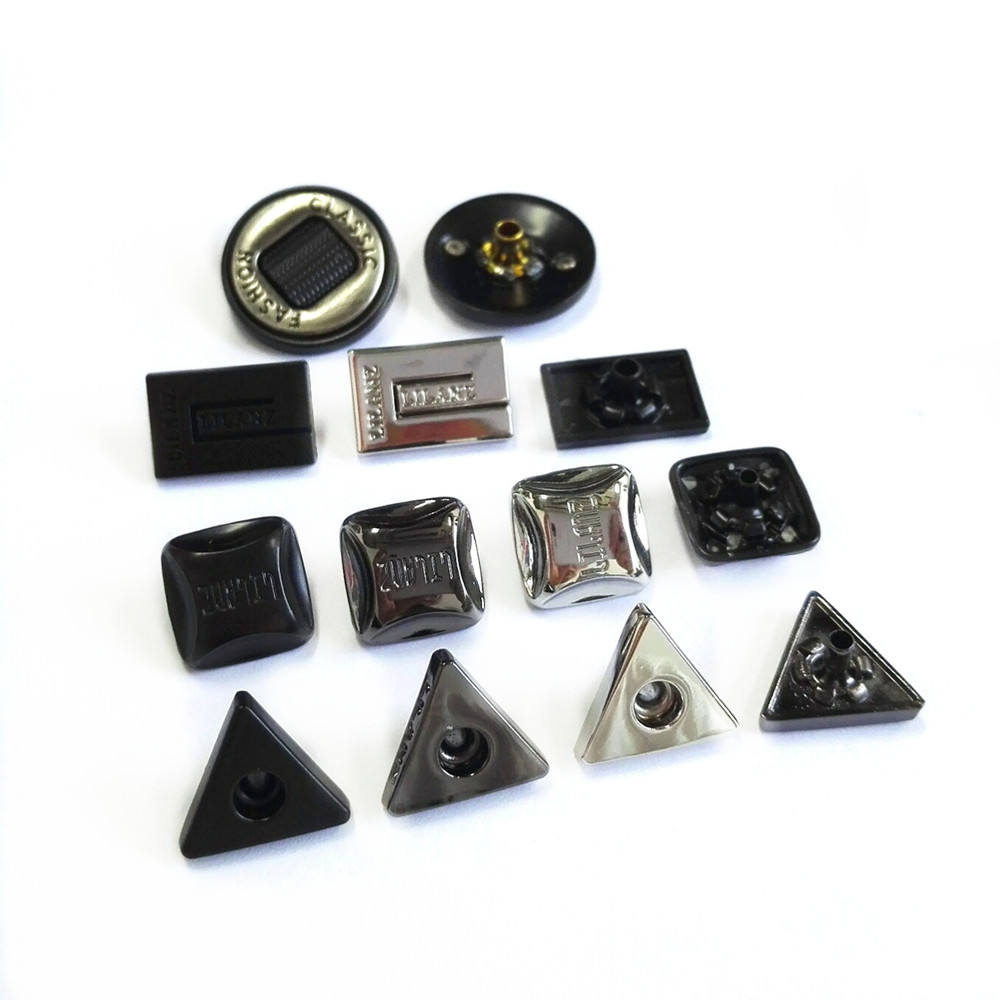
Polyester resin buttons dominate fast fashion and casual shirts, offering unlimited color matching via Pantone references and costs from $0.02 to $0.10 per piece. Acrylic buttons provide glass-like clarity for translucent and tortoiseshell effects. ABS (acrylonitrile butadiene styrene) delivers impact resistance for childrenswear and workwear at 40–60% lower weight than metal.
Natural Buttons: Wood, Shell, Horn, and Corozo
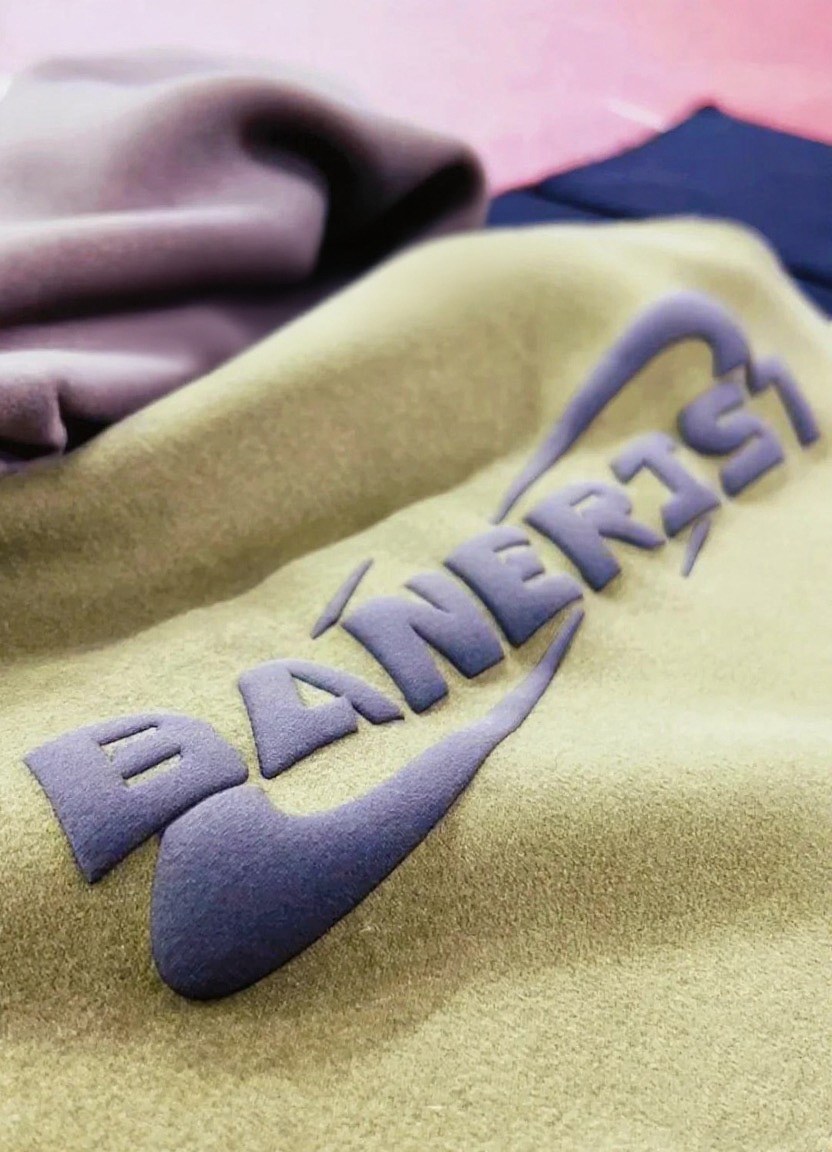
Corozo (tagua nut) buttons mimic ivory with full biodegradability, priced $0.15–$0.35 per unit for sustainable luxury brands. Mother-of-pearl shell buttons offer iridescent finish for bridal and resort collections. Wood and horn buttons provide organic texture but require dry cleaning to prevent cracking, limiting use to premium outerwear and artisan labels.
5. Customization and Decoration Techniques for Custom Buttons
Decoration technique selection directly impacts brand visibility, production cost, and button durability across thousands of wear cycles. ZORWILD applies laser engraving, screen printing, UV printing, embossing, enamel fill, and electroplating finishes to match logo complexity, budget constraints, and minimum order volumes from 50 pieces upward.
| Technique | Setup Cost | Unit Cost (500 pcs) | Durability (Cycles) | Detail Resolution |
|---|---|---|---|---|
| Laser Engraving | $0–20 | $0.15–0.40 | 10,000+ | 0.1 mm / High |
| Screen Printing | $30–80/color | $0.10–0.25 | 500–800 | 0.3 mm / Medium |
| UV Printing | $0 | $0.25–0.50 | 500–700 | 0.05 mm / Very High |
| Emboss/Deboss | $80–150 | $0.20–0.45 | 8,000+ | 0.5 mm / Medium |
| Enamel Fill | $80–150 | $0.40–0.90 | 5,000+ | 0.3 mm / High |
| Electroplating | $50–100 | $0.30–0.70 | 3,000–6,000 | N/A (finish only) |
Laser Engraving for Metal and Wood Buttons
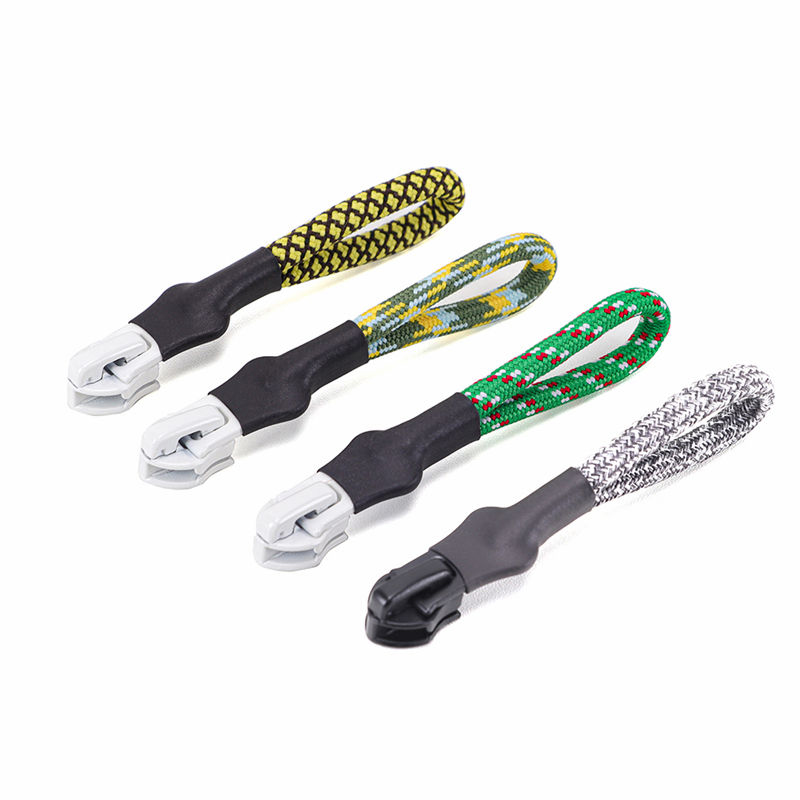
Laser engraving removes surface material through focused beam ablation, creating permanent contrast on stainless steel, brass, zinc alloy, and wood substrates. The process requires no tooling setup, reducing first-order costs by 40–60% compared to mold-based techniques.
Durability exceeds 10,000 wash cycles with no fade or wear. Detail resolution reaches 0.1 mm line width, ideal for intricate logos and fine typography. Unit cost remains stable across 50–5,000 piece runs, making laser engraving the preferred choice for low MOQ custom buttons and test collections.
Screen Printing and UV Printing for Color Logos
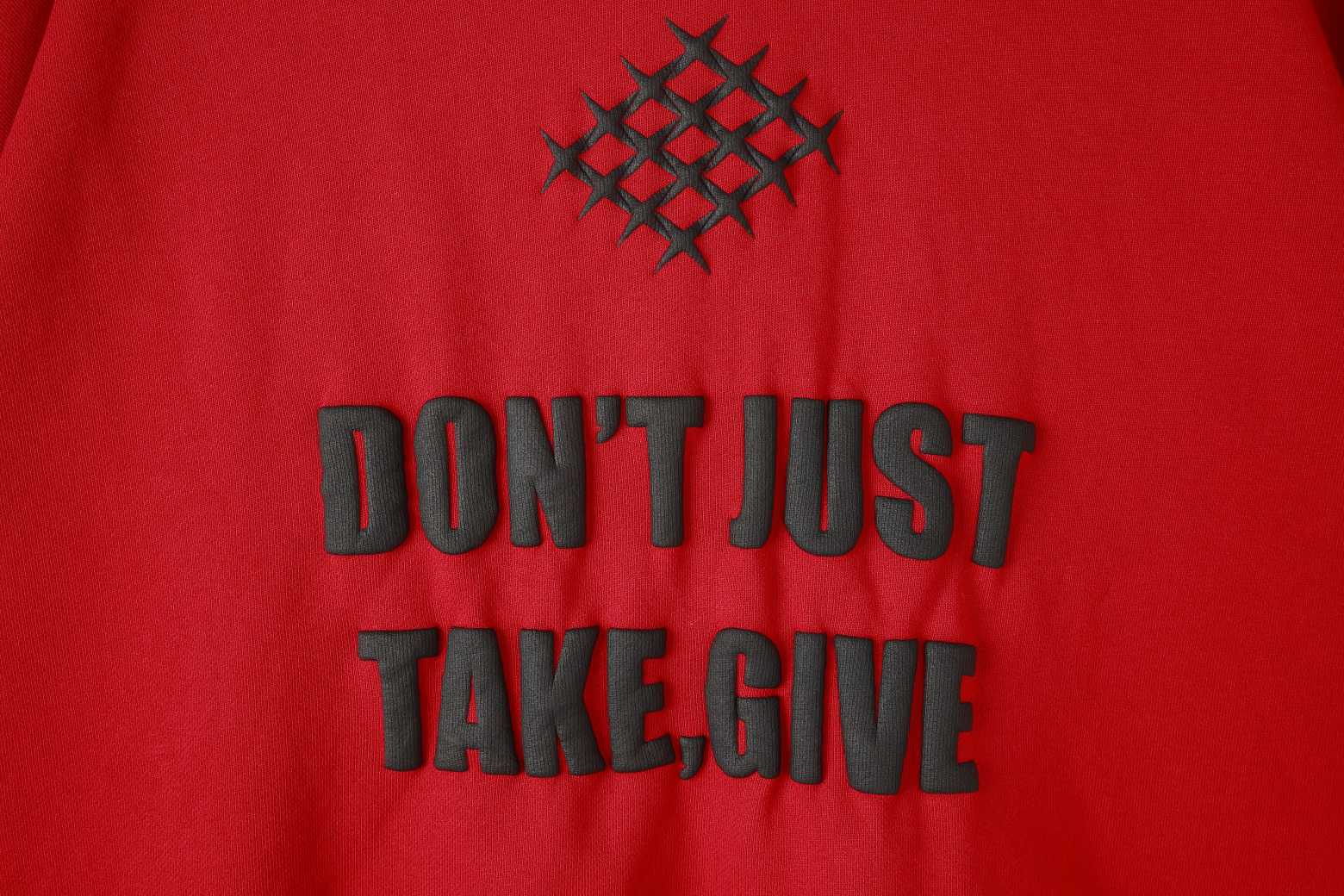
Screen printing deposits UV-cured ink layers onto flat or slightly curved button surfaces, supporting 1–6 Pantone colors per design. Setup tooling costs $30–80 per color, favoring runs above 500 pieces for cost efficiency.
UV printing (direct digital inkjet) eliminates setup fees and delivers full-color gradients and photo-quality detail at 1440 dpi resolution. Unit cost is 20–35% higher than screen printing but ideal for 50–300 piece orders. Both methods achieve 500+ wash cycles before noticeable fade under industrial laundry conditions.
Embossing, Debossing, and Enamel Fill
Embossing raises logo relief 0.3–1.0 mm above the button surface; debossing recesses design elements below the plane. Both require custom steel dies ($80–150 per design) and suit metal, leather, and rigid plastic substrates. Minimum orders typically start at 300 pieces to justify tooling investment.
Enamel fill injects colored resin into debossed cavities, cured at 120–150°C for glass-like finish and scratch resistance exceeding 3H pencil hardness. The technique delivers premium visual impact for luxury fashion brands and formalwear collections, with unit costs 50–80% above basic engraving.
Electroplating Finishes for Premium Aesthetics
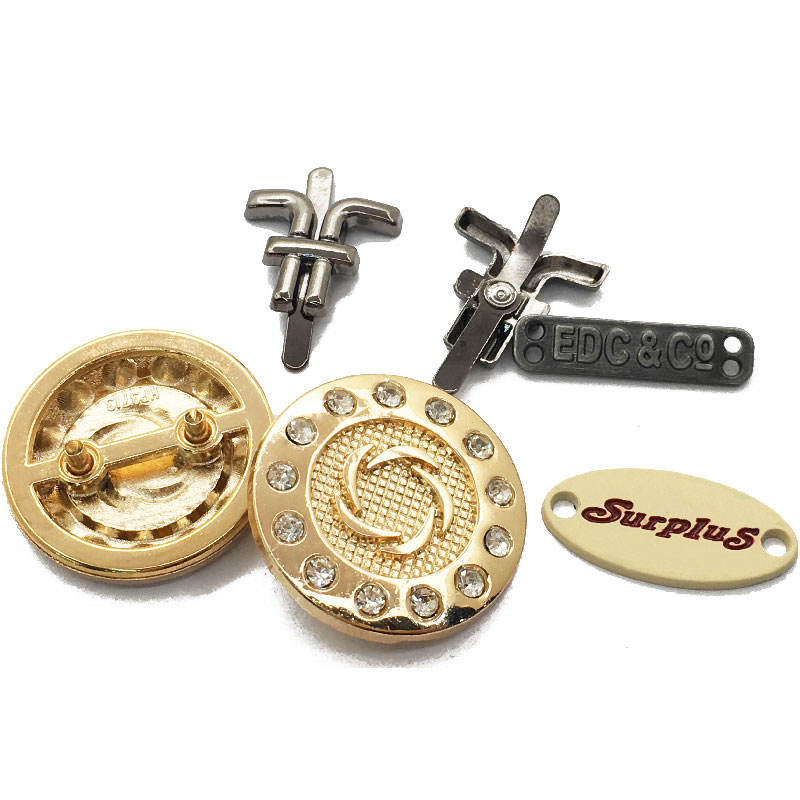
Electroplating deposits thin metal layers—gold, silver, nickel, antique brass, gunmetal, rose gold—onto base metal buttons through electrolytic deposition. Plating thickness ranges from 0.3–3.0 microns, balancing cost and tarnish resistance.
Antique and brushed finishes require additional tumbling or chemical aging steps, adding 15–25% to unit cost. Electroplating combines with laser engraving or enamel fill for multi-process custom buttons that command 2–3× retail premiums in streetwear and luxury casualwear segments.
6. Key Quality Indicators When Sourcing Custom Buttons
Factory-grade and premium custom buttons differ in measurable quality checkpoints that directly affect garment longevity and brand perception. ZORWILD’s 27-year apparel manufacturing experience includes rigorous button inspection protocols across hole alignment, finish integrity, colorfastness, attachment strength, and dimensional tolerance to ensure every button meets professional standards.
Hole Alignment and Spacing Precision
Thread holes must align symmetrically within ±0.2 mm tolerance for automated sewing machines and hand-stitching consistency. Misaligned holes cause thread breakage, uneven tension, and crooked button placement on finished garments.
Test by threading a needle through all holes — resistance or offset indicates poor drilling. Red flags include oval-shaped holes, rough edges inside holes, and inconsistent spacing between two-hole or four-hole configurations.
Finish Consistency and Surface Integrity
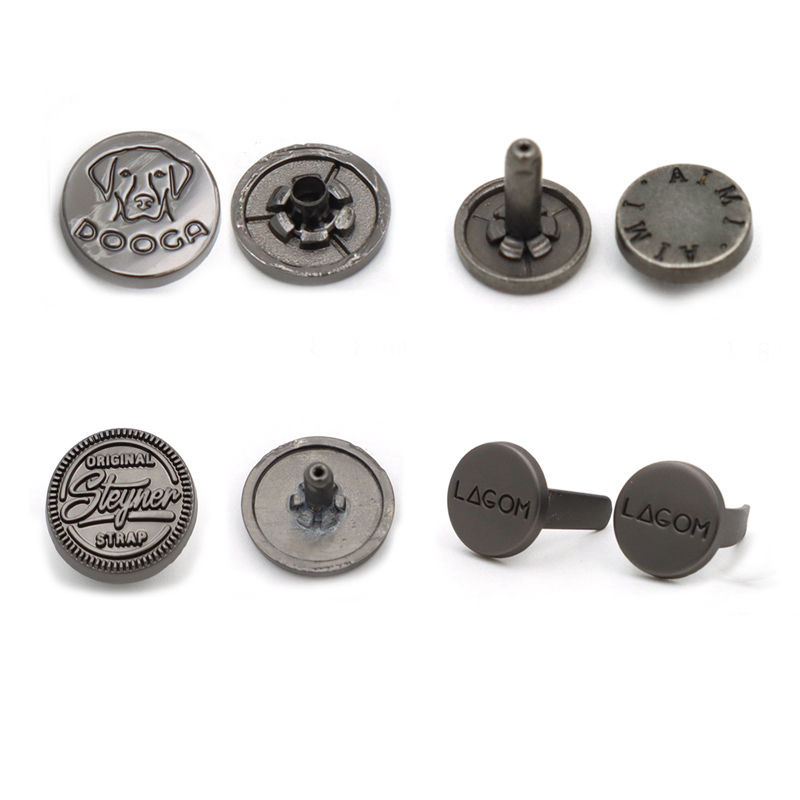
Premium custom buttons show uniform plating thickness (minimum 8–10 microns for metal buttons), no chipping at edges, and consistent color across every unit in a batch. Electroplating defects appear as dark spots, uneven shine, or exposed base metal.
Inspect under bright light at multiple angles. Factory-grade buttons often exhibit thin plating that wears through within 10–15 washes, while premium finishes withstand 50+ industrial wash cycles without degradation.
Colorfastness and UV Resistance
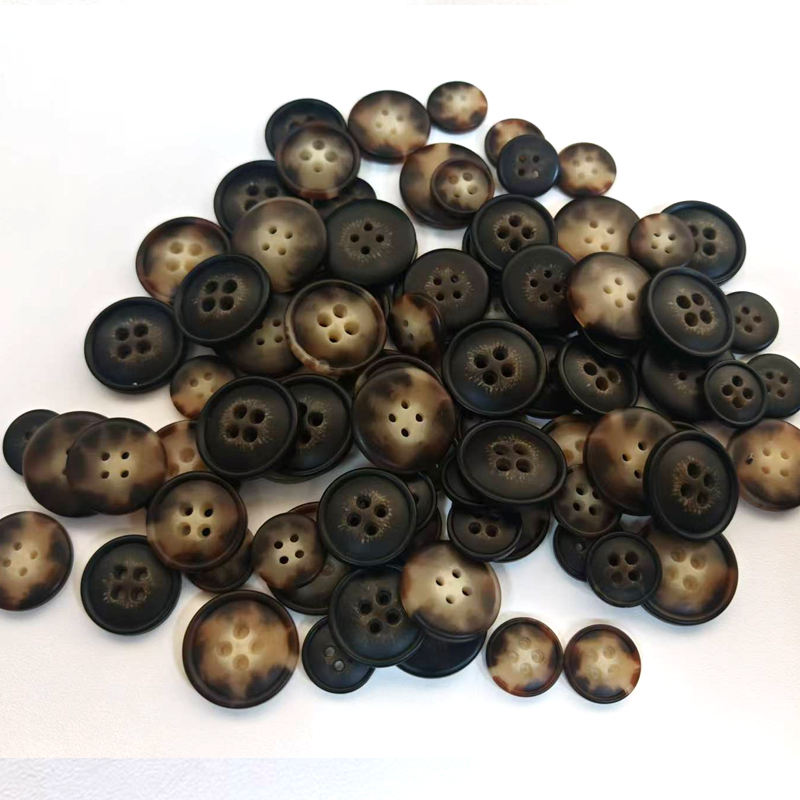
Custom buttons must pass ISO 105 colorfastness testing (minimum grade 4 for washing, grade 3–4 for light exposure) to prevent fading, color transfer to fabric, or yellowing under sunlight. Dyed resin and painted metal buttons are most vulnerable.
Request lab test reports or conduct a 48-hour UV lamp exposure test and hot water soak. Red flags include color bleeding onto white cloth, visible fading after brief sun exposure, or color variation between production batches.
Attachment Strength and Shank Integrity
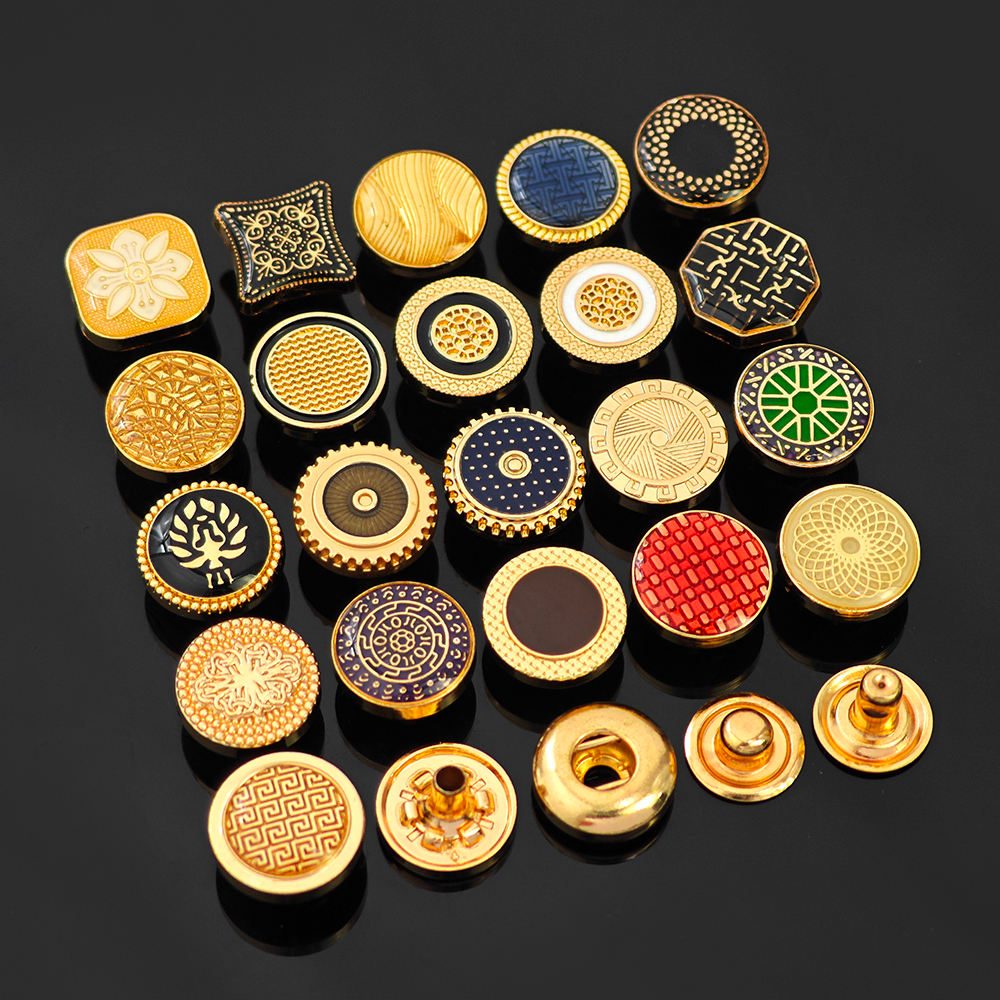
Shank buttons require minimum 15 kg pull force before breakage; sew-through buttons need thread holes that resist cracking under 10 kg tension. Weak shanks snap during garment handling, while brittle holes crack after repeated stress.
Perform pull tests with a spring scale or request third-party test certificates. Premium buttons use reinforced shank bases and chamfered hole edges to distribute stress, while low-grade buttons show visible cracks or thin shank necks prone to failure.
Dimensional Tolerance and Batch Consistency
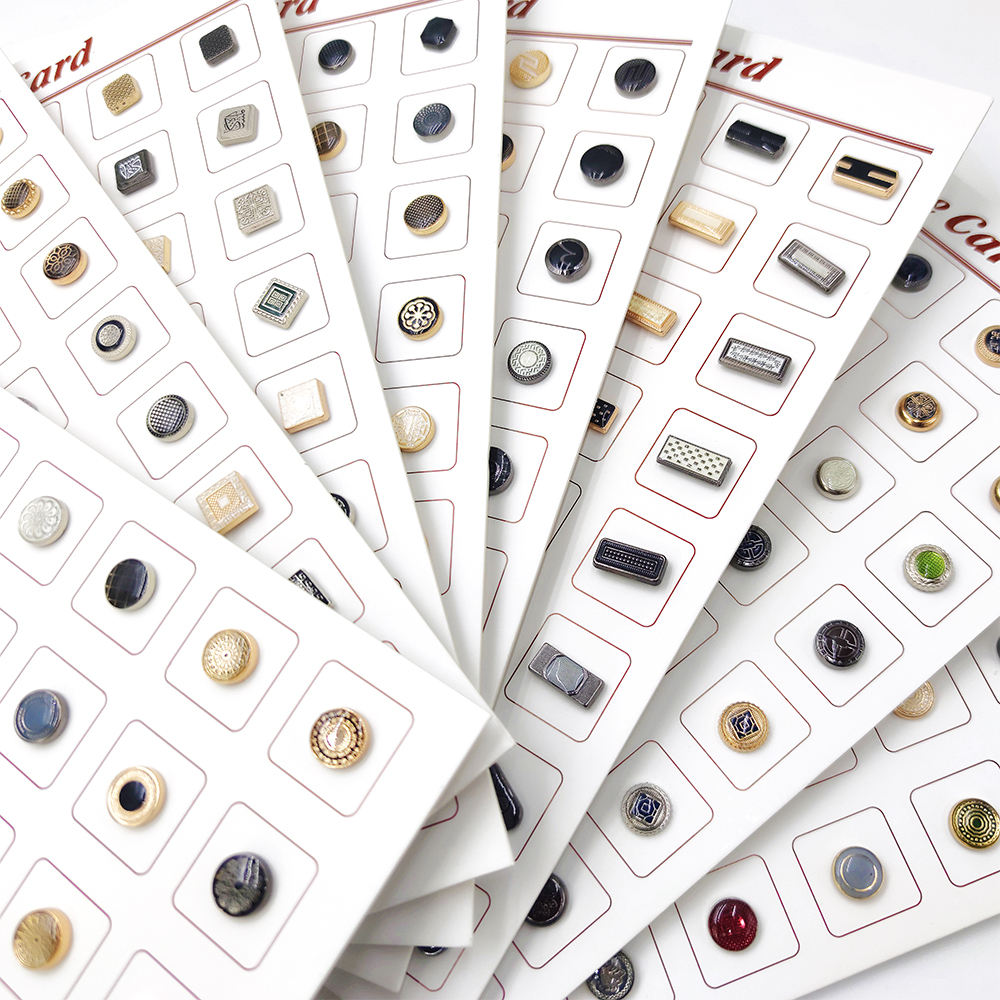
Button diameter must remain within ±0.3 mm across an entire production batch to ensure uniform garment appearance and automated buttonhole alignment. Thickness variation beyond ±0.2 mm causes presser foot problems during sewing.
Measure random samples with digital calipers from different cartons. Red flags include visible size differences when buttons are lined up, weight variation exceeding 5%, or buttons that don’t fit through standardized buttonhole templates for their stated size.
7. How to Choose the Right Custom Buttons Manufacturer
Selecting a custom buttons manufacturer requires evaluating six core criteria that directly impact product quality, speed, and cost. Use this scorecard to compare suppliers and identify partners who can scale with your brand.
MOQ Flexibility and Scalability
Ask suppliers for their minimum order quantity per style and color. ZORWILD starts at 50 pieces for many garment categories, enabling startups to test designs without inventory risk.
Confirm whether the factory can scale from 50-piece test runs to 5,000-unit reorders without changing production lines or pricing tiers. Factories with 100,000+ monthly capacity handle growth without delays.
Sampling Speed and Cost
Request turnaround times for first samples and revision rounds. Professional manufacturers deliver samples within 7–10 days and charge $30–$80 per sample depending on complexity.
Ask if sample fees are refundable against bulk orders and whether the factory provides digital mockups before physical sampling to reduce iteration cycles.
Decoration Capabilities In-House vs. Outsourced
Verify which decoration techniques — screen printing, embroidery, custom buttons, metal hardware — are completed in-house. In-house capabilities reduce lead times by 5–10 days and lower quality variation.
ZORWILD operates screen printing, DTG, embroidery, and garment wash facilities on-site, ensuring consistent quality control and faster turnaround than factories relying on subcontractors.
Quality Certifications
Request copies of OEKO-TEX, ISO 9001, WRAP, or BSCI certifications to confirm factory compliance with international safety and labor standards. Certified factories reduce audit risk for brands entering retail channels.
Communication and Design Support
Test response times and English proficiency during initial inquiries. Professional suppliers reply within 24 hours and provide tech pack templates, fabric swatches, and fit recommendations to streamline development.
Lead Times and Logistics
Clarify production lead times (typically 25–35 days for bulk orders) and ask if the factory arranges door-to-door shipping, export documentation, and customs support to simplify international logistics.
8. Common Mistakes Buyers Make with Custom Buttons
Custom buttons account for 3–7% of total garment production costs, yet sourcing mistakes can trigger delays, quality failures, and brand damage. ZORWILD has observed recurring pitfalls across 2,000+ client projects spanning startup brands to established labels. Understanding these errors helps buyers avoid costly rework and preserve production timelines.
Choosing Material Based on Price Alone
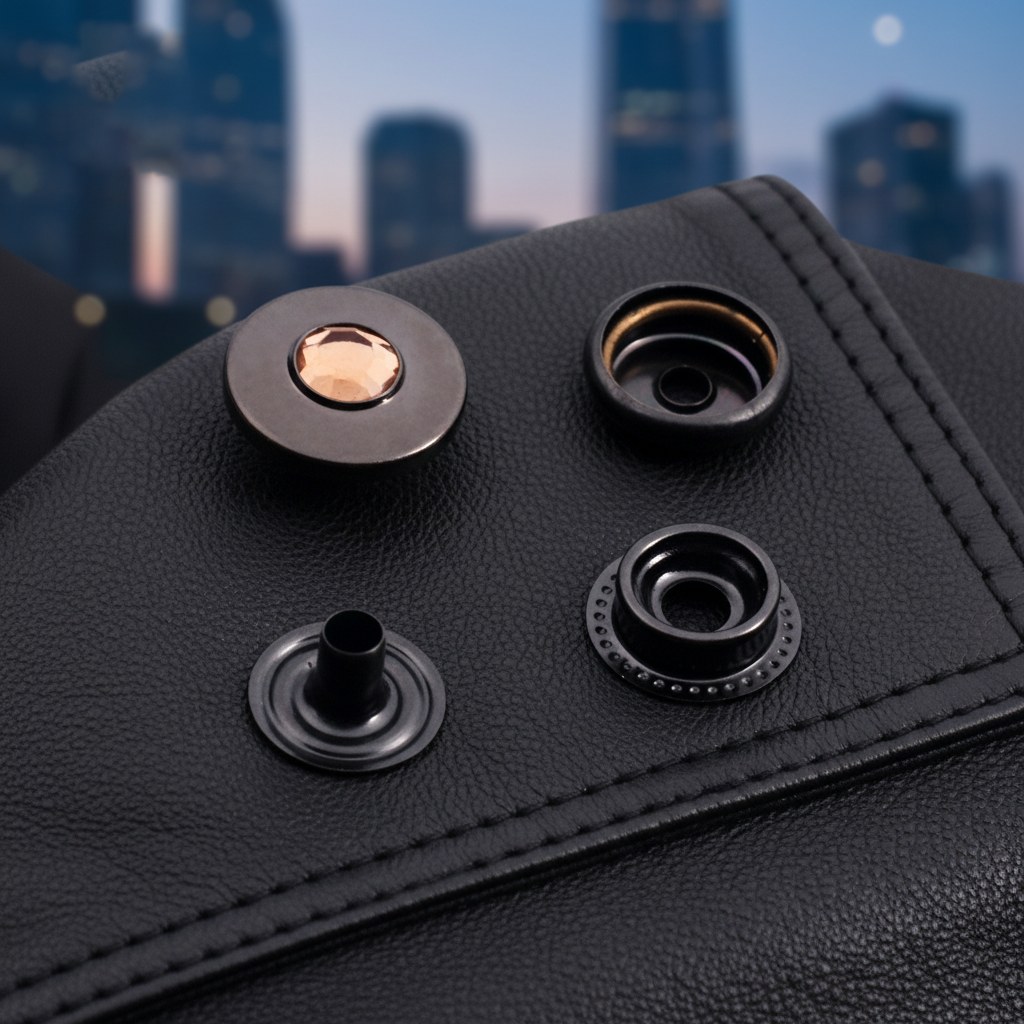
Buyers often select the cheapest button material without evaluating garment wash requirements. Acid wash, enzyme wash, and stone wash processes can crack resin buttons or tarnish zinc alloy hardware within 2–3 wash cycles.
ZORWILD recommends matching button material to finishing processes: corozo or polyester for acid wash collections, stainless steel or brass for heavy enzyme wash, UV-resistant resin for outdoor garments. A $0.02 price difference per button becomes irrelevant when 500-piece orders fail final inspection.
Skipping Physical Samples Before Bulk Orders
Approving custom buttons from photos or CAD renderings without physical samples leads to color mismatches, incorrect sizing, and finish discrepancies. Digital screens cannot convey texture, weight, or how metal finishes reflect under retail lighting.
ZORWILD provides physical button samples within 5–7 days for all custom tooling projects. Clients evaluate size against fabric weight, test color under daylight and LED, and confirm engraving depth before committing to 5,000–10,000 piece minimums for new molds.
Underestimating Lead Time for Custom Tooling
Custom engraved or embossed buttons require mold fabrication, adding 10–15 days to standard lead times. Buyers who assume stock button timelines miss product launch windows and seasonal retail deadlines.
ZORWILD’s production planning accounts for 7–10 days mold development, 3–5 days sampling, client approval time, then 15–20 days bulk production. Brands launching holiday collections should finalize button designs 60–75 days before shipment to absorb tooling cycles and potential revisions.
Ignoring Button Size Relative to Fabric Weight
Oversized buttons on lightweight fabrics cause sagging and buttonhole distortion; undersized buttons on heavyweight denim or wool create functional stress and premature failure. A 20 mm button suits 180–220 GSM shirting, while 400+ GSM outerwear requires 25–30 mm diameter.
ZORWILD’s development team cross-references fabric weight, garment category, and button diameter during tech pack review. Mismatched sizing identified at sampling prevents 500–1,000 piece production runs with unusable closures.
Failing to Specify Pantone or Finishes in Writing
Verbal descriptions like ‘antique gold’ or ‘matte black’ vary across suppliers and production batches. Without written Pantone references or finish codes, buyers receive buttons that clash with brand palettes or differ between reorders.
ZORWILD requires clients to specify Pantone TPX codes for color matching and finish terms (brushed nickel, polished brass, matte powder coat) in purchase orders. Written specifications become the quality standard for in-line inspection and ensure consistency across multi-season production.
9. Pricing and Cost Structure for Custom Buttons
Custom button pricing is driven by three primary factors: material and finish selection, decoration complexity, and order quantity. Metal buttons with laser engraving typically cost 0.15–0.45 USD per unit at 500-piece volumes, while injection-molded plastic buttons with printed logos range from 0.08–0.25 USD per unit. Setup costs for standard shapes start at 50–150 USD for screen printing or laser setup, but custom mold tooling for unique button shapes can add 300–800 USD in one-time fees that amortize across larger production runs.
Order quantity dramatically impacts unit economics through setup cost distribution. A 50-piece order of engraved metal buttons may cost 0.80 USD per unit due to fixed setup allocation, whereas 5,000 units drop to 0.18 USD per unit with the same decoration method. Lead times compress at higher volumes as production efficiency improves—small batches require 12–18 days including sampling, while orders above 3,000 units often complete in 10–14 days once approved.
Decoration complexity adds measurable cost layers. Single-color screen printing on resin buttons costs approximately 0.05–0.10 USD per unit, while four-color designs or metallic foil applications increase decoration fees by 40–70 percent. Deep laser engraving on zinc alloy buttons adds 0.08–0.12 USD compared to surface etching. Startup brands should budget 400–800 USD for initial sampling and first production runs of 200–500 units, while established brands ordering 5,000+ units benefit from per-unit costs below 0.20 USD across most material and decoration combinations.
| Button Type | 50 Units Price/Unit | 500 Units Price/Unit | 5,000 Units Price/Unit | Setup Cost | Lead Time |
|---|---|---|---|---|---|
| Laser-Engraved Metal | $0.80 | $0.28 | $0.18 | $80–120 | 12–16 days |
| Printed Plastic/Resin | $0.45 | $0.15 | $0.09 | $50–90 | 10–14 days |
| Embossed Zinc Alloy | $0.95 | $0.35 | $0.22 | $100–150 | 14–18 days |
| Multi-Color Printed Metal | $1.10 | $0.42 | $0.25 | $120–180 | 15–20 days |
10. Steps to Launch Your Brand with Custom Buttons
Launching a brand with custom buttons demands a structured six-step workflow that aligns design intent, material selection, and production timelines. ZORWILD’s 27 years of manufacturing experience support brands from 50-piece pilot runs to 100,000-unit monthly capacity, ensuring scalability at every stage.
Define Your Brand Aesthetic and Button Role
Clarify whether custom buttons serve functional closure, decorative accent, or signature branding elements. Map button placement, size (10 mm to 40 mm), and color palette to your overall collection identity.
Deliverables include mood boards, tech pack annotations, and reference samples. Timeline: 2–3 days for internal alignment before engaging manufacturers.
- Identify button function: closure, decorative detail, or brand signature
- Specify diameter, shape (round, square, novelty), and finish preferences
- Align color with Pantone codes or fabric swatches for consistency
Select Material and Decoration Method
Cross-reference Section 4 material options—metal, resin, shell, wood—with your budget and aesthetic. Match decoration techniques from Section 5 (laser engraving, enamel fill, embossing) to logo complexity and production volume.
Deliverables: material spec sheet and decoration mockup. Timeline: 1–2 days to finalize technical requirements with your manufacturer.
- Choose base material: zinc alloy for durability, resin for color variety, shell for luxury
- Select decoration: laser engraving for detail, enamel for color, embossing for texture
- Confirm finish: matte, polished, antique, or plated options
Request and Evaluate Samples
Order physical samples to verify color accuracy, engraving depth, attachment strength, and finish quality. ZORWILD’s low MOQ sampling (often 10–50 pieces) reduces risk for startups and influencer brands.
Deliverables: 3–5 sample buttons with attached fabric swatches. Timeline: 5–7 days for sample production, 3–5 days for international shipping.
- Inspect color match under natural and artificial light
- Test shank or hole attachment on target fabric weight
- Evaluate engraving clarity and enamel edge definition
Finalize Artwork and Specifications
Lock vector artwork (AI or EPS format), Pantone codes, button diameter, shank type, and finish. Confirm quantity per garment and total order volume. Reference Section 7 manufacturer selection criteria to ensure supplier capacity.
Deliverables: approved tech pack, artwork files, and purchase order. Timeline: 1–2 days for final approvals before production kickoff.
- Submit vector logo files at 300 DPI minimum resolution
- Specify shank diameter (2 mm or 3 mm) and positioning
- Confirm packaging: bulk bags, cards, or branded boxes
Place Pilot Order and Test In-Market
Start with 50–200 units to validate customer response, attachment durability, and wash performance. ZORWILD’s 50-piece MOQ allows influencers and small brands to test capsule collections without excess inventory risk.
Deliverables: pilot batch with QC report. Timeline: 10–15 days production, 5–7 days shipping. Allocate 2–4 weeks for market feedback.
- Monitor customer feedback on button aesthetics and functionality
- Test wash cycles (5–10 washes) for color fastness and shank integrity
- Track return rates and quality issues before scaling
Scale and Manage Inventory
Transition to bulk orders (500–5,000+ units) once pilot data confirms demand. Negotiate lead times (15–25 days typical) and stagger orders to match seasonal launches. Maintain 10–15% buffer stock for restocks and quality replacements.
Deliverables: production schedule, inventory forecast, and reorder triggers. Timeline: ongoing, with quarterly reviews to optimize cost and lead time.
Ready to Add Custom Buttons to Your Next Collection?
Get your custom button samples and quote today. Low MOQ from 50 pieces, six-stage quality control, 95%+ decoration techniques in-house, and 27 years of custom apparel manufacturing expertise serving 2,000+ global brands.
- Custom Dresses
- Custom Sweatshirts
- Custom Polo Shirts
- Custom Shorts
- Contact