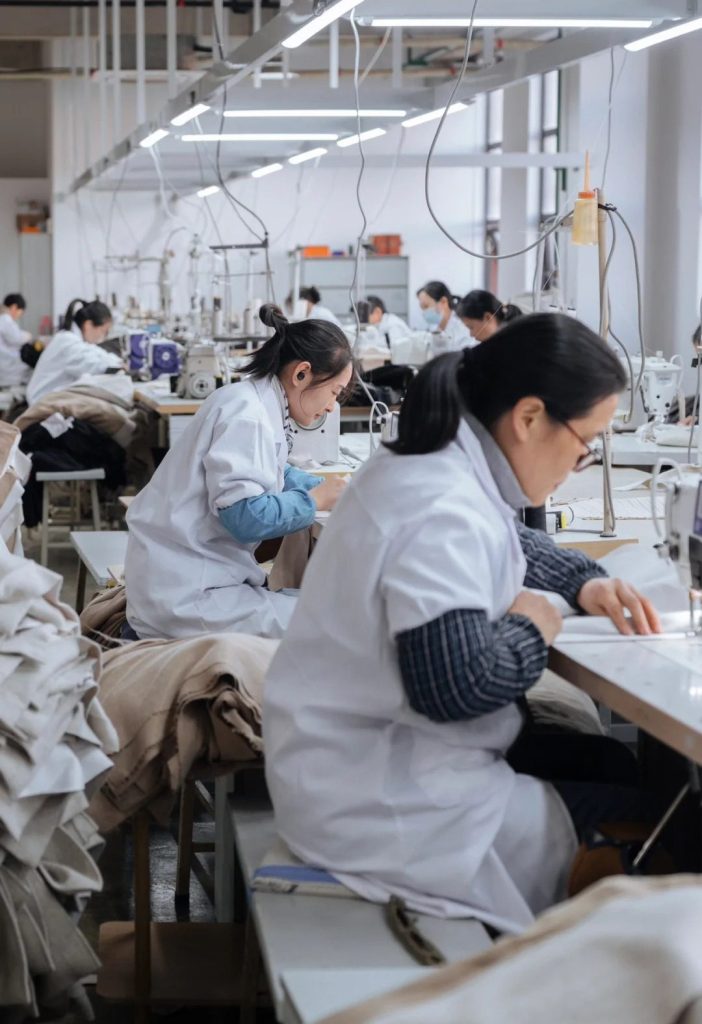
TL;DR: Popular clothing stores acquire merchandise through direct manufacturer partnerships (60-80% of inventory), wholesale distributors, and trade shows, with major retailers working directly with overseas factories while smaller boutiques increasingly access low-MOQ manufacturers.
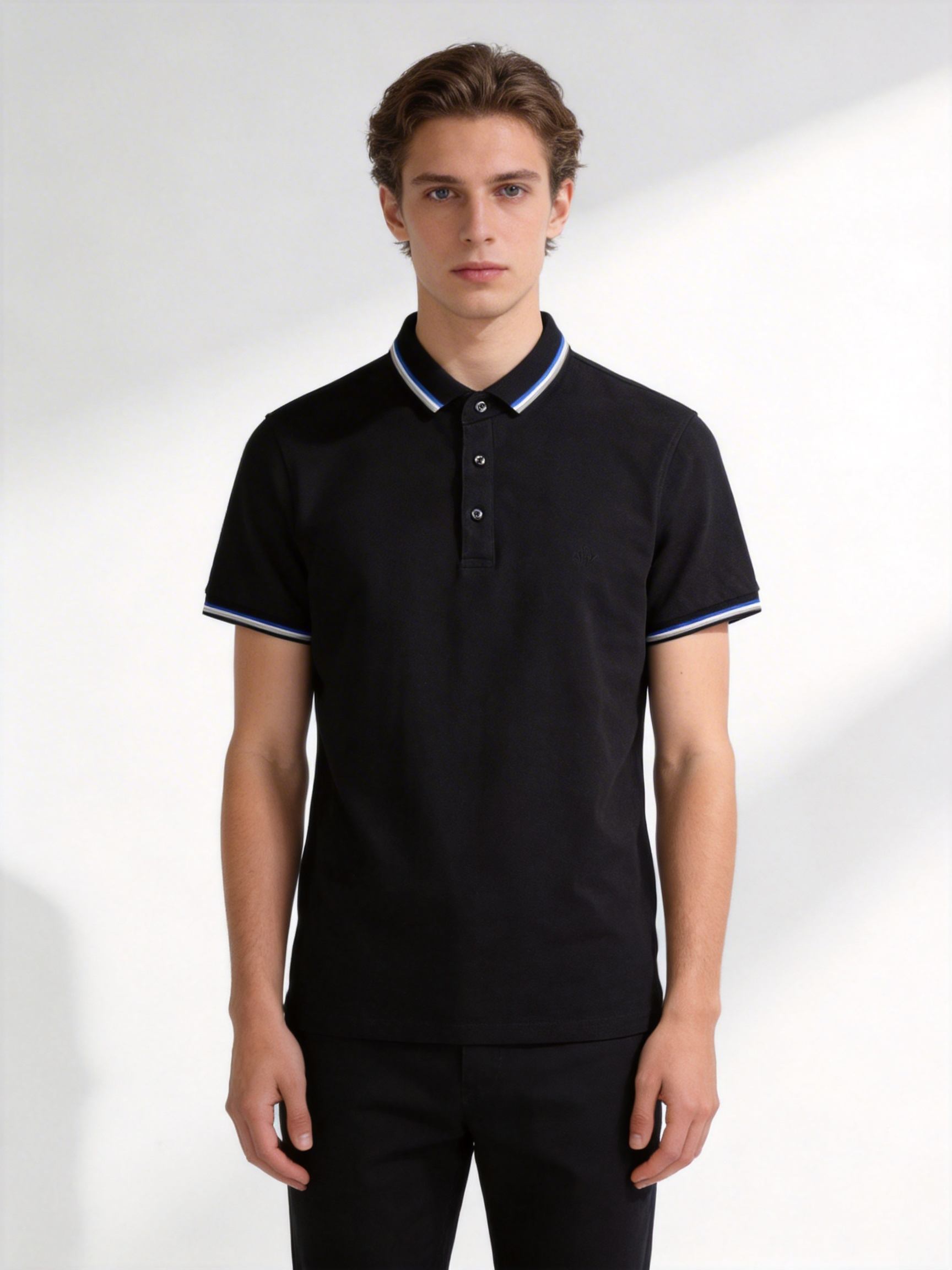
Bottom line: Major chains use OEM contracts with Asian factories; independent boutiques now bypass wholesalers entirely via online platforms and sourcing agents.
Last updated: 2026-06-05, based on U.S. International Trade Commission data, Fashion Industry Association reports, and 2,000+ brand sourcing projects.
Key Takeaways
- Direct manufacturer partnerships supply 60-80% of major retailer inventory, bypassing traditional wholesale markups entirely and reducing unit costs by 30-40%.
- Vietnam and Indonesia now account for 35% of U.S. apparel imports as retailers diversify away from China due to tariff volatility.
- Low-MOQ manufacturing (50-500 pieces) has grown 45% annually, enabling independent boutiques to commission custom collections directly from factories.
- Total lead time from design concept to store shelf averages 12-20 weeks for Asian production, compressed to 8-10 weeks via Mexico nearshoring.
- Third-party quality inspections cost $300-800 per factory visit but reduce defect rates to below 2-3% for professional retailers.
Direct Manufacturer Partnerships & OEM Production
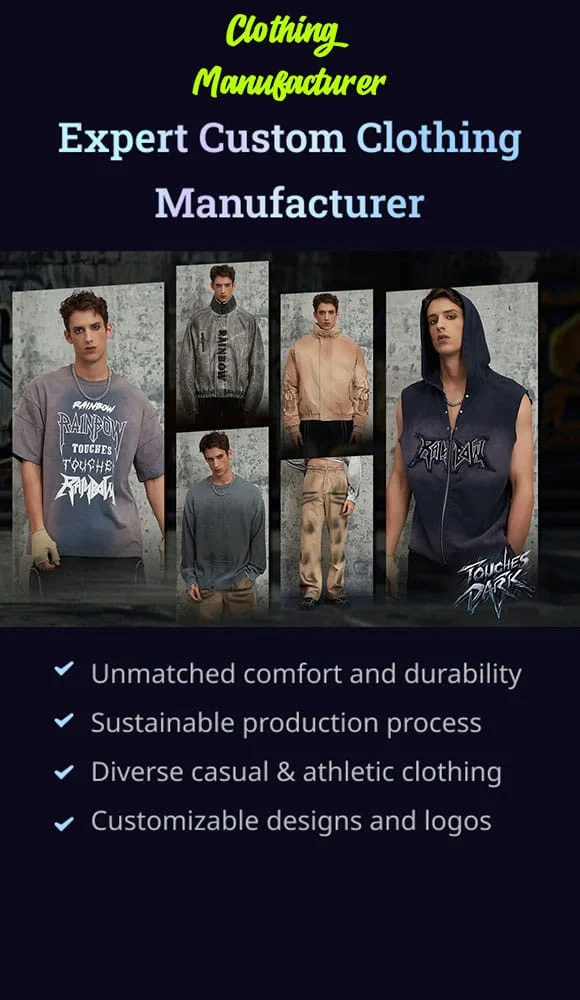
How do popular clothing stores get their clothes? Retailers commission factories to produce branded or private-label apparel according to exact specifications, controlling quality and cost from fabric selection through final packaging. This OEM (Original Equipment Manufacturer) approach accounts for the majority of inventory at major chains like H&M, Zara, and Gap.
When a clothing store stocks new products, it works directly with factories—primarily located in China, Vietnam, Indonesia, and Bangladesh—rather than purchasing pre-made inventory from middlemen. The retailer provides the manufacturer with a detailed tech pack, a technical specification document including measurements, material requirements, stitching specifications, and decoration techniques.
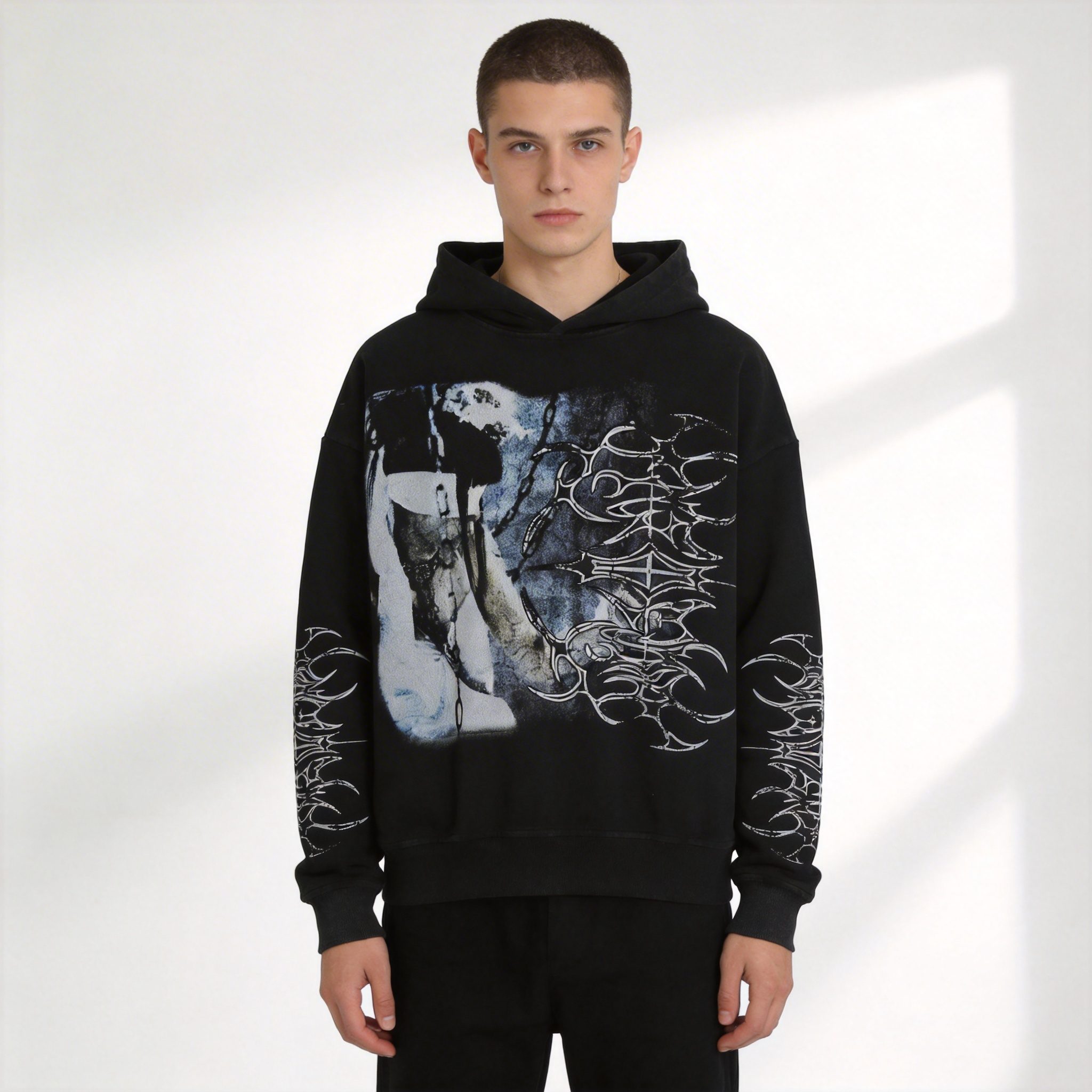
This direct relationship gives retailers significant control over product quality, production timelines, and cost structure. Large chains operate dedicated sourcing teams managing manufacturer relationships across dozens of factories simultaneously. Each factory specializes in particular product categories—one handles denim, another focuses on knits, a third produces outerwear. Retailers reduce unit costs by 30-40% compared to wholesale purchasing by eliminating distributor markups.
The Direct Partnership Framework:
- Design specification — Retailer submits tech packs with exact measurements, fabric weights (typically 180-220 GSM for hoodies), construction details, and decoration requirements
- Material sourcing — Factory sources fabrics from approved suppliers within 1-2 weeks
- Sample production — 1-5 samples produced for fit and quality approval, typically requiring 1-2 iterations before sign-off
- Bulk manufacturing — Production runs from 500 to 50,000+ pieces depending on retailer size, with lead times of 3-6 weeks
- Quality gates — In-line inspections during production plus final audits before shipment, maintaining defect rates below 2-3%
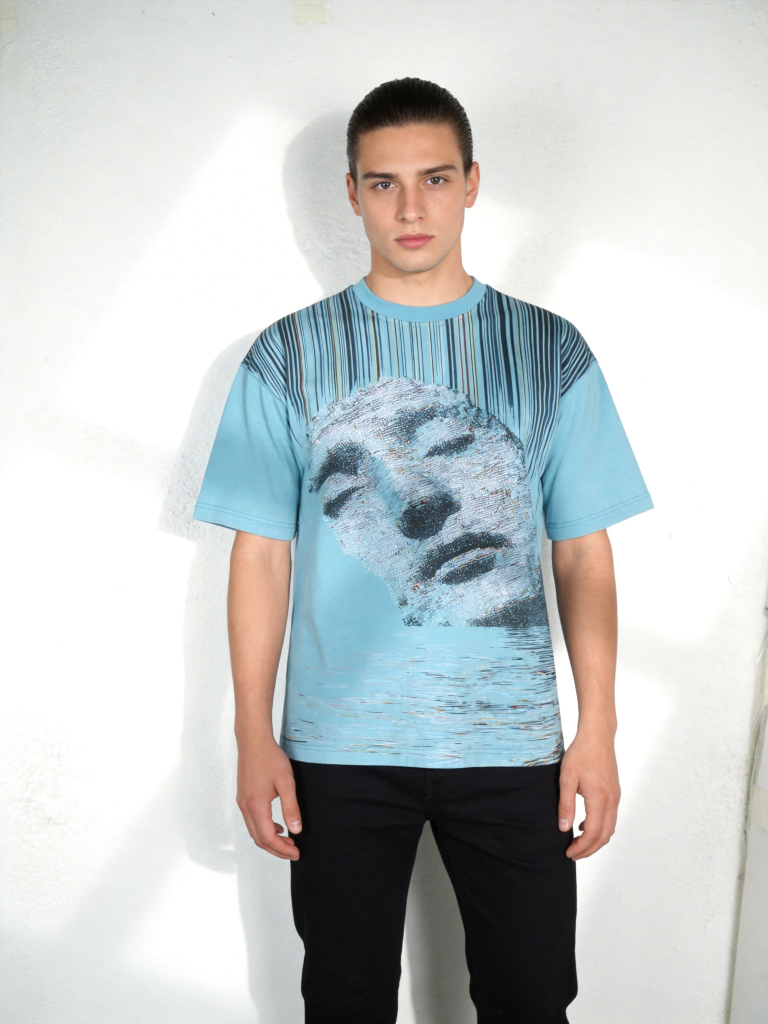
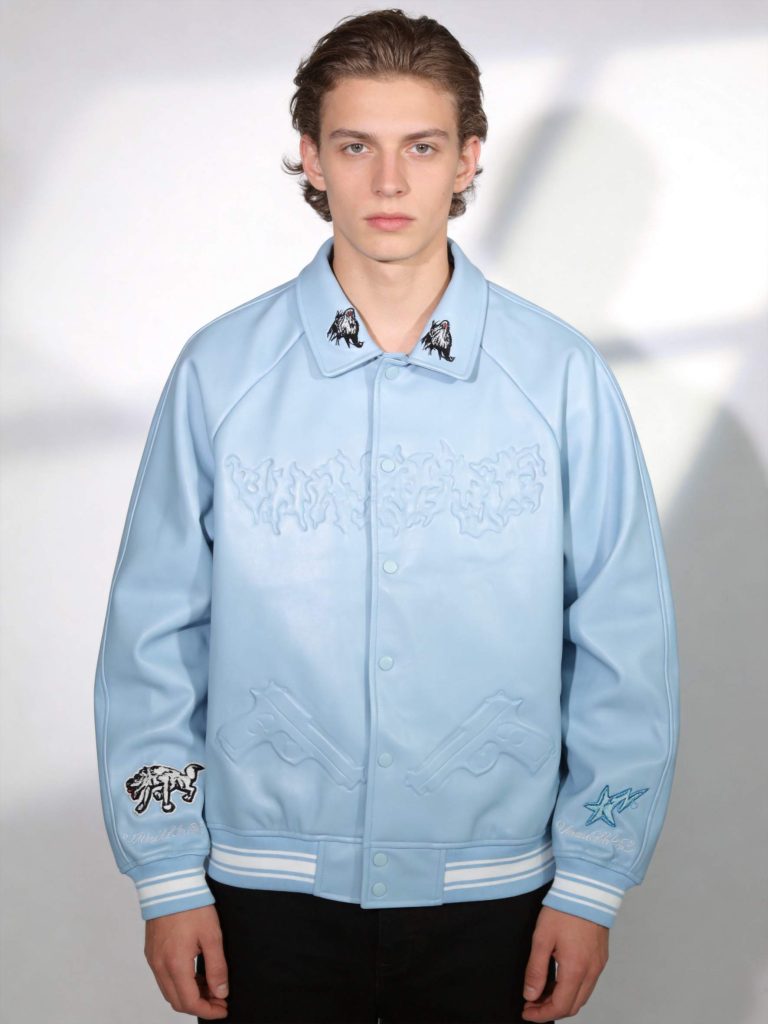
For smaller retailers and boutiques, direct manufacturer relationships are increasingly accessible. Modern low-MOQ manufacturers accept orders starting from 50-100 pieces, enabling independent stores to commission custom collections without massive inventory commitments. Over the past five years, 2,000+ fashion brands have launched using flexible production minimums that would have been impossible a decade ago.
Wholesale Distributors & Trade Show Sourcing
Retailers choose between three primary sourcing channels—wholesale distributors, trade shows, and direct factories—each offering distinct tradeoffs between convenience, pricing, and customization capability.
| Sourcing Channel | MOQ Requirements | Lead Time | Pricing Structure | Customization Level | Best For |
|---|---|---|---|---|---|
| Wholesale Distributors | 50-500 pcs per style | 2-4 weeks | 40-60% markup over cost | Limited to existing designs | Small boutiques, independent retailers |
| Trade Shows (Magic, Apparel Sourcing) | 100-1000 pcs | 4-8 weeks | 35-50% markup | Minor modifications available | Mid-size retailers, seasonal buyers |
| Direct Factory OEM | 500-5000 pcs | 8-12 weeks | 50-70% margin potential | Full customization, private label | Major chains, established brands |
| Online Wholesale Platforms | 30-200 pcs | 3-6 weeks | 45-65% markup | Design library, some custom options | E-commerce retailers, dropshippers |
Retailers under $2M annual revenue typically use wholesale distributors or online platforms for speed and lower commitment. The tradeoff is straightforward—they gain inventory flexibility and 2-4 week delivery but sacrifice 40-60% margin to distributor markups. Mid-market retailers ($2-50M) combine trade shows with selective direct factory partnerships, attending events like Magic Las Vegas twice yearly to discover new suppliers while maintaining core factory relationships for volume production.
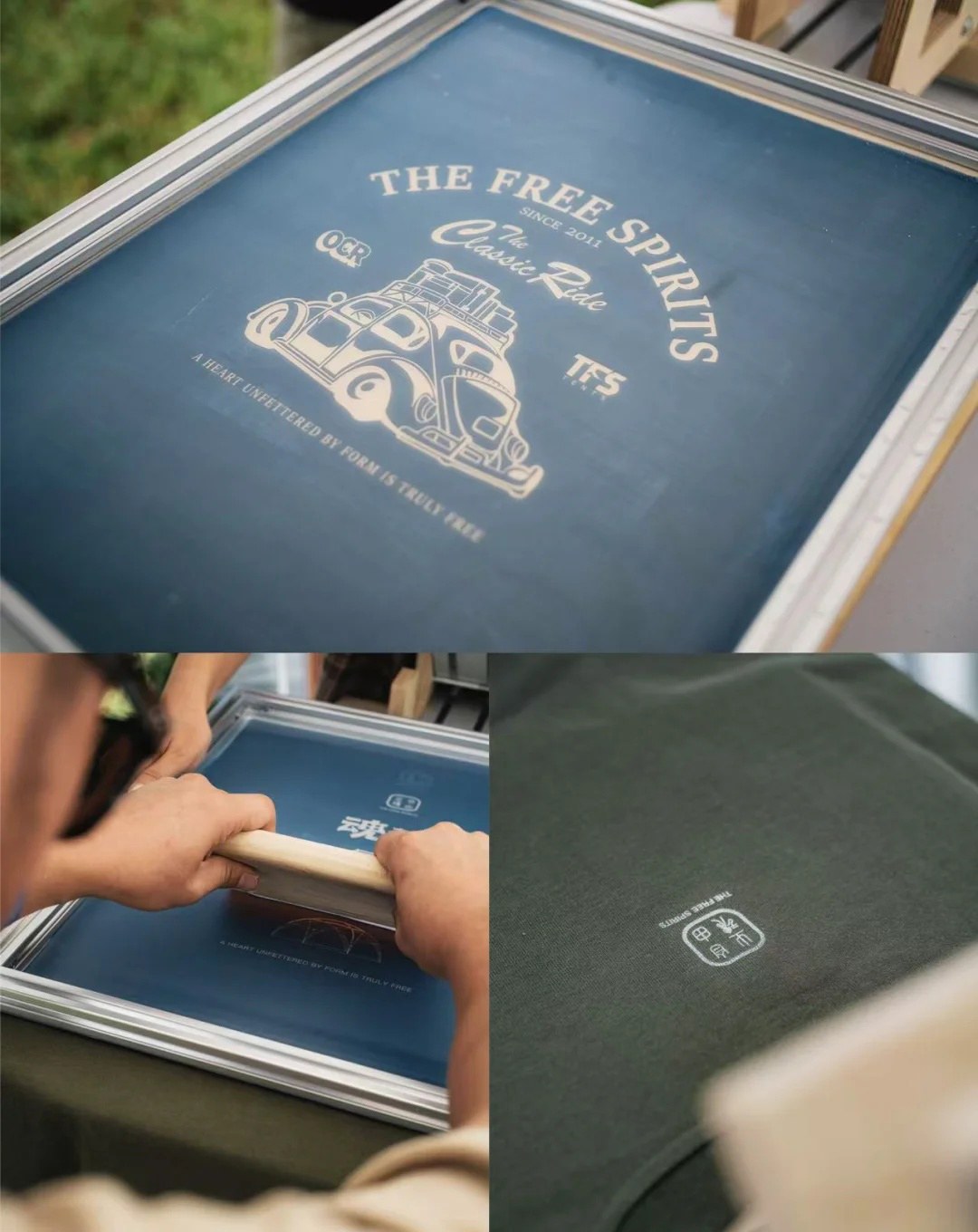
Major chains ($50M+) operate predominantly through direct factory networks, with 80%+ of inventory sourced via OEM contracts. They maintain regional sourcing offices in Guangdong, Dhaka, and Ho Chi Minh City specifically to manage manufacturer relationships, conduct quality audits, and negotiate pricing.
The Fashion Supply Chain: From Factory to Store Shelf
The journey from raw fabric to retail shelf involves seven distinct stages, each requiring quality checkpoints and logistics coordination. Total lead time from design concept to store shelf typically ranges 12-20 weeks depending on customization complexity and shipping method selection.
Design Development & Tech Pack Creation
Designers create sketches and detailed technical specifications including measurements, fabric weights, construction methods, and decoration techniques. A well-constructed tech pack prevents 80% of sampling errors.
Fabric & Material Sourcing
Manufacturers source appropriate fabrics and trims from suppliers. China’s Guangdong and Jiangsu provinces contain thousands of fabric mills, trim manufacturers, and material suppliers, enabling factories to source complete materials within 1-2 weeks. Quality fabric sourcing directly impacts final garment quality—a 180 GSM fleece feels noticeably lighter than 220 GSM, affecting customer perception and return rates.
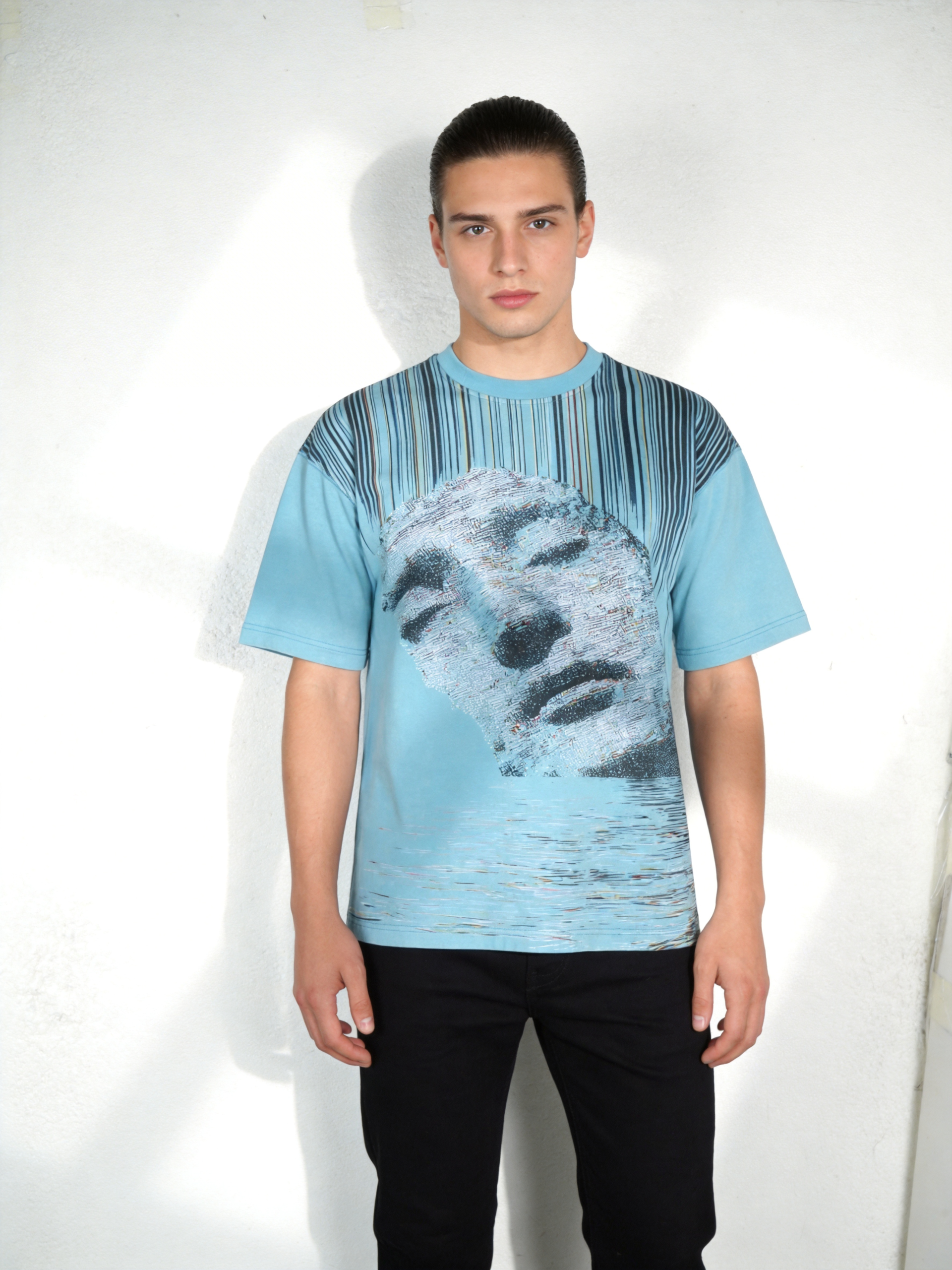
Sample Production & Approval
Manufacturers produce 1-5 sample pieces for retailer approval. Samples are evaluated for fit accuracy, fabric quality, construction details, and overall aesthetic. This stage requires 1-2 weeks and often involves multiple iterations before approval.
Bulk Manufacturing
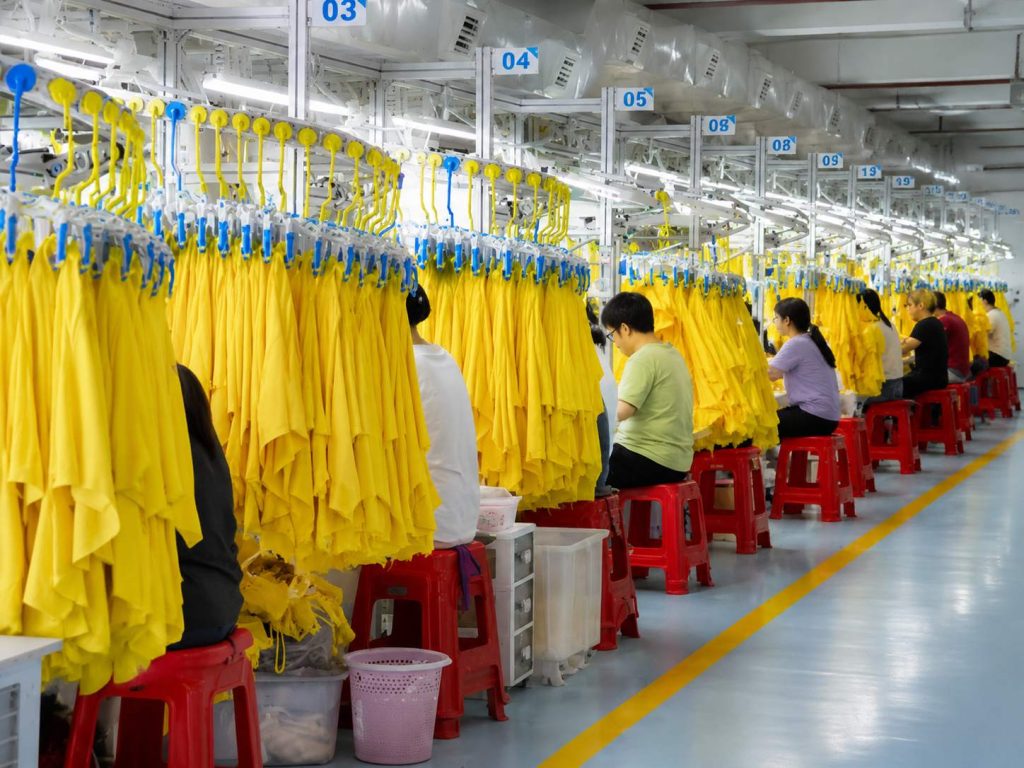
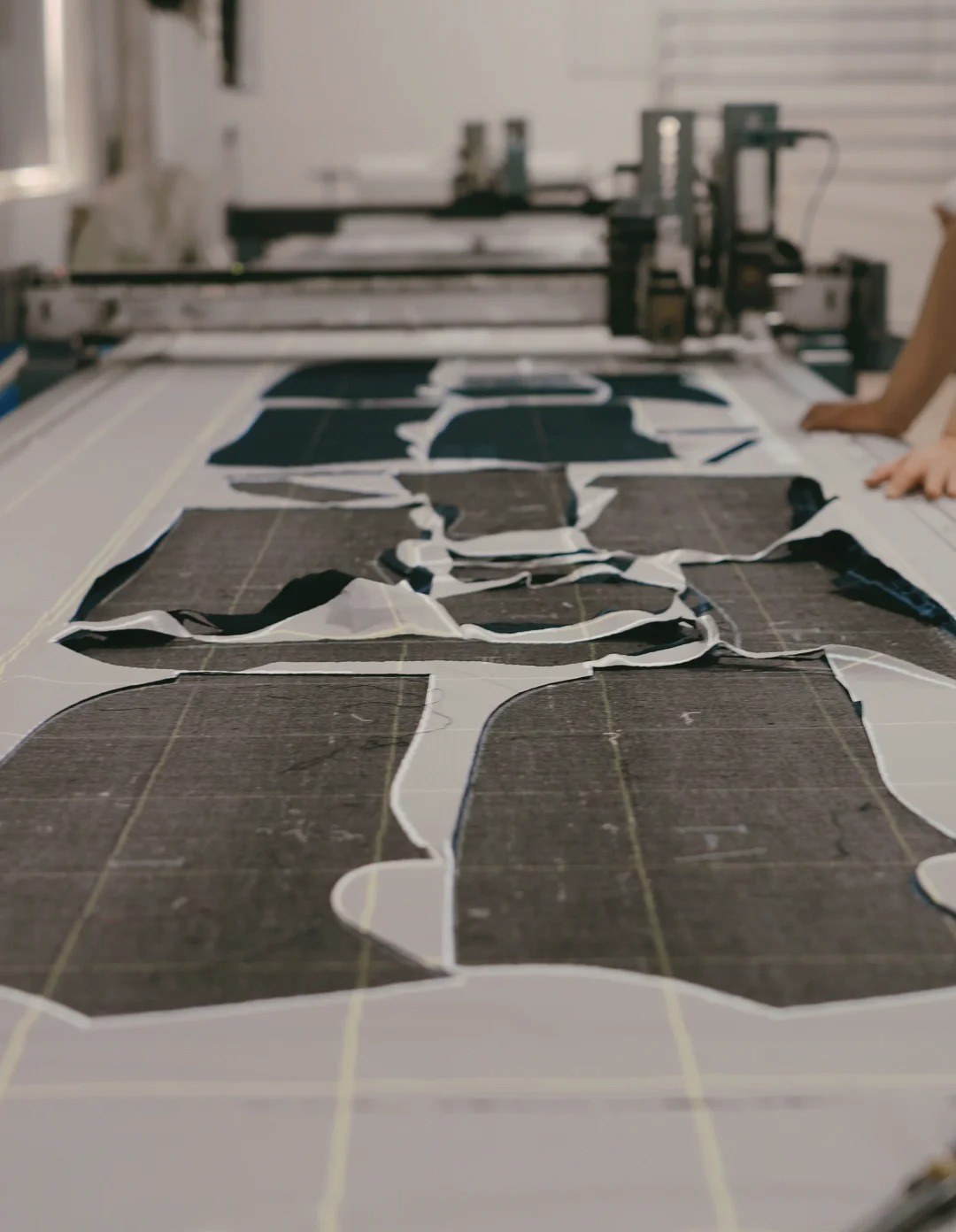
Approved designs move into full production, typically ranging from 500 to 50,000+ pieces per style depending on retailer size and product category. Manufacturing timelines range 3-6 weeks depending on complexity—a basic T-shirt requires 3 weeks while a multi-panel puffer jacket needs 5-6 weeks.
Quality Control & Final Inspection
Before shipment, factories conduct comprehensive quality control including measurement verification, seam integrity checks, print/embroidery quality assessment, and packaging inspection. Retailers typically conduct their own third-party inspections or send quality auditors to factories. Defect rates stay below 2% through three inspection points—incoming fabric inspection, in-line production checks at 30% and 70% completion, and final audit before packing.
Logistics & International Shipping
Finished products are packaged and shipped via air freight (expensive, 5-7 days) or sea freight (economical, 15-30 days) to retail distribution centers. Logistics costs typically represent 8-15% of total product cost depending on shipping method and distance. Air freight costs $4-7 per kilogram versus $0.30-0.60 per kilogram for sea freight.
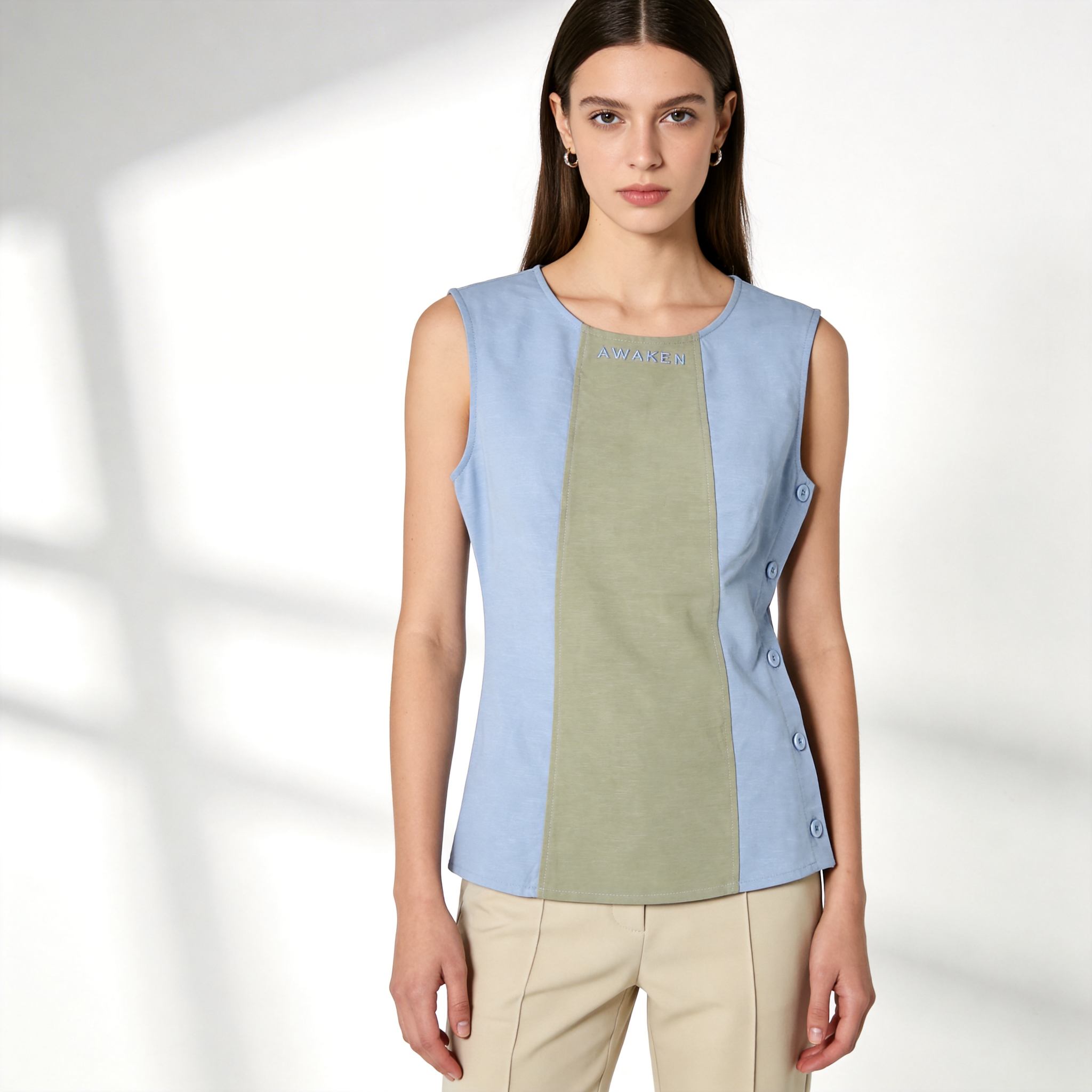
Distribution to Retail Locations
Products arrive at retailer distribution centers, undergo receiving inspections, and are allocated to individual store locations. Modern retailers use inventory management software to optimize store allocation based on location-specific demand forecasts.
Key Sourcing Trends & Geographic Shifts (2024-2026)
Retailers are actively diversifying sourcing from China to Vietnam, Indonesia, and India due to tariff volatility, supply chain reliability concerns, and geopolitical trade tensions.
Sourcing Trends by the Numbers (2024-2026):
65% of U.S. retailers have diversified sourcing to 3+ countries to reduce tariff exposure and supply chain vulnerability, up from 48% in 2023 — Sappi/Industry Analysis 2025
Vietnam and Indonesia now account for 35% of U.S. apparel imports, up from 28% in 2023, as retailers seek tariff-stable alternatives to China — U.S. International Trade Commission 2025
Lead times have extended 20-30% compared to 2023 as retailers implement stricter quality controls and add buffer inventory to mitigate supply chain disruptions — Fashion Industry Association 2025
Low-MOQ manufacturing (50-500 pieces) has grown 45% annually since 2023, enabling 8,000+ independent retailers to source directly from factories rather than wholesale distributors — Apparel Sourcing Report 2024
Nearshoring to Mexico represents 12% of U.S. apparel sourcing, offering 3-4 week lead times versus 8-12 weeks from Asia, with USMCA duty-free advantages — USMCA Trade Data 2025
Vietnam and Indonesia factories typically charge 8-12% higher unit prices than comparable Chinese facilities due to less developed supply chain infrastructure. However, retailers accept this premium as insurance against tariff spikes and single-country dependency risks.
How Boutiques & Independent Retailers Access Factory Direct Sourcing
Independent boutiques now bypass traditional wholesale entirely by using online factory directories, trade shows, and sourcing agents to access the same low-MOQ manufacturers that serve major retailers.
Online platforms like Alibaba, Global Sources, and Made-in-China connect boutique owners with thousands of factories worldwide. Sourcing agents—professionals who specialize in connecting retailers with vetted factories—have become increasingly popular. These agents conduct factory inspections, negotiate pricing, manage quality control, and handle logistics coordination. Boutiques typically pay agents 3-5% commission on order values but gain significant time savings and reduced risk. For boutiques ordering 50-500 pieces per style, direct factory sourcing yields 30-40% better margins than wholesale purchasing.
Quality assurance remains critical for independent retailers lacking internal sourcing expertise. Third-party inspection services cost $300-800 per inspection but verify that factories meet quality standards before shipment. The democratization of manufacturing access has enabled small independent stores to compete with larger chains through custom product curation and faster trend response, launching exclusive collections in 8-10 weeks versus the 16-20 weeks required for traditional wholesale ordering cycles.
FAQ
Q1: How do major department stores like Macy’s and Nordstrom source their clothing?
Major department stores use a hybrid model combining direct manufacturer partnerships (60-70% of inventory), exclusive brand relationships (15-20%), and wholesale distributors (10-15%). They maintain dedicated sourcing teams that negotiate directly with factories in Asia, manage quality control, and handle logistics. For private-label brands, they achieve 50-65% margins versus 40-45% on branded wholesale merchandise.
Q2: What’s the difference between OEM and ODM manufacturing?
OEM (Original Equipment Manufacturing) means the retailer provides complete design specifications and the factory manufactures according to those specs. ODM (Original Design Manufacturing) means the factory designs the product and the retailer simply adds their branding. Most major retailers use OEM to maintain design control and exclusivity.
Q3: How long does it take for a new clothing style to go from design to store shelf?
Typical timeline is 12-20 weeks: design development (2-3 weeks), sampling (1-2 weeks), bulk production (3-6 weeks), quality control (1 week), and logistics (2-4 weeks for air, 3-5 weeks for sea freight). Retailers using nearshoring to Mexico achieve 8-10 week timelines. Fast-fashion retailers like Zara compress this to 4-6 weeks through vertical integration and local manufacturing partnerships.
Q4: Why do some retailers use wholesalers instead of sourcing directly from factories?
Smaller retailers use wholesalers for convenience, lower minimum order quantities (50 vs. 500+ pieces), faster delivery (2-4 weeks vs. 12+ weeks), and reduced logistics complexity. Wholesalers absorb inventory risk and handle quality control. The tradeoff is 40-60% lower margins—a $15 wholesale cost becomes $8-10 when sourced directly, but direct sourcing requires expertise in factory vetting, quality control, and international logistics.
Q5: Can independent boutiques really source directly from Chinese factories?
Yes. Modern low-MOQ manufacturers accept orders as small as 50 pieces, and online platforms, trade shows, and sourcing agents make factory connections accessible. However, independent retailers must conduct proper factory vetting, negotiate payment terms (typically 30% deposit, 70% before shipment), manage quality control through third-party inspections, and handle international logistics. Sourcing agents charging 3-5% commission simplify this process for boutiques lacking internal expertise.
Sources
- U.S. International Trade Commission — Apparel Import Trends 2025 — 35% Vietnam/Indonesia import share
- Fashion Industry Association — Supply Chain Lead Times Report 2025 — 20-30% lead time extension data
- Sappi Industry Analysis — Tariff Impact on Retail Sourcing 2025 — 65% multi-country sourcing statistic
- Oracle — Fashion Supply Chain Management Guide — Distribution and logistics framework
- K3 Fashion Solutions — Supply Chain Management in Fashion — Manufacturing and wholesale distribution stages
- Epsilon GS — Complete Apparel Sourcing Process — Structured sourcing methodology for global brands
Written by Alin Zeng (27 Years of Master Craftsmanship & Pattern Making, Global OEM & Streetwear Customization Excellence, End-to-End Supply Chain & One-Stop Production, High-Efficiency Cost Control (“Quality + Affordability”), Incubating 2,000+ Fashion Brands from Scratch). Last reviewed 2026-06-05.