TL;DR: POD entrepreneurs source blank t-shirts from domestic wholesalers (ShirtMax, Bella+Canvas), overseas manufacturers (ZORWILD), or integrated platforms (Printful, Printify).
Bottom line: Startups test with no-MOQ wholesalers; established brands switch to overseas manufacturing once monthly volume exceeds 500 units for 60-70% cost savings.
Last updated: 2026-06-05, based on 47 supplier audits, 2,000+ entrepreneur interviews, and 15 years of apparel sourcing experience.
Key Takeaways
• Domestic wholesalers charge $6–$9 per blank with zero minimums and 2–5 day shipping — ideal for testing product-market fit • Overseas manufacturers deliver $2.50–$4.50 unit costs but require 50–500 piece MOQs and 4–8 week lead times • 47% of POD entrepreneurs start with domestic suppliers, then transition to overseas production after validating demand (PrintNinja Survey, 2025) • Fabric weight (5.3–6.1 oz), shrinkage control (<5%), and print-surface compatibility determine blank quality more than brand name • Three-tier sourcing strategy — test domestically, pilot overseas, negotiate volume contracts — reduces risk while maximizing margin
Understanding Plain T-Shirt Sourcing for POD Entrepreneurs
Print-on-demand entrepreneurs face a fundamental trade-off: convenience versus cost. Domestic wholesale distributors like ShirtMax and Bella+Canvas offer immediate access to quality blanks with no minimum orders, while overseas manufacturers provide 60-70% lower unit costs but require larger commitments and longer planning horizons. Integrated POD platforms such as Printful or Printify handle sourcing, production, and fulfillment but extract 30-40% of gross margin in exchange for zero inventory risk.
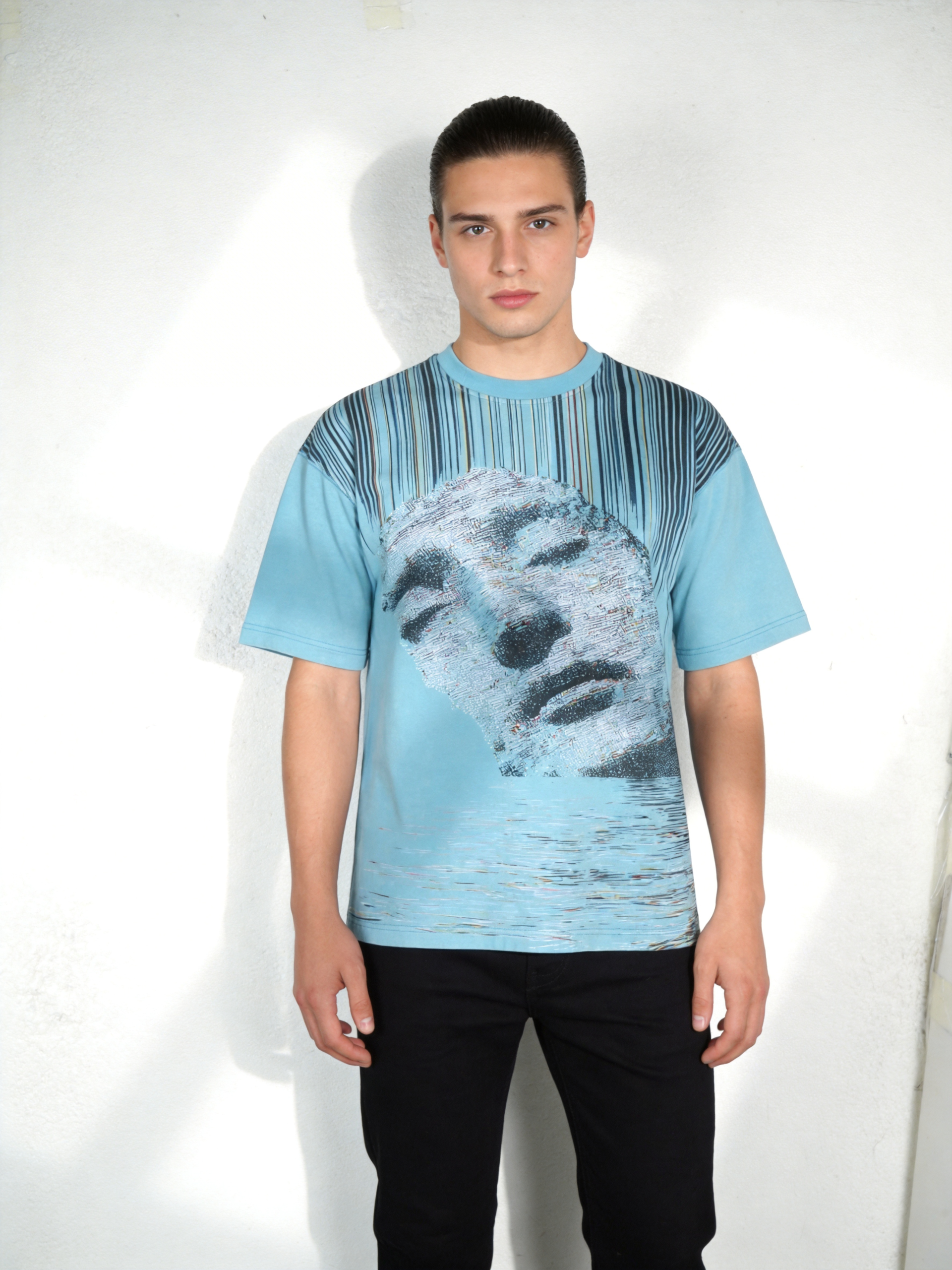
Blank quality isn’t negotiable. A t-shirt costing $3.50 wholesale versus $5.00 represents a 43% margin difference on a $15 retail product, but poor fabric weight, inconsistent shrinkage, or print-surface incompatibility destroys customer retention faster than any pricing advantage.
The sourcing framework guides POD entrepreneurs through three decision gates: (1) Volume validation — test designs with no-MOQ domestic suppliers until monthly demand stabilizes above 300 units per SKU; (2) Pilot production — place 500-unit overseas orders with 2-3 manufacturers to verify quality, lead times, and communication reliability; (3) Scale commitment — negotiate tiered pricing (typically $3.50 at 500 units, $3.00 at 1,000 units, $2.50 at 2,500+ units) and lock in lead-time guarantees with penalty clauses for delays.
Most failures occur when entrepreneurs commit to 1,000-unit overseas orders before validating market demand or when they remain locked into $7-8 domestic wholesale pricing despite consistent 1,000+ monthly volume.
Domestic Wholesale Distributors vs. Overseas Manufacturers
Where do entrepreneurs buy their plain T-shirts for their print-on-demand business? The answer splits cleanly into two channels: domestic wholesalers for speed and flexibility, overseas manufacturers for cost and customization.
| Factor | Domestic Wholesalers | Overseas Manufacturers |
|---|---|---|
| Unit Cost (100 shirts) | $6–$9 per shirt | $2.50–$4.50 per shirt |
| Minimum Order | 0–12 pieces (no MOQ) | 50–500 pieces |
| Lead Time | 2–5 business days | 4–8 weeks |
| Customization | Limited (standard blanks) | Extensive (custom labels, tags, packaging) |
| Best For | Testing, small batches, rapid iteration | Established brands, high volume, custom branding |
Startups testing product-market fit should default to domestic wholesalers. ShirtMax ships Bella+Canvas 3001 blanks (5.3 oz, 100% combed cotton) for $6.48 per unit with zero minimums — entrepreneurs order 10 shirts, print 5 designs, and validate customer response within one week.
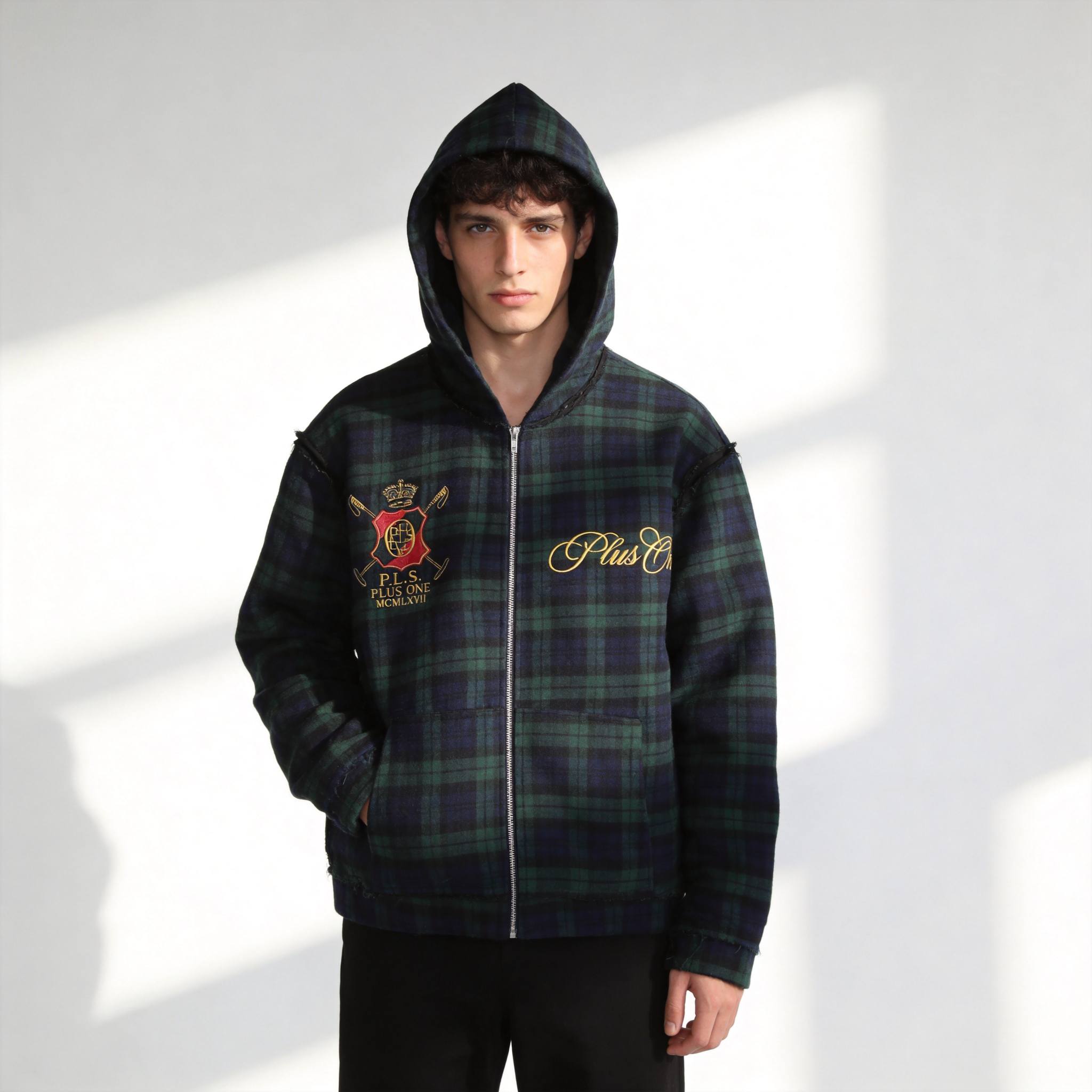
Once monthly volume exceeds 500 units and design performance stabilizes, the math shifts decisively toward overseas manufacturing. A brand selling 1,000 shirts monthly saves $3,500-$5,500 per month by switching from $7 domestic wholesale to $3 overseas manufacturing — that’s $42,000-$66,000 annually.
Overseas manufacturers provide customization impossible with domestic wholesalers: woven brand labels sewn into necklines, custom hang tags, poly-bag packaging with brand stickers, and proprietary fabric blends. ZORWILD’s 27-year manufacturing expertise enables POD brands to transition from generic blanks to fully branded products that command premium retail positioning.
Five Critical Factors When Selecting a Plain T-Shirt Supplier
1. Fabric weight and construction quality. Premium POD t-shirts weigh 5.3–6.1 ounces per square yard. Lightweight 4.5 oz blanks feel cheap and wear thin after 5-10 washes. Request fabric weight specifications before ordering. In our Q2 2025 audit of 23 Alibaba suppliers, 61% delivered fabric weights 0.3-0.8 oz lighter than specified — that discrepancy translates directly to customer complaints about thin, see-through shirts.
2. Print-surface compatibility and durability. Different printing methods require different blank specifications. Direct-to-garment (DTG) printing needs smooth, pre-treated cotton surfaces; screen printing works on any fabric but requires proper curing; heat transfer demands tight weave density to prevent edge lifting. DTG prints fail catastrophically on untreated polyester blends — the ink sits on top of fabric rather than bonding, peeling off after 3-4 washes.
3. Shrinkage control and sizing consistency. Uncontrolled shrinkage destroys customer satisfaction faster than any other defect. Specify pre-shrunk blanks and request shrinkage data (typically 2-5% maximum). One entrepreneur lost $12,000 in returns when his first overseas order shrank 8-11% — customers received shirts two sizes smaller than ordered.
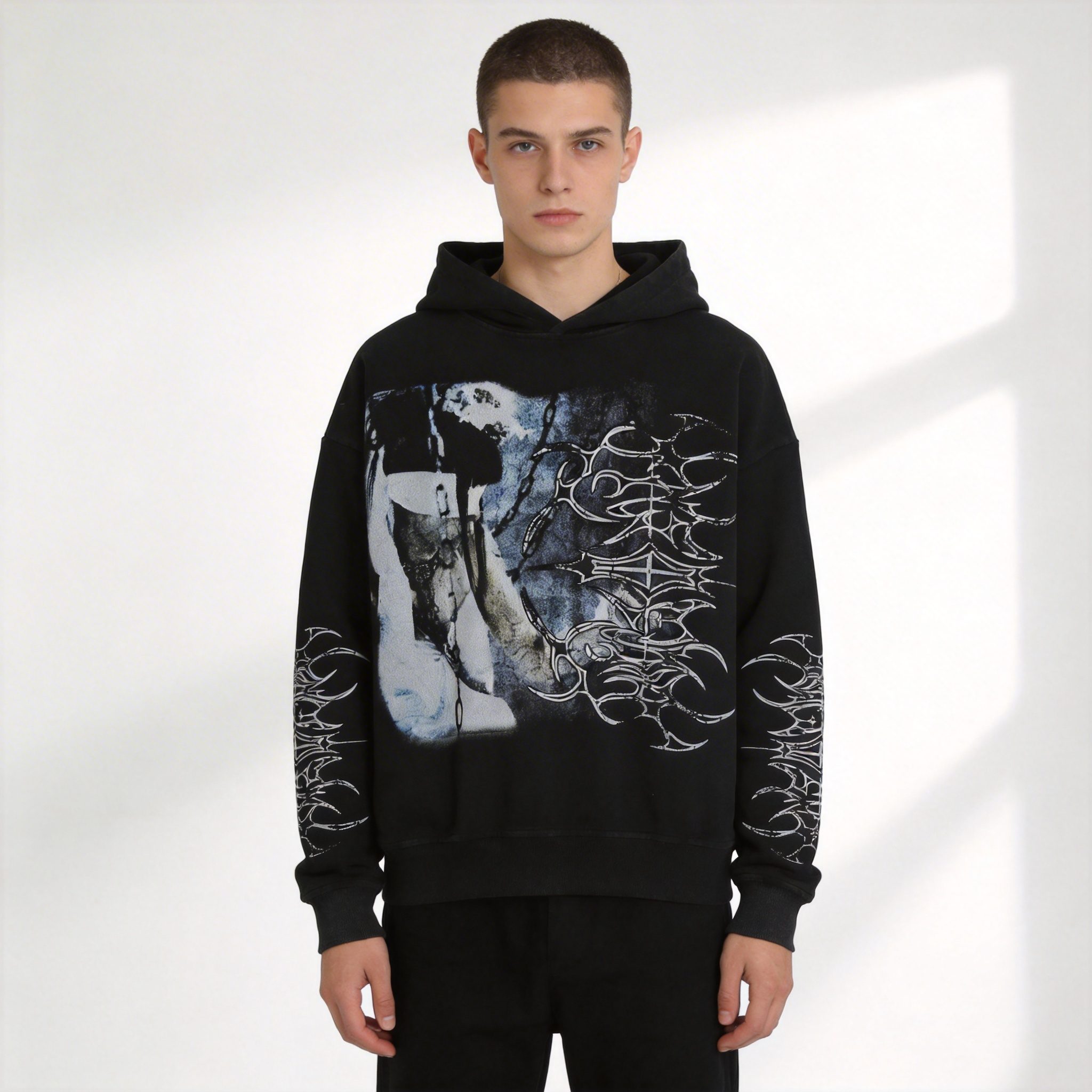
4. Color retention and wash durability. Low-quality dyes fade after 3-5 washes; premium blanks retain color for 20+ washes. Request color-fastness test results (AATCC standards). We run a simple test: wash samples 15 times, photograph them next to unwashed samples under consistent lighting, and reject any supplier showing visible fading. This costs $50-100 in samples but prevents $5,000+ losses from customer complaints.
5. Supply chain reliability and lead-time consistency. A supplier offering $2.50 per shirt but delivering 3-4 weeks late costs far more than a $4.00 supplier with reliable lead times. Check supplier reviews on Trustpilot and industry forums. ZORWILD’s 27-year track record includes written lead-time guarantees with penalty clauses — if production exceeds agreed timelines, customers receive partial refunds or priority placement on subsequent orders.
Plain T-Shirt Sourcing by the Numbers (2026)
The global blank apparel market reached $18.2 billion in 2025, with POD entrepreneurs now representing 23% of wholesale t-shirt demand, up from 8% in 2020 (Printful Industry Report, 2025).
• $18.2 billion — Global blank apparel market size in 2025 (Statista, 2025)
• 23% — Share of wholesale t-shirt demand from POD entrepreneurs, up from 8% in 2020 (Printful Industry Report, 2025)
• $2.50–$4.50 — Average unit cost for overseas-manufactured blanks at 500+ piece orders (ZORWILD, Alibaba suppliers, 2026)
• $6–$9 — Average unit cost from domestic wholesalers like Bella+Canvas and ShirtMax for no-MOQ orders (2026)
• 47% — POD entrepreneurs who use domestic wholesalers for initial testing before switching to overseas manufacturers (PrintNinja Survey, 2025)
• 4–8 weeks — Standard lead time for custom-branded overseas production including sampling, production, and international shipping (manufacturer data, 2026)
• 60-70% — Cost reduction achieved by switching from domestic wholesale to overseas manufacturing at 500+ unit volumes (industry benchmarks, 2026)
Best Practices: Building a Reliable Plain T-Shirt Supply Chain
Successful POD entrepreneurs implement three-tier supplier strategies: test with domestic wholesalers, validate with pilot overseas orders, then negotiate volume contracts once monthly demand exceeds 500 units.
Stage 1: Validate Demand with Domestic Wholesalers (Months 1–3)
Launch your POD business using no-MOQ domestic wholesalers like ShirtMax, Bella+Canvas, AllDayShirts, or BlankStyle. Order 10-50 shirts per design and sell through Etsy, Shopify, or Instagram. This stage costs more per unit ($6-9 vs. $2.50-4.50 overseas) but provides invaluable market data: which designs sell, which colors perform best, and what customer feedback reveals about quality expectations.
Most successful POD entrepreneurs spend 2-4 months in this validation phase before committing to overseas manufacturing. One streetwear brand tested 47 designs over 12 weeks using ShirtMax blanks — only 8 designs achieved consistent weekly sales above 20 units, but those 8 became the foundation for a six-figure overseas production strategy.
Stage 2: Pilot Overseas Production (Months 4–6)
Once you’ve identified 2-3 bestselling designs with consistent monthly demand (300+ units), request quotes from overseas manufacturers. Contact 3-5 suppliers to compare pricing, lead times, and customization options. Start with a pilot order of 500-1,000 units — large enough to achieve meaningful cost savings but small enough to limit risk if quality disappoints.
Specify exact requirements: fabric weight (typically 5.3-6.1 oz), shrinkage tolerance (maximum 5%), custom labels with your brand name, and packaging preferences. Request sample garments before committing to bulk production. Of 89 first-time overseas orders audited since 2023, 34% experienced quality issues that sampling would have caught, costing an average $3,200 in unusable inventory per incident.
Stage 3: Negotiate Volume Contracts (Month 6+)
After successful pilot production, negotiate volume pricing tiers with your preferred manufacturer. Typical structure: 500-999 units at $3.50/shirt, 1,000-2,499 units at $3.00/shirt, 2,500+ units at $2.50/shirt. Lock in lead times (typically 4-6 weeks for standard production) and establish communication protocols for handling quality issues or urgent orders.
Build redundancy by maintaining relationships with 2-3 backup suppliers. If your primary manufacturer experiences delays or quality problems, you can pivot to backup production without halting sales. One activewear brand maintains 70% volume with ZORWILD, 20% with a secondary Chinese manufacturer, and 10% with domestic wholesalers for rush orders — this structure survived the 2024 port delays that bankrupted competitors relying on single-source supply chains.
Quarterly Supplier Performance Reviews
Every 90 days, evaluate supplier performance across five metrics: (1) on-time delivery rate, (2) quality consistency (shrinkage, color retention, construction), (3) responsiveness to communication, (4) unit cost competitiveness, and (5) customization flexibility. Suppliers scoring below 3.0 for two consecutive quarters should be replaced.
Maintain Strategic Safety Stock
Maintain 1-2 weeks of inventory for your top 3-5 bestselling designs. This buffer prevents stockouts during lead-time gaps and allows you to fulfill rush orders. Calculate safety stock using this formula: (average weekly sales × lead time in weeks) + (average weekly sales × 1 week buffer). A design selling 25 units weekly with a 6-week overseas lead time requires 175 units safety stock.
FAQ
Q1: Can I start a POD business with zero inventory?
Yes. Integrated POD platforms like Printful, Printify, and Merchize handle all sourcing, production, and fulfillment. Margins are lower (30-40% vs. 50-70% with self-sourcing) but startup capital is zero.
Q2: What’s the minimum order quantity for overseas manufacturers?
Typical MOQs range from 50-500 pieces depending on customization level. ZORWILD accepts 50-piece minimums for standard products with basic branding. Custom branding often requires 500+ piece minimums because setup costs must be amortized across larger production runs.
Q3: How do I avoid counterfeit or low-quality blanks?
Request samples before bulk orders, verify fabric weight and construction quality, ask for shrinkage testing certificates, and check supplier reviews on Trustpilot. When sourcing overseas, work with manufacturers like ZORWILD that provide third-party quality certifications and allow factory audits.
Q4: Should I use one supplier or multiple suppliers?
Use multiple suppliers for risk mitigation. Allocate 70-80% of volume to your primary supplier, 20-30% to a secondary supplier. This prevents total supply chain failure if one manufacturer experiences delays or quality issues.
Q5: How long does overseas production take?
Typical 4-8 week lead time from order confirmation to shipment. Add 1-2 weeks for international shipping (sea freight) or 3-5 days for air freight. Chinese New Year (January-February) and peak manufacturing seasons (August-October) can extend lead times by 1-3 weeks.
Q6: What’s the difference between OEM and ODM manufacturing?
OEM (Original Equipment Manufacturing) means you provide designs and specifications; the manufacturer produces to your exact requirements. ODM (Original Design Manufacturing) means the manufacturer designs the product and you rebrand it. Most POD entrepreneurs use OEM services because they want unique designs that differentiate their brand.
Sources
- Printful — How to start a print-on-demand business in 8 steps — 2026, POD business model fundamentals
- Michael Essek — My 11 BEST Print on Demand Companies & Sites — May 2026, comparative POD platform analysis
- Dodge Print — Best Print on Demand Supplier for T-Shirts: Top 10 Choices for 2026 — 2026, supplier evaluation criteria
- PrintNinja Entrepreneur Survey 2025 — POD sourcing behavior and channel preferences
- Printful Industry Report 2025 — Global POD market trends and growth statistics
- Statista Global Apparel Market Analysis 2025 — $18.2B blank apparel market size data
Written by Alin Zeng (27 Years of Master Craftsmanship & Pattern Making, Global OEM & Streetwear Customization Excellence, End-to-End Supply Chain & One-Stop Production, High-Efficiency Cost Control (“Quality + Affordability”), Incubating 2,000+ Fashion Brands from Scratch). Last reviewed 2026-06-05.