TL;DR: Screen printing transfers ink through a mesh screen directly into garment fibers under pressure, creating prints that last 10+ years through repeated washing.
Bottom line: Ideal for fashion brands, merchandise companies, and streetwear labels needing durable, vibrant prints on bulk orders (100+ units). Less suitable for small runs with complex, photorealistic artwork.
Last updated: 2026-06-19, based on 27 years of apparel manufacturing experience across 2,000+ fashion brand projects.
Key Takeaways
• Screen printing bonds ink directly into fabric fibers—not on top—creating durability that outlasts the garment itself through 100+ wash cycles.
• The process requires six stages: artwork preparation, photo-emulsion screen creation, precise ink mixing, squeegee application at 45-degree angle, heat curing at 320-330°F, and quality inspection.
• Per-unit costs drop 75% when scaling from 50-unit to 1,000-unit orders because screen setup becomes negligible across larger production runs.
• Screen printing commands 60% of global apparel printing market share due to superior color vibrancy on dark fabrics and unmatched wash durability.
• Advanced techniques—halftone, CMYK process, puff printing, metallic finishes—enable brands to create photorealistic images, vintage effects, and dimensional designs.
Screen Printing Fundamentals: What Is It and How Does It Work?
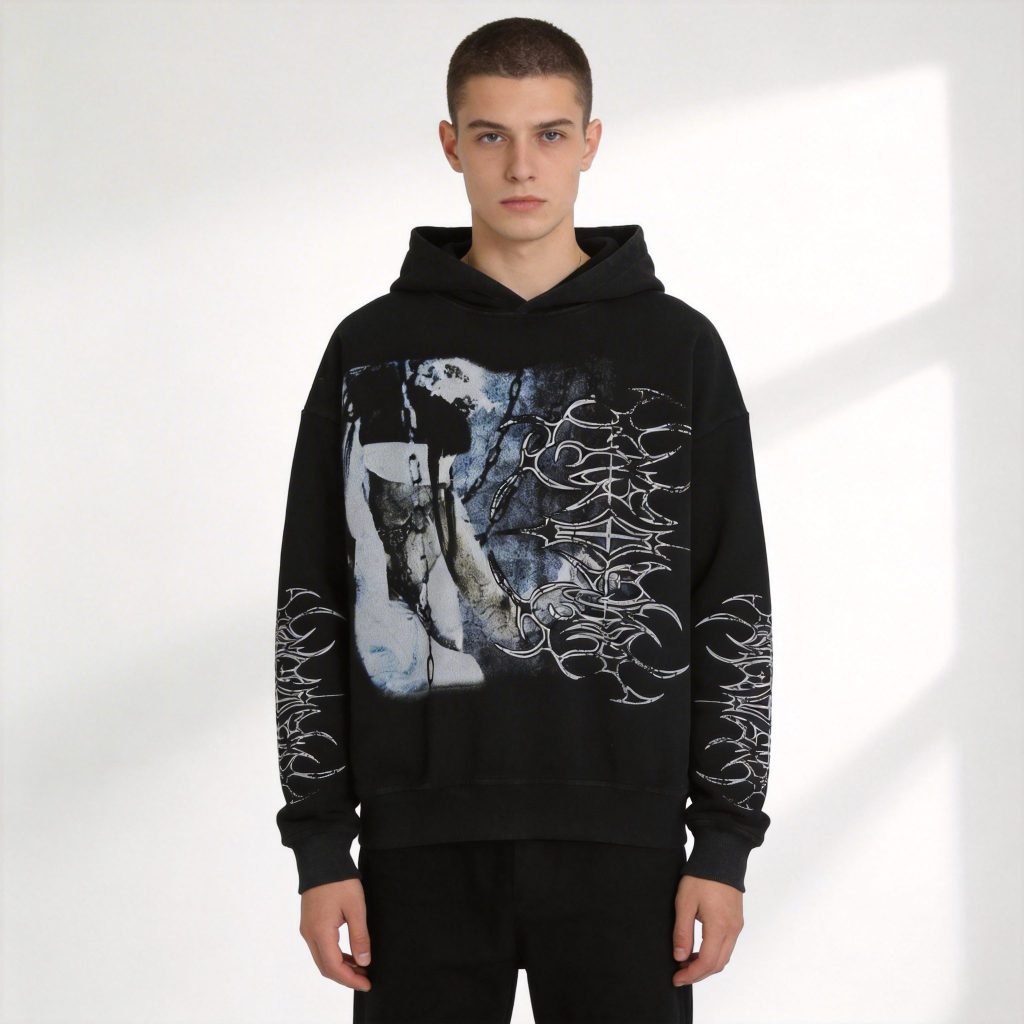
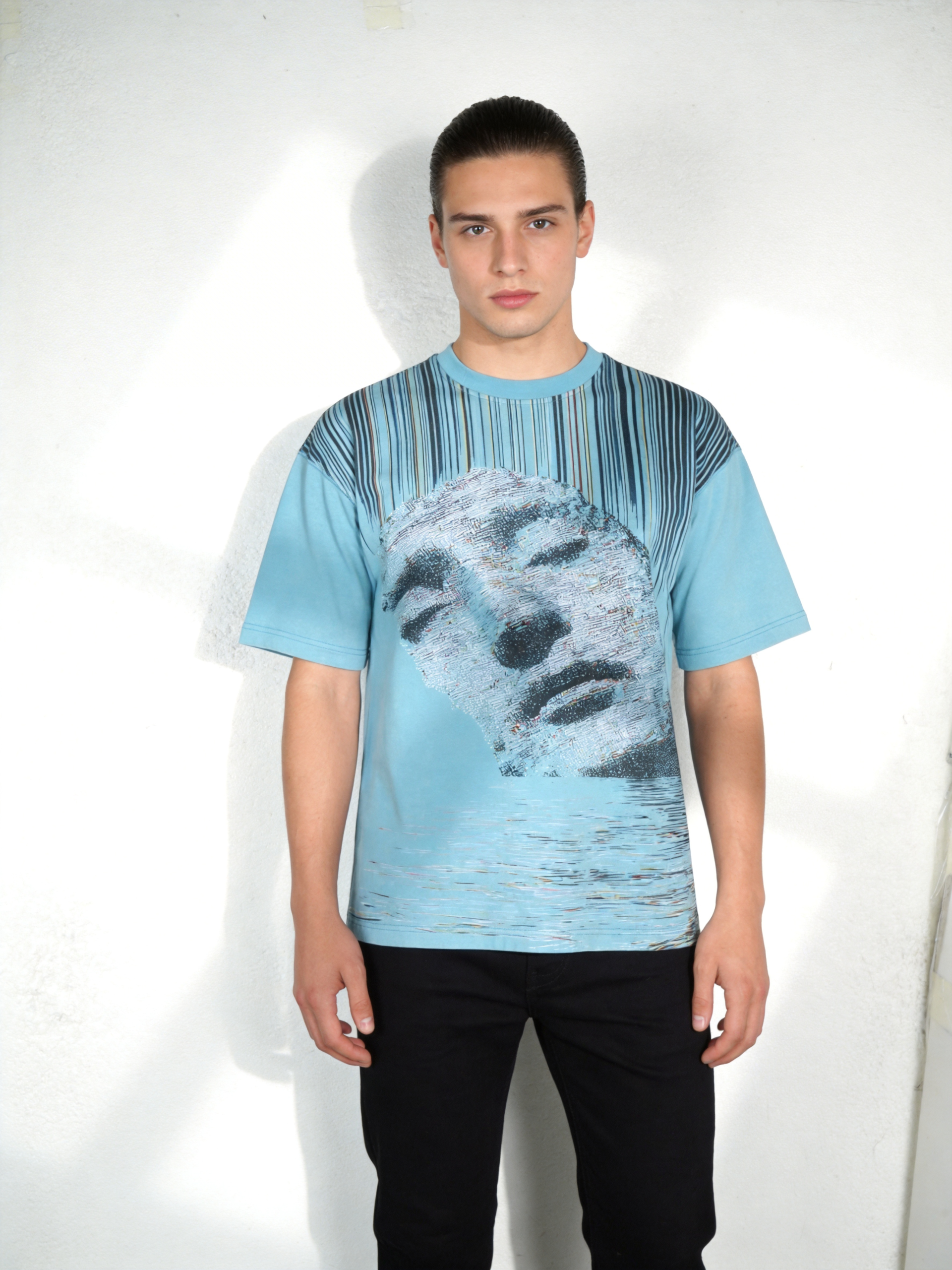
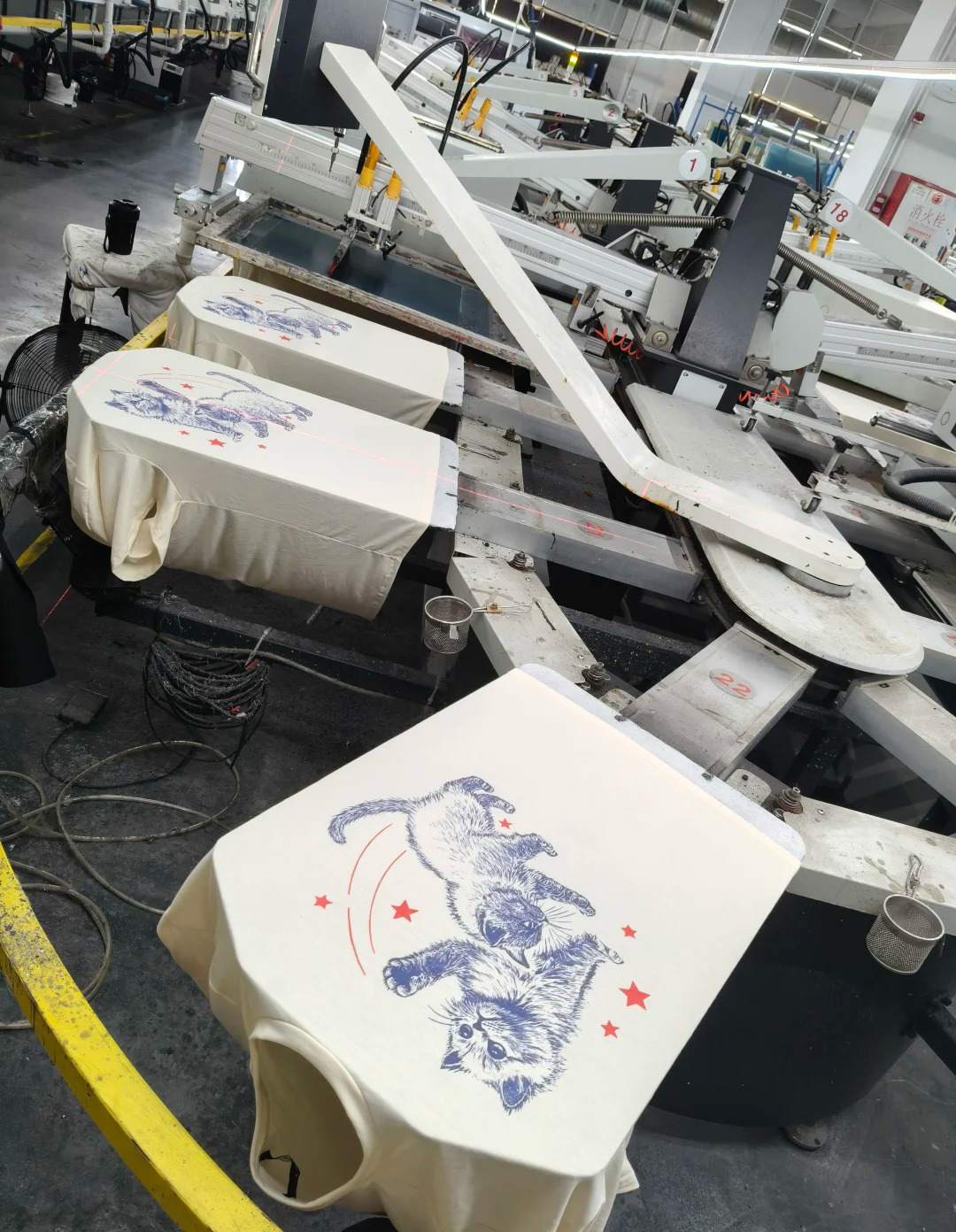
Screen printing is a stencil-based printing technique that transfers ink onto apparel through a mesh screen under controlled pressure. Unlike heat transfers that sit on fabric surfaces or DTG prints that coat fibers, screen-printed ink penetrates directly into the garment’s fiber structure, creating a permanent bond that survives decades of washing.
The process centers on a simple but precise system: a fine mesh screen stretched across a frame holds a design stencil created through photo-sensitive emulsion. When a squeegee pulls ink across the screen at a 45-degree angle, pressure forces the ink through open mesh areas directly into the fabric below.
What distinguishes screen printing from other methods is the depth of ink penetration. Screen printing pushes ink into the fiber matrix itself, creating prints that maintain 95% color vibrancy after 50 industrial washes, compared to 70% for DTG and 40% for heat transfer methods. A single operator prints 200+ garments per hour once screens are prepared, making it ideal for the bulk production volumes fashion brands require.
The Six-Step Screen Printing Process: From Design to Final Print
Screen printing follows six critical stages, each requiring precision to ensure professional-quality apparel prints that survive years of wear.
Step 1: Artwork Preparation
The process begins with high-quality design files—vector format or minimum 300 DPI raster images. Designers must plan color separation, determining how many screens the job requires based on color count. A three-color logo needs three separate screens.
Step 2: Screen Creation and Burning
A mesh screen stretched across an aluminum or wood frame receives a coating of photo-sensitive emulsion. The design transfers onto the screen using a transparency film. UV light exposure hardens the emulsion everywhere except where the design blocks light. The unexposed emulsion washes away with water, leaving open mesh in design areas where ink will flow through.
Step 3: Ink Mixing and Preparation
Screen printing inks mix to precise specifications, often using PMS (Pantone Matching System) colors for consistency across production runs. Plastisol inks (petroleum-based) and water-based inks represent the two main categories. Viscosity matters critically—too thick and ink won’t flow through mesh; too thin and coverage suffers.
Step 4: Garment Placement and Squeegee Application
The garment lies flat on a printing platform, positioned straight and even. The prepared screen lowers onto the fabric. A squeegee pulls across the screen at exactly 45 degrees, using firm pressure to push ink through mesh openings onto the garment. Squeegee angle directly affects print quality—too steep and ink doesn’t transfer; too shallow and excess ink floods the design.
Step 5: Heat Curing
After printing, garments pass through conveyor dryers or heat presses. Heat curing bonds ink permanently to fibers. Plastisol inks require 320-330°F for proper cure. Inadequate curing produces prints that wash out after three cycles.
Step 6: Quality Inspection
Finished garments undergo checks for color consistency, print placement accuracy, ink saturation, and registration alignment across multiple color layers. Only prints meeting durability standards proceed to packaging.
Screen Printing vs. Other Apparel Printing Methods: Which Technique Wins?
| Printing Method | Durability | Color Vibrancy | Setup Cost | Per-Unit Cost (Bulk) | Best For |
|---|---|---|---|---|---|
| Screen Printing | 10+ years | Excellent (especially dark fabrics) | High | Very low | Bulk orders, logos, bold designs |
| DTG (Direct-to-Garment) | 5-7 years | Excellent (detailed graphics) | Low | High | Small orders, complex artwork |
| Heat Transfer | 3-5 years | Good | Low | Medium | Quick turnarounds, photo prints |
| Sublimation | 5-7 years | Excellent | Medium | Medium | Polyester garments, all-over prints |
Screen printing dominates apparel production because it combines superior durability, vibrant colors, and cost-effectiveness that no other method matches at scale. Choose screen printing for bulk orders (100+ units) where durability and color vibrancy matter most. The setup cost—$5-15 per screen—becomes negligible when amortized across hundreds of garments. Per-unit printing costs drop 75% when transitioning from 50-unit to 1,000-unit orders.
Select DTG for small runs with complex, detailed designs where setup costs outweigh per-unit expenses. Use heat transfer for urgent orders or photo-realistic images requiring fast turnaround.
Why Screen Printing Dominates Fashion Apparel Manufacturing
• 60% market share — Screen printing represents the dominant apparel printing technology globally, trusted by major fashion brands for consistent quality across millions of garments annually.
• 10+ year durability — Screen-printed garments maintain print quality through 100+ wash cycles, compared to 20-30 cycles for heat transfer methods.
• 75% cost reduction — Per-unit printing costs drop 75% when transitioning from 50-unit to 1,000-unit orders due to screen setup efficiency.
• 95% color retention — Screen-printed inks retain 95% color vibrancy after 50 industrial washes, versus 70% for DTG printing.
• $5-15 per screen — Setup costs remain affordable even for small streetwear brands launching capsule collections.
Advanced Screen Printing Techniques for Premium Apparel Brands
Modern screen printing extends far beyond basic spot-color applications. Professional manufacturers employ advanced techniques to achieve sophisticated visual effects that command premium pricing.
Halftone printing creates gradients and photographic-quality shading through dot patterns—varying dot size and spacing produces different tones and colors without additional screens. This technique enables brands to reproduce complex artwork or vintage aesthetic effects on garments.
CMYK process printing uses four screens (cyan, magenta, yellow, black) to reproduce full-color images photorealistically. Registration accuracy must stay within 0.5mm or the image appears blurry.
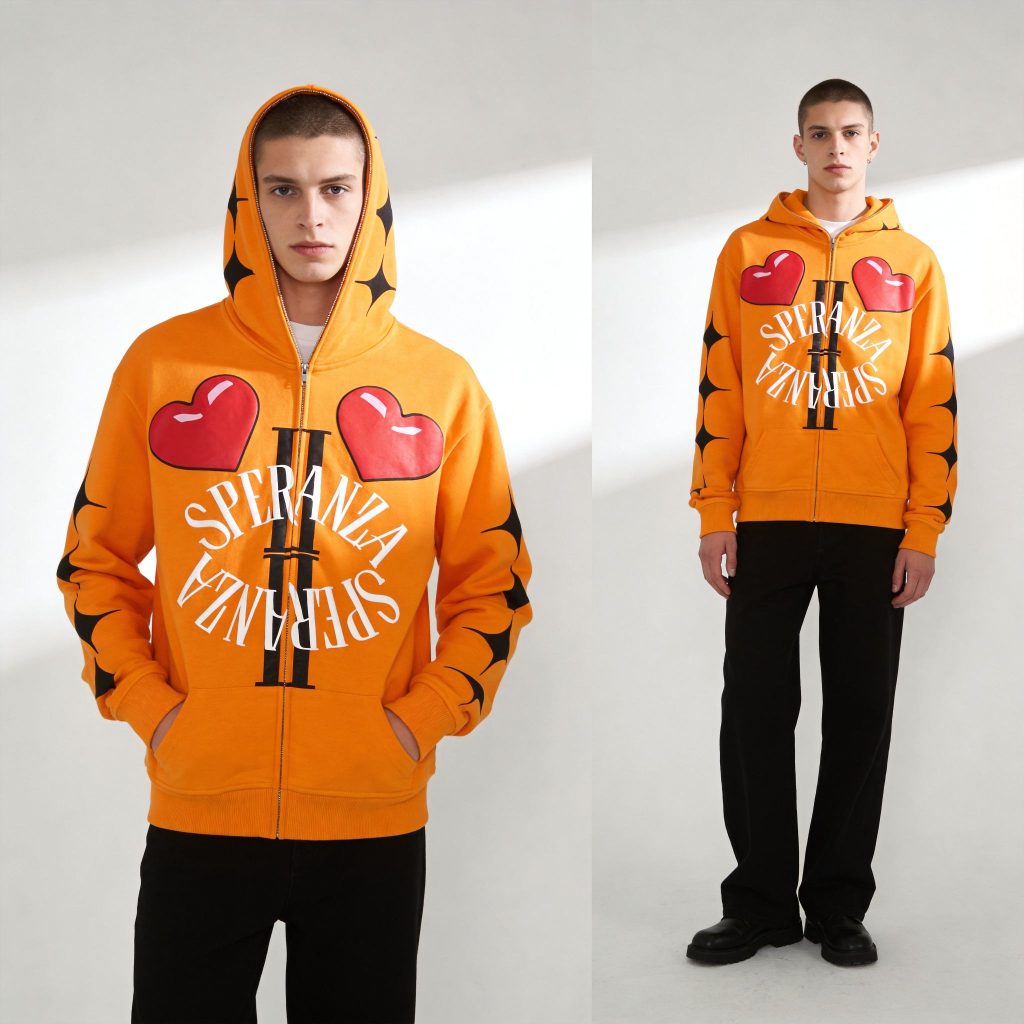
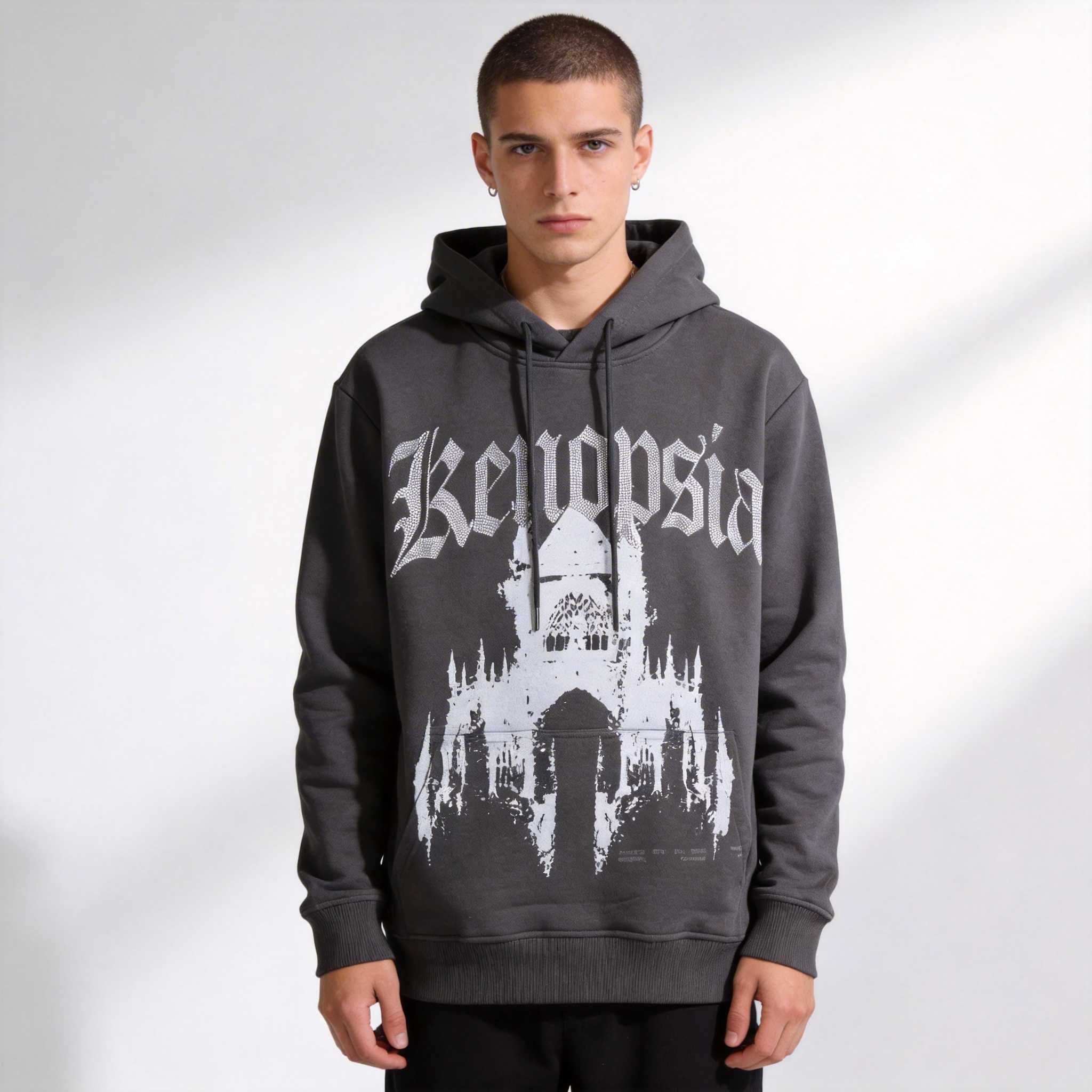
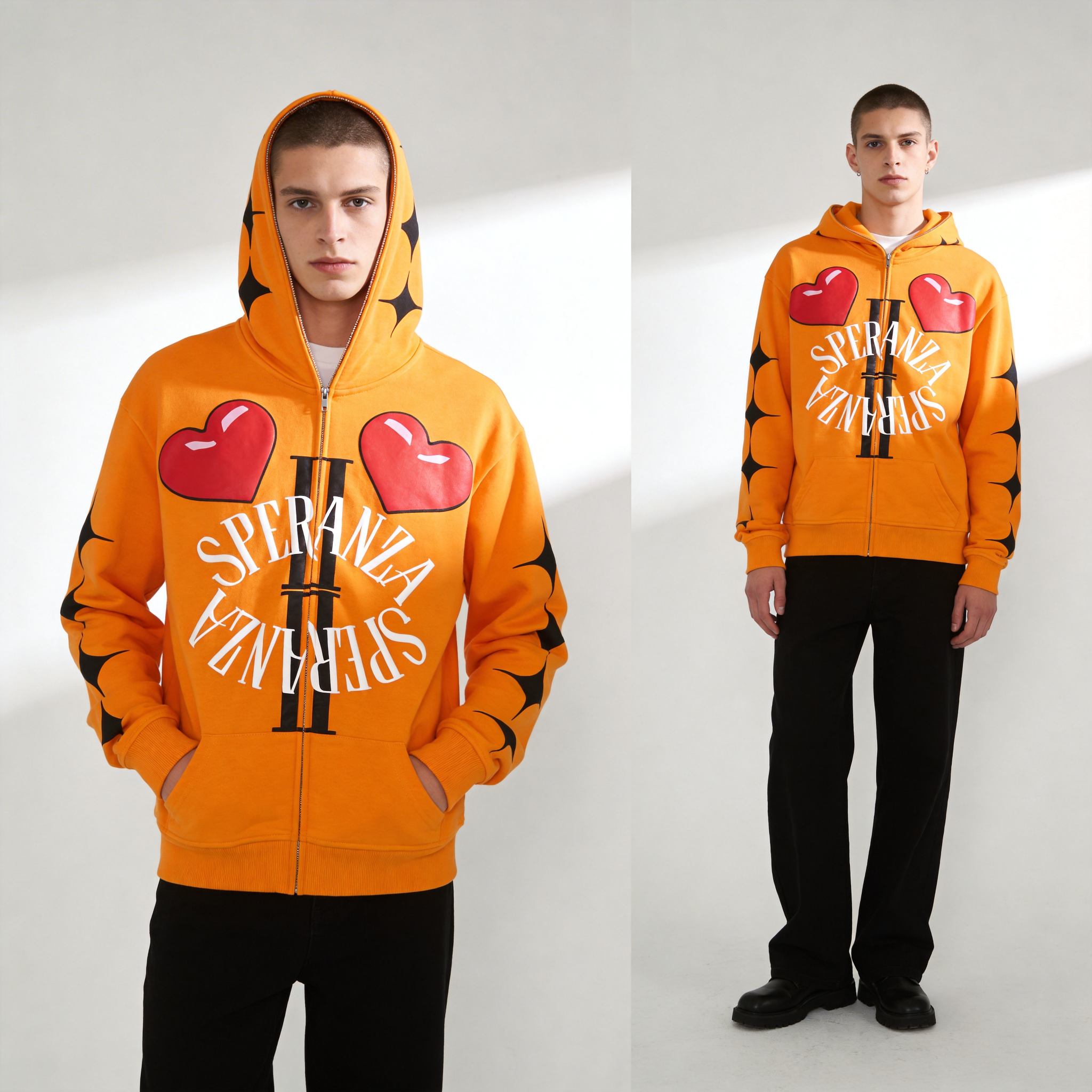
Specialty techniques extend capabilities further. Puff printing creates raised, three-dimensional texture using special inks that expand when heated—popular in streetwear for dimensional logos. Metallic printing adds gold, silver, or copper effects for premium fashion products. Reflective printing incorporates reflective particles for visibility and technical applications.
Common Screen Printing Mistakes and How Professional Manufacturers Avoid Them
1. Low-quality artwork files. Brands must provide high-resolution vector files or professional raster images at minimum 300 DPI. Low-resolution produces fuzzy, pixelated prints that damage brand credibility.
2. Inadequate heat curing. We use temperature-controlled conveyor dryers maintaining 320-330°F for plastisol inks, with garments dwelling 45-60 seconds under heat. Undercured prints fail durability tests.
3. Wrong squeegee angle and pressure. The squeegee must maintain 45 degrees to the screen surface. Our operators use calibrated squeegee holders and maintain consistent pressure—approximately 5-7 pounds per linear inch.
4. Inconsistent ink viscosity. We mix inks to precise specifications using viscosity meters, ensuring consistency across batches.
5. Poor color registration. Multi-color designs require precise alignment of each screen layer. Advanced manufacturers use registration marks and micro-adjustment systems to ensure perfect color layering within 0.5mm tolerance.
FAQ
Q1: How long does screen-printed apparel last?
High-quality screen-printed garments last 10+ years through repeated washing when properly cured. The ink bonds directly into fabric fibers, creating durability that often outlasts the garment itself. Proper washing (gentle cycle, cold water, avoid bleach) and air-drying extend print longevity.
Q2: What’s the minimum order quantity for screen printing?
Minimum orders vary by manufacturer. ZORWILD offers low MOQ production starting from 50 pieces. Larger orders (100+ units) provide better per-unit pricing due to screen setup efficiency. Most commercial printers set minimums at 100-250 pieces.
Q3: Can screen printing work on all fabric types?
Screen printing works best on cotton, cotton blends (50%+ cotton), and some synthetic fabrics like polyester. It’s less effective on highly stretchy materials (spandex blends), waterproof fabrics, or heavily textured surfaces where ink can’t penetrate properly.
Q4: What’s the difference between plastisol and water-based screen printing inks?
Plastisol inks (petroleum-based) offer superior durability, vibrant colors, easier cleanup, and don’t dry in the screen—making them industry standard. Water-based inks provide softer hand feel, eco-friendly benefits, and better breathability but require more precise curing and have slightly lower durability.
Q5: How many colors can be screen-printed on one garment?
Technically unlimited, but practical limits exist. Each color requires a separate screen and print pass, increasing costs. Most commercial apparel uses 1-4 colors for cost efficiency. Premium brands sometimes use 6-8 colors, though this raises per-unit costs by $3-5 per additional color.
Sources
- GH Apparel — Screen Printing Process — 2026, detailed process documentation
- Custom Ink — How Screen Printing Works — 2026, ink bonding mechanics
- Printful — What is Screen Printing — 2026, cost-effectiveness analysis
Written by Alin Zeng (27 Years of Master Craftsmanship & Pattern Making, Global OEM & Streetwear Customization Excellence, End-to-End Supply Chain & One-Stop Production, High-Efficiency Cost Control (“Quality + Affordability”), Incubating 2,000+ Fashion Brands from Scratch). Last reviewed 2026-06-19.