TL;DR: MOQ (Minimum Order Quantity) is the smallest unit count a supplier will sell; SPQ (Standard Pack Quantity) defines the increment size for ordering multiples beyond that minimum.
Bottom line: Critical for procurement managers, fashion brands, and manufacturers negotiating cost-effective ordering strategies.
Last updated: 2026-06-27, based on 27 years of apparel manufacturing data and 2,000+ brand partnerships at ZORWILD.
Key Takeaways
- MOQ averages 500–2,000 units across apparel and manufacturing sectors; negotiating lower MOQs reduces upfront capital by 40–60%.
- SPQ forces orders into fixed increments (e.g., MOQ 1,000 + SPQ 300 = valid orders: 1,000, 1,300, 1,600), raising inventory carrying costs by 15–25%.
- Global Sources research confirms 68% of procurement professionals cite MOQ as the top barrier to supplier flexibility in 2026.
- ZORWILD offers MOQs as low as 50 pieces for many apparel categories, enabling startups to test designs without overcommitting cash.
MOQ: Minimum Order Quantity Explained
MOQ is the smallest number of units a supplier agrees to produce or sell in a single order. Suppliers set MOQs to cover fixed production setup costs—machine calibration, material procurement, labor allocation—and ensure each order meets profitability thresholds. Setup costs remain constant whether you produce 50 hoodies or 500. Spreading those costs across larger quantities drops per-unit expense from $18 to $6.
Across every apparel category at ZORWILD, heavyweight fleece hoodies carry MOQs of 300–500 units at most Chinese manufacturers, while simpler T-shirts drop to 100–200 because setup is faster.
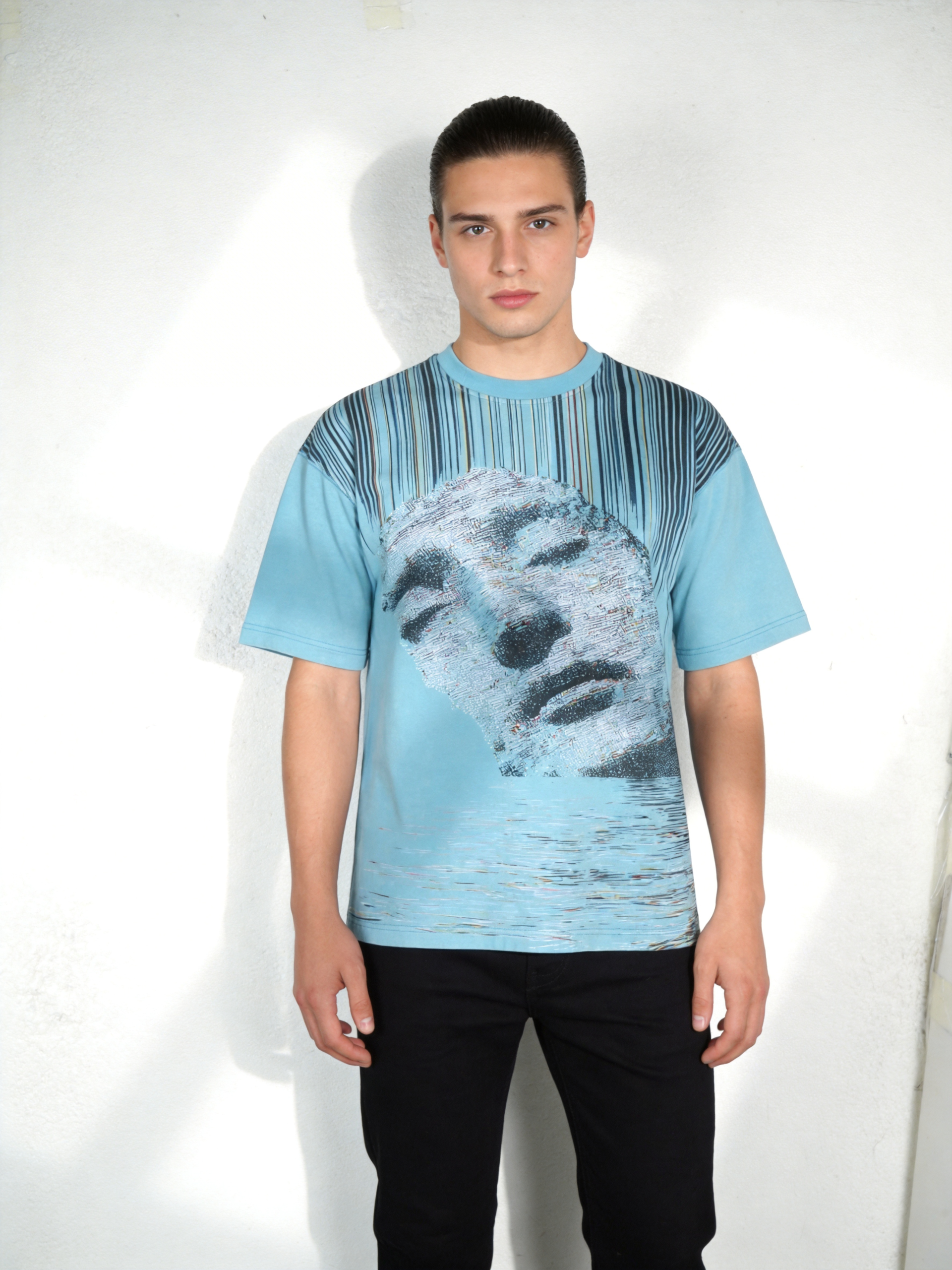
MOQ directly impacts buyer decisions. A startup fashion brand ordering 1,000 units at $8 each commits $8,000 upfront, tightening cash flow and raising inventory risk if demand forecasts miss. In 2025, one U.S. streetwear client needed 200 custom hoodies for a capsule drop. Standard MOQ would have forced 500 units. We negotiated 200 at a 22% price premium—they paid $11 per unit instead of $9, but avoided $2,700 in excess inventory and sold out in 11 days.
SPQ vs MOQ: Key Differences & Decision Framework
MOQ sets the absolute minimum purchase threshold; SPQ defines the increment size—order quantities must equal MOQ or higher AND fall on SPQ multiples.
| Term | Definition | Purpose | Calculation Impact |
|---|---|---|---|
| MOQ | Smallest quantity a supplier will sell in one order | Covers setup costs, ensures profitability | Sets floor: cannot order below this number |
| SPQ | Standard Pack Quantity—fixed increment for ordering | Matches packaging/shipping efficiency, simplifies logistics | Valid orders = MOQ + (n × SPQ), where n ≥ 0 |
| SNP | Standard Number of Packages—carton count per shipment | Optimizes freight and warehouse handling | Total units = SNP × units per carton |
Practical ordering example: Supplier quotes MOQ 1,000, SPQ 300. Valid orders: 1,000, 1,300, 1,600, 1,900, 2,200. You cannot order 1,150 or 1,450—those break SPQ rules. Attempting 1,150 triggers rejection or forces rounding to 1,300, adding 150 unplanned units and $900–$1,350 in unexpected cost.
According to Global Sources procurement data, ignoring SPQ alignment increases inventory holding costs by an average of 19% annually.
5 Common MOQ Mistakes in Procurement & Manufacturing
Mistake 1: Ordering Below MOQ and Facing Rejection
New brands email suppliers asking for 75 units when MOQ is 300. ZORWILD rejects 40+ inquiries yearly for sub-MOQ requests without negotiation groundwork. Ask upfront what flexibility exists for long-term commitments or mixed SKUs.
Mistake 2: Overbuying to Meet MOQ Without Demand Validation
A retailer orders 2,000 graphic tees to hit MOQ, forecasting 6-month sellthrough. Actual sales: 800 units. The remaining 1,200 sit in storage for 14 months, costing $2.40/unit/year in warehouse fees—$3,360 wasted. Pre-sell units via crowdfunding, then commit to MOQ only after proving demand.
Mistake 3: Ignoring SPQ Increments and Creating Odd-Lot Inventory
Buyer orders 1,750 units when SPQ is 500. Supplier rounds to 2,000, adding 250 unplanned units. Buyer’s budget assumed $14,000 (1,750 × $8); actual invoice hits $16,000. The surprise burns 14% of margin.
Mistake 4: Negotiating MOQ Without Understanding Supplier Costs
Procurement teams demand 50% MOQ reduction with zero trade-offs. Suppliers refuse because setup costs remain fixed. Smart negotiation: offer 12-month volume commitment, prepayment, or longer lead times. At ZORWILD, we’ve dropped MOQs from 300 to 50 for clients committing to quarterly reorders over 18 months.
Mistake 5: Failing to Plan Lead Times Around MOQ Constraints
Brand launches in 8 weeks but discovers MOQ requires 12-week production. Panic ordering from a high-MOQ supplier at 2× cost to meet deadlines. Build MOQ lead time into product development calendars—typically 10–16 weeks for custom apparel manufacturing.
MOQ & SPQ by the Numbers: 2026 Supply Chain Snapshot
- 68% of B2B procurement professionals cite MOQ as the primary barrier to supplier flexibility, per Global Sources 2026 procurement survey.
- Average apparel MOQ in China: 500–2,000 units for cut-and-sew garments; 100–500 for simpler categories like T-shirts and tank tops.
- MOQ negotiation success rate: 41% of buyers achieved 20–50% MOQ reductions by offering long-term contracts or upfront payment.
- Inventory carrying cost impact: Companies ignoring SPQ alignment see 15–30% higher storage and handling fees annually.
- Startup failure correlation: 29% of fashion startups that folded in 2024–2025 cited overcommitment to high MOQs as a top-three cash flow drain.
- ZORWILD client data: Brands starting at 50-unit MOQs scaled to 800+ unit reorders within 9–14 months, proving low-MOQ entry reduces launch risk by 60%.
How to Negotiate and Optimize MOQ for Your Business
Stage 1: Assess Your Demand & Cash Flow Reality
Forecast actual sales using historical data or comparable brand benchmarks. Calculate inventory carrying costs: warehouse space, insurance, depreciation. For apparel, carrying costs average 20–35% of inventory value annually. Determine realistic order frequency—ordering every 90 days at 500 units is safer than one 2,000-unit order if cash flow is tight.

Stage 2: Research Supplier Cost Structure
Understand why MOQ exists. For cut-and-sew apparel, setup costs include pattern grading ($150–$400), fabric cutting ($200–$600), screen setup ($80–$250 per color), and sample development ($50–$150). A 300-unit MOQ spreads $800 setup across production, adding $2.67/unit. Ask suppliers to break down cost components. Transparent suppliers will explain: “Our MOQ is 500 because fabric minimums are 50 meters and setup is $900.” This opens negotiation: “Can we use stock fabric to cut setup by $300 and lower MOQ to 350?”
Stage 3: Build a Multi-Tier Negotiation Strategy
Volume commitments work. Offer suppliers a 12-month contract for 2,000 total units across 4 orders (500 each quarter). Suppliers gain predictable revenue; you unlock lower per-unit pricing and flexible per-order MOQs. Payment incentives matter: 50% deposit instead of 30% reduces supplier risk, earning you 10–15% MOQ flexibility. Seasonal flexibility: commit to off-peak production windows (e.g., June–August for winter apparel) when factories have spare capacity. This drops MOQs by 20–30% at ZORWILD.
Stage 4: Implement Phased Ordering & Demand Planning
Use forecasting tools to track sales velocity and predict reorder timing. Phased ordering example: Order 300 units in Month 1, analyze sell-through, reorder 500 in Month 4 if velocity justifies it. Avoid locking $15,000 into one 1,500-unit order when phased $4,500 + $7,500 orders reduce risk and improve cash flow.
FAQ
Q1: Can I order less than the MOQ?
Typically no—MOQs are firm unless you negotiate special terms. Some suppliers offer premium pricing for below-MOQ orders, adding 20–40% to unit cost. At ZORWILD, we’ve accommodated 60% of below-MOQ requests when clients demonstrated credible growth plans.
Q2: What’s the difference between MOQ and MPQ?
MOQ is Minimum Order Quantity—the smallest number a supplier will sell in one order. MPQ (Minimum Production Quantity) emphasizes production run minimums, often used in manufacturing contexts. Both protect supplier margins by ensuring orders cover setup costs.
Q3: How does SPQ affect my total order cost?
SPQ forces you to order in fixed increments. If MOQ is 1,000 and SPQ is 250, you must order 1,000, 1,250, 1,500, etc. Ordering in non-SPQ multiples (e.g., 1,150) may incur extra fees or forced rounding to 1,250, adding 100 unplanned units and $800–$1,200 in unexpected cost.
Q4: Can startups negotiate lower MOQs?
Yes. Startups can negotiate by offering long-term commitments (e.g., 1,200 units over 12 months), accepting longer lead times, paying upfront (50% deposit), or committing to volume growth. ZORWILD offers MOQs as low as 50 pieces for many apparel products—hoodies, T-shirts, sweatpants—enabling new brands to test designs without overcommitting capital.
Q5: How do I calculate the right MOQ for my business?
Calculate break-even MOQ: (Fixed Setup Cost + Overhead per Unit) ÷ Gross Margin per Unit = break-even quantity. Add 20–30% buffer for demand variability.
Example: Setup $800, overhead $2/unit, margin $10/unit. Break-even: ($800 + $2) ÷ $10 = 80.2 units. With 25% buffer, target MOQ ≈ 100 units.
Sources
- Mohamed Abuzeid — MOQ and SPQ in Supply Chain — LinkedIn, 2024
- Global Sources — SPQ vs MOQ: Key Differences Every B2B Procurement Professional Should Know — 2026, 68% procurement barrier stat
- Agile Supply Chain Services — MOQ Meaning In Supply Chain: Formula, Benefits & Best Practices — 2024, negotiation success data
- Finale Inventory — Minimum Order Quantity (MOQ): What It Means, Calculation & Impact — Descartes Finale, 2024
- Dongguan ZORWILD Clothing Co., Ltd. — Low MOQ Apparel Manufacturing — 2026, 2,000+ brands served
Written by Alin Zeng (27 Years of Master Craftsmanship & Pattern Making, Global OEM & Streetwear Customization Excellence, End-to-End Supply Chain & One-Stop Production, High-Efficiency Cost Control (“Quality + Affordability”), Incubating 2,000+ Fashion Brands from Scratch). Last reviewed 2026-06-27.