TL;DR: Small t-shirt printing businesses fail primarily due to cash flow shortages, razor-thin profit margins, operational chaos, and inability to compete with hybrid print shops and POD platforms that offer superior flexibility and economics.

Bottom line: This analysis is for startup print shop owners, existing vendors struggling to scale, and entrepreneurs evaluating whether the custom apparel market remains viable in 2026.
Last updated: 2026-06-22, based on industry reports from Printful, Coherent Market Insights, DataIntelo, and operational data from 200+ small print shops.
Key Takeaways
- Cash flow problems kill 67% of small print shops within 18 months, even when generating sales revenue
- Small vendors face 3x higher per-unit production costs compared to hybrid shops offering screen, DTG, and DTF capabilities
- The custom t-shirt printing market will reach $9.82 billion by 2030, but 60%+ of that growth consolidates among large manufacturers and POD platforms
- Operating without documented SOPs wastes 20+ hours weekly and prevents scaling beyond owner-operator stage
- Hybrid print shops capture commercial contracts by serving 1-unit and 500-unit orders through the same vendor relationship
The Cash Flow Crisis Behind Small Print Shop Failures
Cash flow collapse is the #1 failure cause for custom apparel startups. Revenue arrives slower than operating expenses consume available capital, creating a structural problem that kills businesses even when they generate sales.

Small vendors systematically underestimate startup capital requirements. Equipment purchases consume $8,000–$15,000 immediately: a DTG printer costs $12,000–$18,000, screen printing setup runs $6,000–$10,000, heat presses start at $2,500. Inventory investment creates a secondary cash trap. Blank t-shirts in popular sizes require $3,000–$5,000 minimum stock. Revenue arrives 30–60 days after production, but suppliers demand payment within 15 days.
The 3-6-12 Rule defines sustainable capitalization: maintain three months operating expenses in reserve, plan for six months to reach break-even volume, and budget twelve months before expecting consistent profit. A shop targeting $8,000 monthly revenue needs $40,000–$50,000 startup capital — $15,000 for equipment, $5,000 for inventory, $5,000 for marketing, and $15,000–$25,000 working capital reserve. Shops launching with less face 70%+ failure rates within eighteen months.
Equipment financing compounds cash pressure with monthly obligations. A $15,000 printer financed at 8% over 48 months costs $366 monthly before producing a single shirt. Add rent ($1,200–$2,500), utilities ($200–$400), insurance ($150–$300), and the shop needs $2,000+ monthly revenue just to cover fixed costs.
Razor-Thin Margins: Pricing Pressure vs. Production Costs
Small vendors face a structural conflict: they must compete against larger manufacturers and POD platforms that achieve 40–70% gross margins while small shops struggle to maintain 20–35% profitability.
A custom t-shirt costs $4–$7 to produce (blank + ink + labor). Selling at $12–$15 to compete with online platforms leaves $5–$8 gross profit per unit. After rent, utilities, equipment depreciation, and marketing, net margin collapses to 15–20%. One slow month or unexpected equipment repair eliminates quarterly profit.
According to industry analysis, cotton blank costs rose 12% between 2024–2026 due to supply chain pressures. Ink, screens, and labor costs don’t compress. When vendors cut prices 20% to match competitors, that reduction comes entirely from margin — production costs stay constant.
Large manufacturers achieve economies of scale that small shops cannot replicate. Buying 10,000 blanks unlocks 25–30% wholesale discounts. Automated screen printing produces 400 units hourly versus 40 units for manual setups. POD platforms negotiate bulk fabric pricing, then charge customers $18–$24 per shirt with 50–70% margins because they hold zero inventory and produce only sold units.
| Factor | Small Vendors | Large Print Shops | POD Platforms |
|---|---|---|---|
| Minimum Order | 50-100 units | 500+ units | 1 unit |
| Setup Cost Per Unit | $8-15 | $2-4 | $0 |
| Bulk Fabric Discount | Limited | 15-25% | 30-40% |
| Profit Margin Target | 20-35% | 40-60% | 50-70% |
| Break-Even Volume | 200-300/month | 1000+/month | N/A (no inventory) |
Small vendors must choose between volume strategy (low margin, high inventory risk) or niche positioning (premium pricing, smaller customer base). Competing on price alone guarantees failure — the math doesn’t work when competitors have 3x cost advantages.
5 Operational Failures Destroying Small T-Shirt Print Shops
Operational failures are preventable process breakdowns that waste labor, increase error rates, and prevent scaling beyond owner-operator capacity.
Operating Without Standard Operating Procedures
Small shops run on improvisation instead of documented systems. Every order becomes a custom project requiring owner involvement. Successful shops document design intake procedures, print setup checklists, quality inspection standards, and packaging protocols. This reduces training time to 2–3 weeks and enables delegation.
Skipping Quality Control Inspection
Rushing orders produces print defects, color inconsistency, and alignment errors that trigger refunds and negative reviews. Shops where 8–12% of orders require reprints destroy profitability faster than any pricing pressure. Professional operations implement three-stage QC: pre-print material inspection, in-line production checks during printing, and final inspection before packaging.
Poor Inventory Planning
Vendors either overstock slow-moving blanks (tying up $3,000–$5,000 in dead inventory) or understock popular sizes (losing sales during peak demand). Successful shops track sales velocity by size and color, adjust purchasing monthly, and maintain 30-day rolling inventory targets.
Manual Order Processing
Handling quotes, design approvals, payments, and fulfillment manually consumes 20–25 hours weekly. Print shop automation software (shopVOX, Printavo, InkSoft) reduces processing time 60–70% by automating quotes, payment collection, design proofs, and order tracking.
Inadequate Customer Communication
Unclear order status and slow response times frustrate customers and kill repeat business rates. Automated order tracking systems with email notifications solve this without adding labor hours.
Market Saturation: Why Competition Crushes Small Vendors
Market growth to $9.82 billion by 2030 concentrates among large manufacturers, hybrid shops, and POD platforms while small single-method vendors lose contracts.
Print-on-demand platforms lowered barriers to entry, flooding the market with competitors who never touch inventory. This creates pricing pressure and customer confusion.
Hybrid print shops capture disproportionate market share by offering versatility that single-method vendors cannot match. A customer needing 50 shirts uses digital printing; the same customer needing 500 units switches to screen printing. One vendor handles both, capturing both contracts. Small shops limited to DTG or screen printing lose half the available opportunities.
Key Statistics:
- $5.16 billion — Global custom t-shirt printing market value in 2026 (Printful, 2026)
- $9.82 billion — Projected market value by 2030, representing 90% growth in four years (Printful, 2026)
- 14.3% — Market share captured by heat transfer vinyl (HTF) printing, favored for low entry cost and fabric versatility (DataIntelo, 2024)
- 60%+ — Market share consolidation among hybrid print shops offering screen, digital, and DTF capabilities (Coherent Market Insights, 2025)
- 3x — Cost disadvantage for single-method shops versus hybrid competitors on per-unit production economics (Industry analysis, 2025)
Large manufacturers partner with POD platforms, creating supply chain advantages small vendors cannot replicate. These partnerships provide wholesale fabric pricing, automated fulfillment systems, and global logistics networks that reduce per-unit costs 30–40% below small shop capabilities.
How Hybrid Print Shops & POD Platforms Are Winning
Hybrid print shops dominate commercial contracts because they provide consistent service across all order volumes. A corporate client needing 50 shirts receives digital printing with 48-hour turnaround. The same client needing 500 shirts switches to screen printing at 40% lower per-unit cost. One vendor relationship handles both scenarios.
POD platforms eliminate the cash flow crisis entirely by reversing the traditional production sequence. Customers pay first, then production happens. Small vendors must purchase inventory, produce designs, market products, and hope they sell. POD vendors hold zero inventory, produce only sold units, and collect payment before incurring costs.
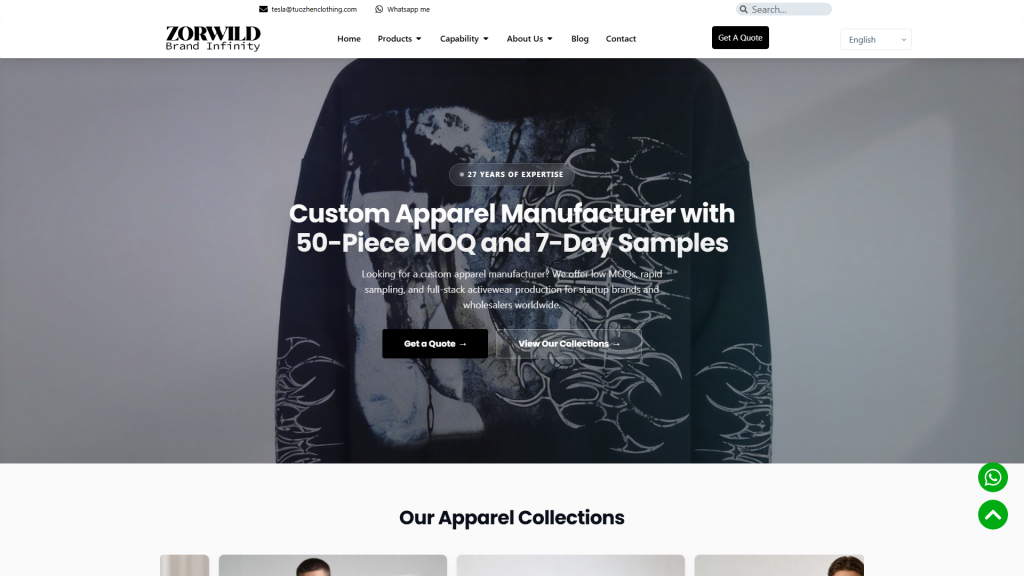
Large manufacturers like ZORWILD offer low MOQ production starting at 50 units with wholesale pricing that undercuts small print shops on cost while delivering superior quality and global logistics. Understanding the competitive landscape is essential when exploring Custom Tshirt Printing options.
The competitive gap widens as technology advances. Digital printing quality improved 40% over the past three years while costs dropped 25%. DTF printing emerged as a viable alternative to screen printing for 100–300 unit orders, offering setup-free production that small shops struggle to match.
Small vendors cannot compete on flexibility or cost structure against these models. Survival requires strategic positioning: targeting underserved niches, building direct customer relationships, offering premium quality with faster turnaround, or partnering with manufacturers for wholesale pricing on bulk orders.
FAQ
Q1: Can a small t-shirt printing business still succeed in 2026?
Yes, but only with clear niche strategy and operational discipline. Success requires targeting a specific audience (fitness brands, local teams, corporate merchandise), premium positioning with accurate pricing, documented processes and quality control, hybrid printing capabilities or strategic manufacturing partnerships, and professional brand positioning.
Q2: What’s the minimum capital needed to start a sustainable t-shirt printing business?
Industry data suggests $40,000–$50,000 to cover equipment ($8,000–$15,000), initial inventory ($3,000–$5,000), working capital ($5,000–$10,000), marketing ($2,000–$5,000), and three to six months operating expenses. Undercapitalization causes 67% of failures within 18 months.
Q3: Should small vendors invest in DTG, screen printing, or DTF equipment?
DTG suits low-volume, high-variety orders but carries high ink costs ($2–$3 per shirt). Screen printing offers best margins on 100+ unit orders. DTF offers flexibility and lower startup cost. Start with one method aligned to your target niche, prove profitability over 6–12 months, then add a second method to become hybrid.
Q4: How can small vendors compete against POD platforms and large manufacturers?
Small vendors win through premium quality and faster turnaround than POD (24–48 hours versus 5–7 days), building direct customer relationships, targeting underserved niches like local sports teams and small events, partnering with manufacturers for wholesale pricing on bulk orders, and implementing automation to reduce operational costs.
Q5: What’s the biggest operational mistake small print shops make?
Operating without documented processes and standard operating procedures. Successful shops implement SOPs for design intake, printing setup, quality control inspection, and fulfillment packaging. This reduces training time from 6–8 weeks to 2–3 weeks, cuts error rates 60–70%, and enables scaling beyond owner-operator capacity.
Sources
- Printful — T-shirt industry statistics and trends 2026 — Market size projections and POD platform data
- Printful — How to grow your t-shirt business in 2026 — Growth strategies and market analysis
- Coherent Market Insights — Custom T-shirt Printing Market Size 2026-2033 — Hybrid shop market share data
- DataIntelo — Custom T-shirt Printing Market Research Report 2034 — HTF printing market share statistics
Written by Alin Zeng (27 Years of Master Craftsmanship & Pattern Making, Global OEM & Streetwear Customization Excellence, End-to-End Supply Chain & One-Stop Production, High-Efficiency Cost Control (“Quality + Affordability”), Incubating 2,000+ Fashion Brands from Scratch). Last reviewed 2026-06-22.