TL;DR: Screen printing detail depends on mesh count—110T handles 0.3mm lines and moderate halftones; 305T+ achieves photorealistic 100–150 LPI resolution with proper exposure and artwork preparation.
Bottom line: Ideal for brands needing durable, vibrant prints at scale (100+ units); not optimal for ultra-complex, single-unit photorealistic work where DTG excels.
Last updated: 2026-06-05, based on 27 years manufacturing experience across 2,000+ fashion brands and industry technical standards.
Key Takeaways
- Mesh count controls detail ceiling: 43T suits bold graphics; 110T handles 0.3mm lines; 305T enables 100–150 LPI photorealistic halftones with proper technique.
- Resolution floor is 300 DPI: Upscaling 72 DPI web graphics to 300 DPI doesn’t recover lost detail—always start with native high-resolution files or vector artwork.
- Halftone line counts determine realism: 35–55 LPI creates visible dot patterns; 65–85 LPI blends at arm’s length; 100+ LPI approaches photographic quality on 305T+ mesh.
- Vector beats raster for scalability: Logos and text should always be vector (AI, EPS, PDF) to preserve infinite detail; raster images require 300 DPI at final print size.
Understanding Screen Printing Resolution & Mesh Count Fundamentals
Screen printing detail capability is a mesh-based stenciling process that controls ink flow through thread density, directly determining minimum line width, halftone dot size, and photorealistic reproduction limits. Mesh count—the number of threads per linear inch—is the primary variable governing detail capacity. A 43T mesh has 43 threads per inch; 305T has 305 threads per inch. Higher thread density creates smaller apertures between threads, enabling finer lines and smaller halftone dots while reducing ink deposit volume.
Resolution matters because artwork must convert into printable separations. A 300 DPI image at final print size provides sufficient pixel density for halftone conversion software to generate clean dot patterns. Files below 150 DPI produce visible pixelation when separated into halftone screens. According to ScreenPrinting.com’s mesh selection guide, professional shops match mesh count to desired line frequency—110T for moderate detail, 200T for fine halftones, 305T for photorealistic four-color process.
Emulsion thickness and exposure precision affect final sharpness. Under-exposure leaves emulsion soft, causing mesh apertures to close during printing and losing fine detail. Over-exposure spreads emulsion beyond stencil edges, blurring lines and enlarging halftone dots. We control exposure using step tablets and light integrators to ensure halftone dots hold their intended diameter—critical when printing 85+ LPI screens where dot size variation of 0.05mm visibly degrades image quality.
ZORWILD Framework for Mesh Selection:
- Identify minimum feature size in artwork (line width, text height, halftone dot diameter)
- Match mesh count to feature size: 43T for features >1mm, 110T for 0.3–1mm, 200T for 0.15–0.3mm, 305T for <0.15mm
- Verify artwork resolution meets 300 DPI at final print size for raster elements
- Test exposure variables on sample screens to confirm dot retention before production runs
This systematic approach ensures detail capacity matches design intent while maintaining production efficiency across our 100,000+ monthly unit capacity.
Mesh Count Categories: From Bold Graphics to Fine Halftone Detail
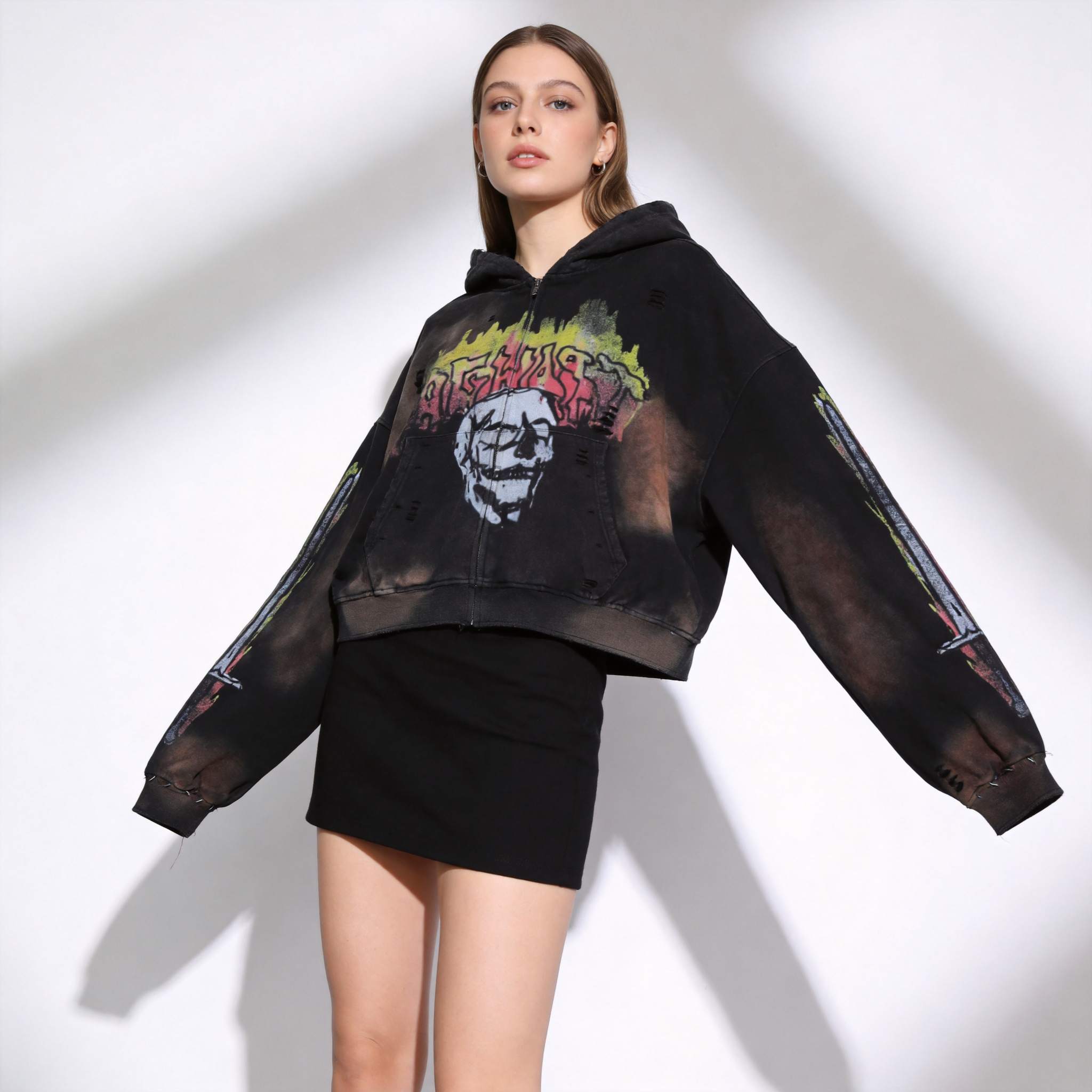
Professional screen printers choose specific mesh counts for different detail levels: 43T for general apparel, 110T for moderate detail, and 305T+ for photorealistic four-color process prints. Each category offers distinct trade-offs between detail capacity, ink deposit, production speed, and technical complexity. We’ve printed millions of garments across these mesh ranges and the performance differences are substantial.
43T Mesh: Bold Streetwear & Startup Production
43T mesh is industry standard for apparel screen printing. It balances ink flow, durability, and ease of use. Ideal for solid color designs, large text, and chunky graphics. Minimum line width approximately 0.5mm. Best for brands prioritizing speed and cost efficiency over intricate detail. We run 43T for 60% of our streetwear production—oversized logos, vintage band tees, promotional apparel—where bold aesthetics and wash durability matter more than fine lines.
110T Mesh: Fashion Graphics & Moderate Detail
110T enables finer lines (0.3mm+), small text, and basic halftone patterns. Commonly used for branded logos, vintage wash effects, and two-color process prints. Halftone dots remain visible but crisp. Suitable for fashion brands seeking detail without extreme mesh complexity. Production speed remains practical for commercial runs. According to Handprinted UK’s technical documentation, 110T handles 45–65 LPI halftones reliably on cotton substrates without ink starvation.
160T–200T Mesh: Advanced Detail & Multi-Color Process
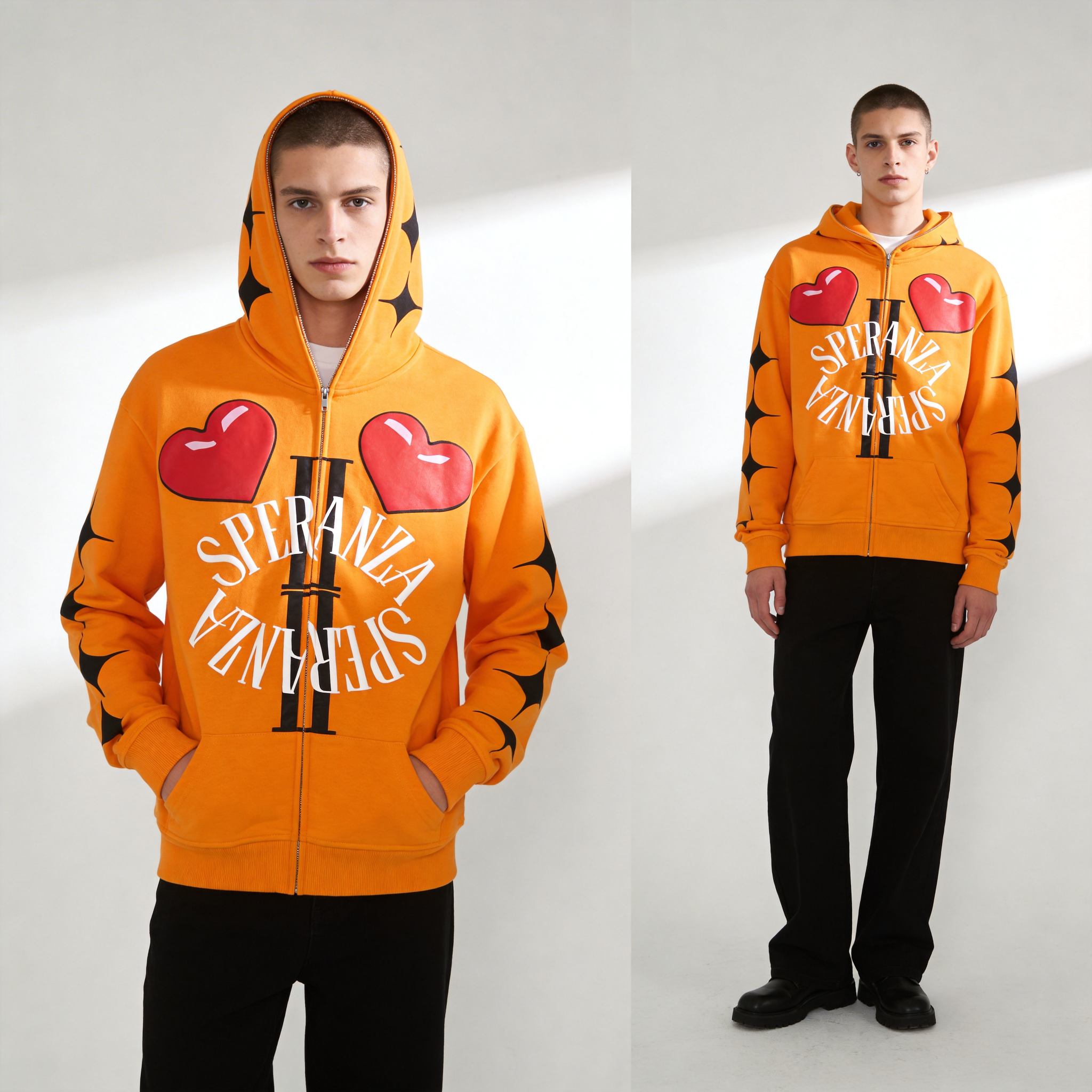
These counts support detailed graphics, fine line work, and halftone screens with 55–75 LPI. Enables photorealistic effects through CMYK color separation. Requires careful exposure and precise squeegee pressure. Used for premium streetwear, band merchandise, and high-end fashion applications where detail justifies longer setup times. Ink deposit thins noticeably—we compensate by adjusting squeegee angle and stroke speed to maintain color saturation on absorbent fabrics.
305T+ Mesh: Photorealistic & Maximum Detail Resolution
305T and higher mesh counts achieve the finest screen printing detail: halftone line counts of 85–150 LPI, hair-thin lines, and photorealistic color reproduction. Reserved for specialty applications, fine art prints, and luxury fashion. Requires advanced equipment, expert technique, and UV inks. Ink deposit is minimal; suitable for paper, ceramics, and specialized substrates rather than heavy garments. Setup time extends to 3–5 days for color separation, screen exposure, and registration—economical only for runs exceeding 500 units where per-unit setup cost amortizes.
Screen Printing vs. Digital Methods: Detail Capability Comparison
While DTG (direct-to-garment) printing handles unlimited colors and photorealistic detail instantly, Custom Screen Printing delivers superior durability, vibrancy, and cost-efficiency at scale—with detail limits determined by mesh count and halftone technique. The decision hinges on production volume, detail complexity, and durability requirements. We guide brands through this choice daily based on their specific collection needs.
| Method | Max Detail Level | Color Capability | Cost Per Unit (100+) | Durability | Best For |
|---|---|---|---|---|---|
| Screen Print (305T) | Photorealistic halftone | Unlimited (CMYK + spot) | $1–$3 | Excellent (10+ washes) | High-volume, fashion, durability |
| DTG Printing | Photorealistic (full color) | Unlimited (true color) | $4–$8 | Good (5–7 washes) | Small runs, complex art, quick turnaround |
| Sublimation | High detail (polyester only) | Unlimited | $2–$5 | Excellent | Technical wear, all-over prints |
| Heat Transfer | Moderate detail | Limited | $1–$4 | Fair (3–5 washes) | Promotional, small batches |
Choose screen printing for orders 100+ units where durability and cost matter—the per-unit advantage compounds dramatically at 500+ pieces, dropping to $1–2 versus DTG’s persistent $4–8 floor. Choose DTG for photorealistic detail on small runs (under 50 units) or complex multi-color artwork requiring no setup time. We’ve shipped collections using both methods: screen printing for core styles (hoodies, tees with 2–4 spot colors), DTG for limited-edition photorealistic drops.
Halftone Dots, Line Counts & Photorealistic Screen Printing Techniques
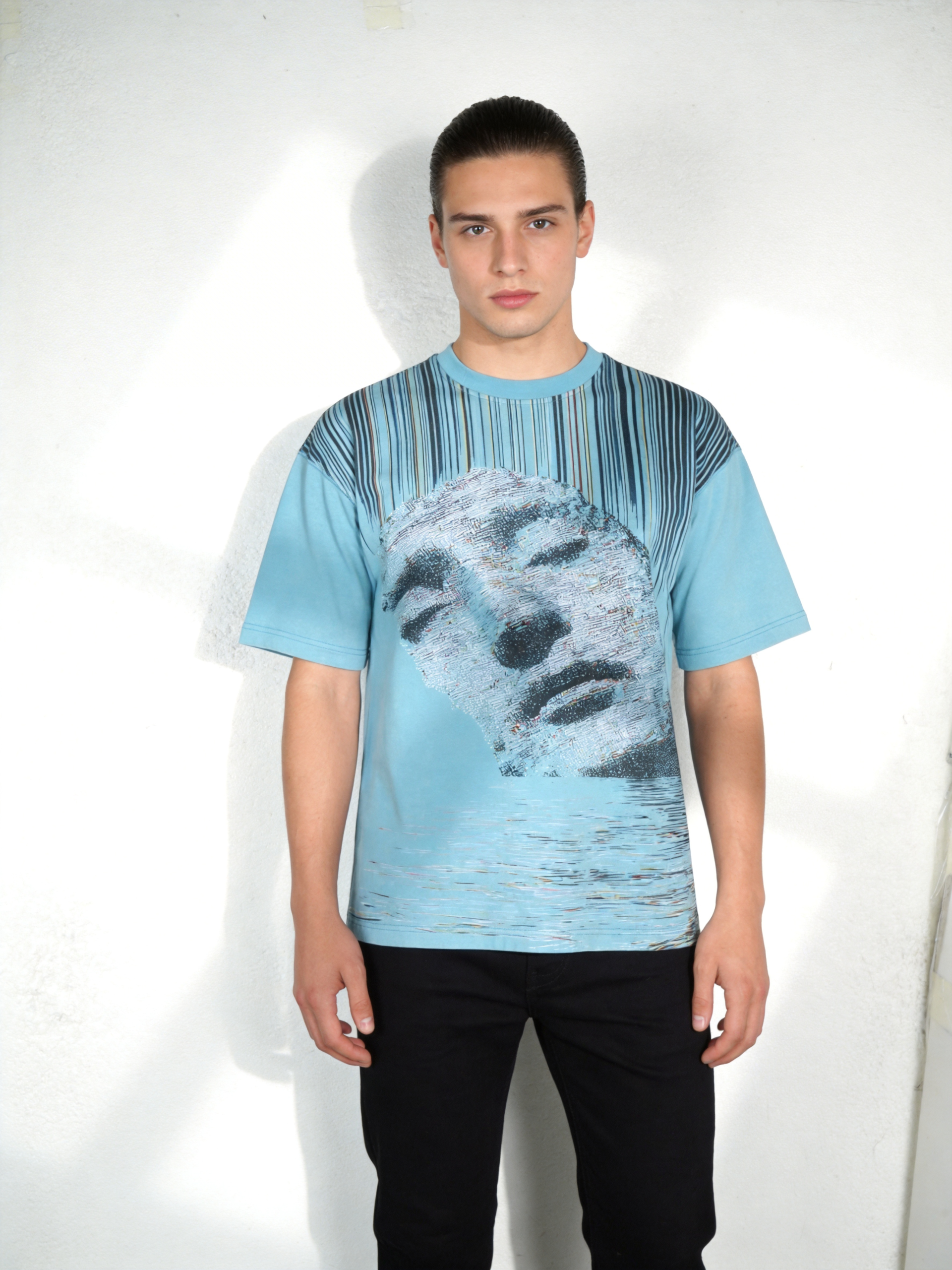
Screen printing achieves photorealistic detail through halftone conversion—breaking images into dots sized 35–150 LPI (lines per inch)—with higher LPI enabling finer detail but requiring correspondingly high mesh counts. Line count directly determines perceived realism: 35 LPI creates visible dot patterns suitable for vintage aesthetics; 100+ LPI approaches continuous-tone photographic quality when viewed at normal distance.
- 35–55 LPI — Bold halftone patterns visible to naked eye; suitable for 110T mesh; common for vintage and artistic prints — [Industry Standard, ScreenPrinting.com 2024]
- 65–85 LPI — Moderate detail; dots blend visually at arm’s length; requires 160T–200T mesh; used for fashion graphics — [Professional Practice, DecoNetwork 2024]
- 100–150 LPI — Fine photorealistic detail; dots nearly invisible; requires 305T+ mesh and UV inks; primarily for fine art and specialty printing — [High-Resolution Standard, Baselayr 2024]
- 150–300 DPI artwork resolution — Optimal input file specification for screen printing separation software; ensures halftone dots convert cleanly without pixelation — [Best Practice, Torch Print Shop 2024]
- 0.3mm minimum line width — Practical lower limit for fine lines on 110T+ mesh; below this, lines risk breaking or filling during exposure and printing — [Technical Specification, Handprinted UK 2024]
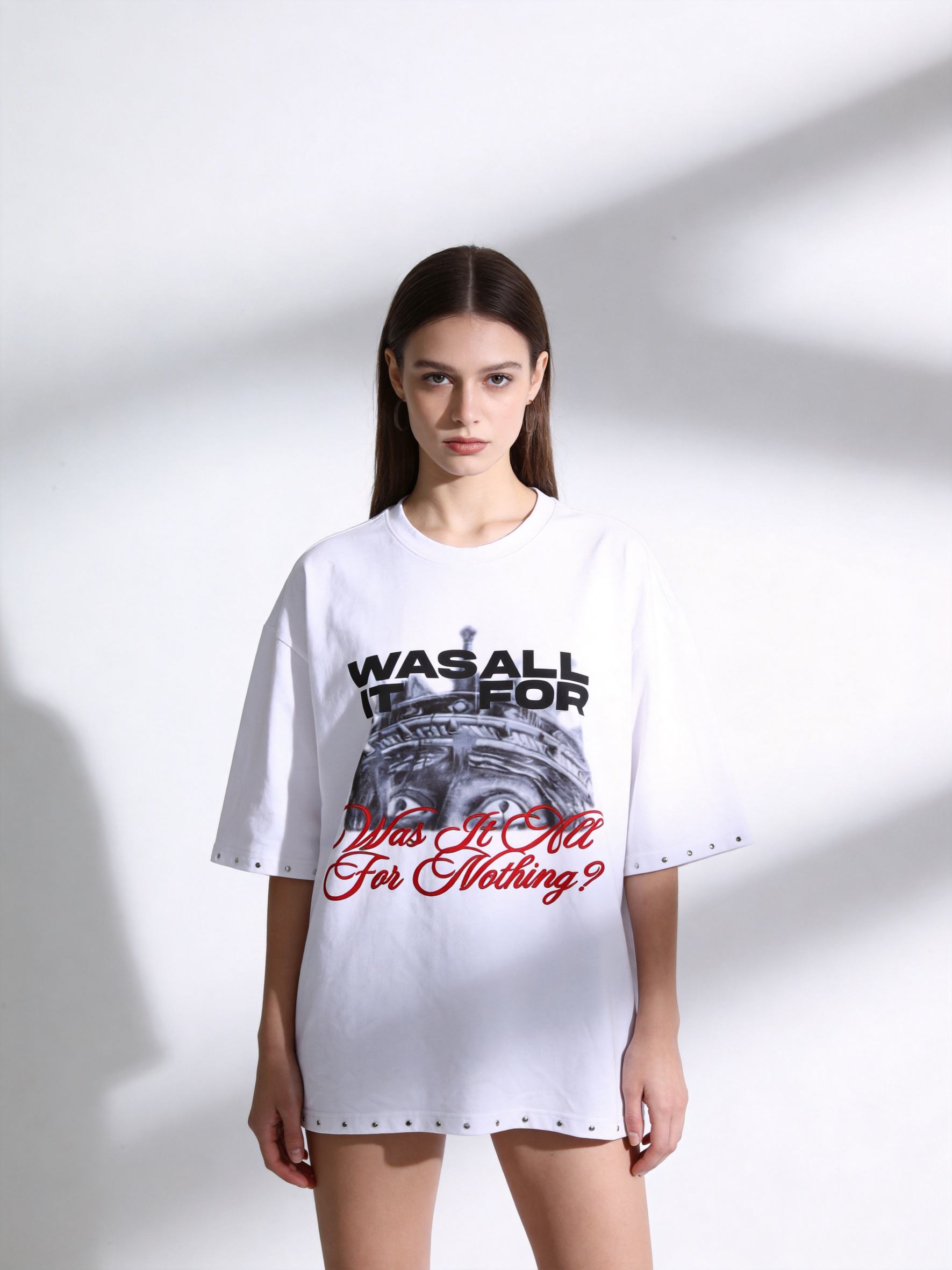
Dot shape influences perceived detail. Elliptical dots create smoother tonal transitions than round or square dots—the elongated shape overlaps more gradually as density increases, reducing visible banding in gradients. We specify elliptical dots for all CMYK process work above 65 LPI. Diamond-shaped dots work well for single-color halftones where directional texture enhances the design aesthetic rather than detracting from photorealism.
Design Optimization: Preparing Artwork for Maximum Screen Print Detail
Converting designs to screen-printable artwork requires vector files for logos, 300 DPI raster images for photorealistic work, and understanding that upscaling low-resolution files (72 DPI) cannot recover lost detail. File preparation determines whether intricate artwork prints cleanly or degrades into blurry, pixelated results.
Vector files (Adobe Illustrator, EPS, PDF) preserve detail infinitely because they store mathematical curves, not pixels. Logos, text, and geometric designs should always be vector. Raster images (JPG, PNG, TIF) require 300 DPI at final print size; rescaling a 72 DPI web graphic to 300 DPI does not add detail—the computer interpolates (guesses), creating blurry results. According to QDigitizing’s resolution guide, screen printing on garments uses 150–300 DPI depending on substrate absorbency; text-heavy designs require 300 DPI to prevent character edges from appearing jagged.
For photorealistic halftone prints, provide high-quality source images: studio photography or high-resolution digital art. Exposure precision matters: under-exposure closes mesh apertures (loses fine detail); over-exposure spreads emulsion (blurs lines). Professional shops control exposure using step tablets and light integrators to ensure halftone dots hold their intended size. Mesh color (white vs. yellow) and emulsion type (diazo, SBQ, dual-cure) influence detail retention—yellow mesh reduces UV scattering, preserving finer dots.
We reject approximately 15% of submitted artwork files for insufficient resolution or improper format. Common mistakes include providing RGB files instead of CMYK for process printing, submitting compressed JPGs with visible artifacts, and sending logos as low-resolution PNG exports from websites. When brands provide proper vector files and 300 DPI raster elements, our pre-press team completes color separation in 24–48 hours. Improper files require back-and-forth artwork revision, delaying production by 3–7 days.
FAQ
Q1: Can screen printing achieve the same photorealistic detail as DTG printing?
Yes, but with limitations. Using 305T+ mesh and CMYK four-color process, screen printing produces photorealistic halftone prints rivaling DTG. However, setup time is longer (3–5 days for color separation and screen exposure) versus DTG’s instant output. Screen printing excels in durability and color vibrancy; DTG is faster for complex, single-unit orders.
Q2: What’s the minimum line width achievable in screen printing?
On 110T mesh, approximately 0.3mm (0.012 inches). On 305T mesh, lines approach 0.15mm, but consistency and durability decline. Below 0.3mm, fine lines risk breaking during exposure, ink flow, or garment washing. For reliable detail, design with 0.5mm+ line widths.
Q3: Does mesh color affect detail capability?
Yes. White mesh scatters UV light during exposure, slightly blurring fine halftone dots. Yellow mesh reduces scattering, preserving finer dot definition. For maximum detail, professional shops use yellow mesh with high mesh counts (200T+) and precise exposure timing.
Q4: Can I upscale a low-resolution image (72 DPI) to 300 DPI for screen printing?
No. Upscaling does not recover lost detail. A 72 DPI image contains the same visual information at any DPI value—the computer interpolates (guesses) pixels, creating blurriness. Always start with native high-resolution artwork (300 DPI or vector files).
Q5: What halftone line count should I use for fashion garments?
For apparel, 55–85 LPI is industry standard. This range balances visible detail with practical mesh count (110T–200T) and strong ink deposit. Finer counts (100+ LPI) risk ink starvation on absorbent fabrics like cotton, resulting in weak color.
Q6: Is screen printing detail affected by fabric type?
Yes. Smooth, tightly woven fabrics (synthetic blends, performance fabrics) retain finer detail than loose, absorbent fabrics (heavyweight cotton, fleece). Ink spreads slightly on absorbent surfaces, softening halftone dots. Plan detail accordingly based on substrate.
Sources
- Handprinted UK — How Much Detail on Exposed Screens — Technical specifications for mesh count and line width limits
- ScreenPrinting.com — Screen Mesh Size Information — Mesh count selection guide for different detail levels
- QDigitizing — Let’s Talk About Resolution — DPI requirements and file preparation best practices
- Baselayr — Screen Printing Exposure Variables — Exposure control for maximum detail retention
- Torch Print Shop — Prep Your Artwork Like a Pro — Vector vs. raster file requirements
- DecoNetwork — Understanding Mesh Counts — Mesh count impact on resolution and ink deposit
Written by Alin Zeng (27 Years of Master Craftsmanship & Pattern Making, Global OEM & Streetwear Customization Excellence, End-to-End Supply Chain & One-Stop Production, High-Efficiency Cost Control (“Quality + Affordability”), Incubating 2,000+ Fashion Brands from Scratch). Last reviewed 2026-06-05.