TL;DR: Custom t-shirt businesses generate $500–$8,500+ monthly depending on sales volume, production method, and pricing strategy, with profit margins ranging from 30–60% (print-on-demand) to 40–85% (bulk manufacturing).
Bottom line: Viable for part-time sellers testing designs and full-time entrepreneurs building scalable brands; requires consistent marketing investment and design quality.
Last updated: 2026-06-11, based on market data from 2,000+ fashion brand partnerships and verified seller case studies.
Key Takeaways
- The global custom t-shirt market reached $6.84 billion in 2025 and grows at 11.5% annually through 2030.
- Print-on-demand sellers earn $3–8 profit per shirt with zero inventory risk; bulk manufacturers earn $8–25 per unit with higher upfront investment.
- Realistic first-year earnings: $5,000–$50,000 part-time, $100,000–$250,000+ full-time with multi-channel distribution.
- Top performers use weekly design releases and sell across Etsy + Shopify + Instagram + wholesale simultaneously.
- Break-even timeline: 2–4 months for print-on-demand, 3–8 months for bulk manufacturing at 100+ units monthly.
Revenue Models & Profit Potential
Custom t-shirt profitability ranges from $500 monthly side income to $250,000+ annual revenue, determined by production method, sales volume, and pricing strategy.
Direct Answer: A custom t-shirt business generates 30–60% profit margins through print-on-demand or bulk manufacturing. Part-time sellers averaging 50 shirts monthly at $20 retail ($8 profit) earn $400/month or $4,800 annually. Full-time operations selling 500 shirts monthly at $25 retail ($12 profit) generate $6,000/month or $72,000 annually. Top performers report $100,000–$250,000+ through multi-channel sales.
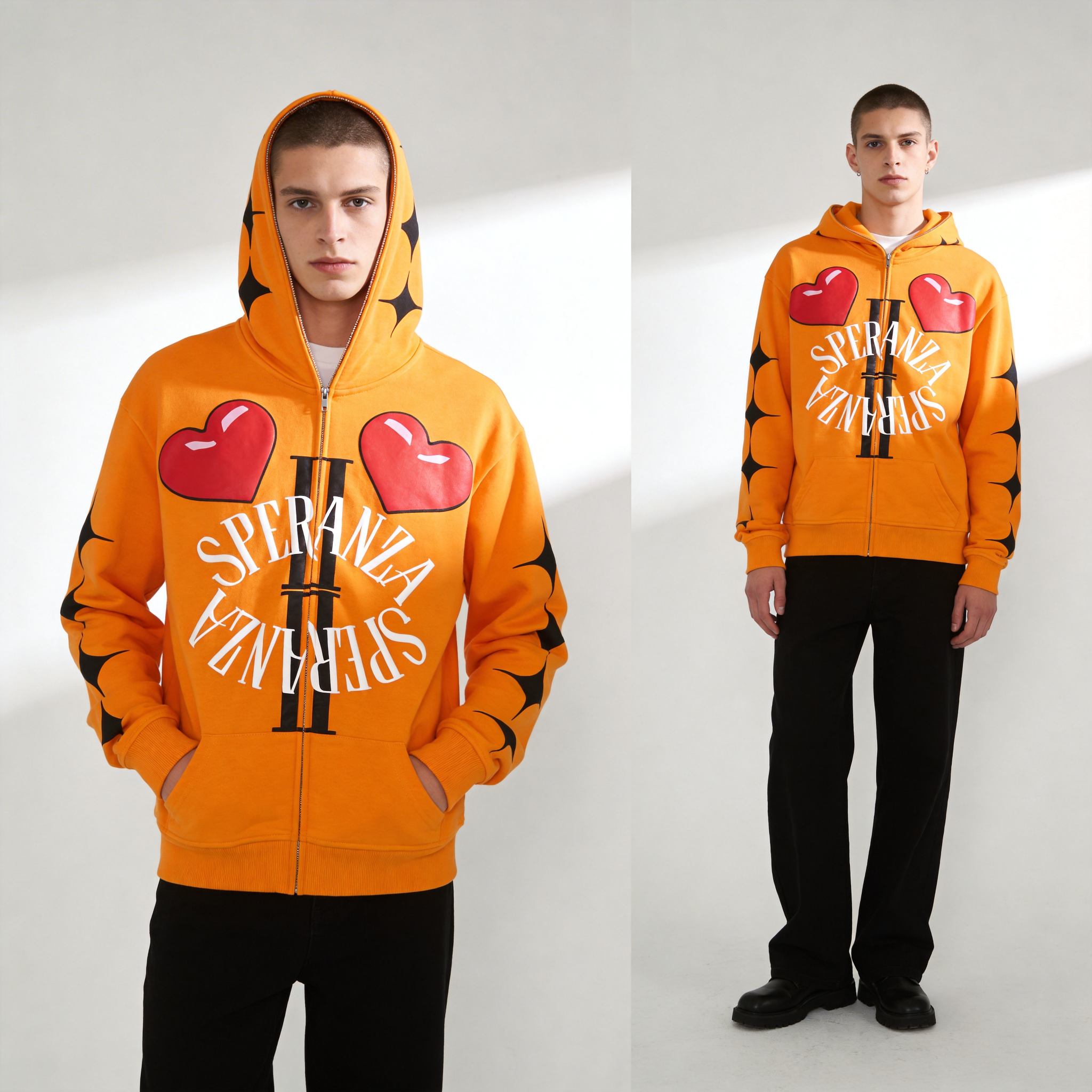
Print-on-demand (POD) requires $0–500 startup capital and delivers 20–40% margins. You upload designs to platforms like Printful or Printify, which print and ship per order. Profit per shirt: $3–8. Monthly revenue at 100 orders: $300–800. Zero inventory risk is the primary advantage; slower fulfillment and limited brand control are the trade-offs.
Bulk manufacturing demands $2,000–10,000+ upfront and delivers 40–85% margins. You order 50–500+ units from manufacturers. Clients at ZORWILD achieve $8–25 profit per shirt depending on wholesale cost and retail price. Monthly revenue at 200 sales: $1,600–5,000+. Premium quality, brand identity, and faster shipping are the advantages; inventory risk and minimum order quantities are the drawbacks.
Hybrid models combine POD for testing with bulk manufacturing for bestsellers. According to Merchize’s market research, the custom t-shirt market is projected to reach $10 billion, driven by personalized fashion trends and e-commerce expansion.
The ZORWILD Profit Framework
Our 27 years manufacturing for 2,000+ fashion brands revealed a three-tier profitability model:
Tier 1 — Testing Phase (Months 1–3): Use POD to validate 10–20 designs. Investment: $300–500. Expected revenue: $500–1,500 monthly.
Tier 2 — Scaling Phase (Months 4–12): Manufacture bestsellers in bulk (100–300 units). Investment: $2,000–5,000. Expected revenue: $2,000–5,000 monthly.
Tier 3 — Brand Phase (Year 2+): Establish wholesale partnerships and premium positioning. Investment: $10,000–50,000. Expected revenue: $8,000–20,000+ monthly.
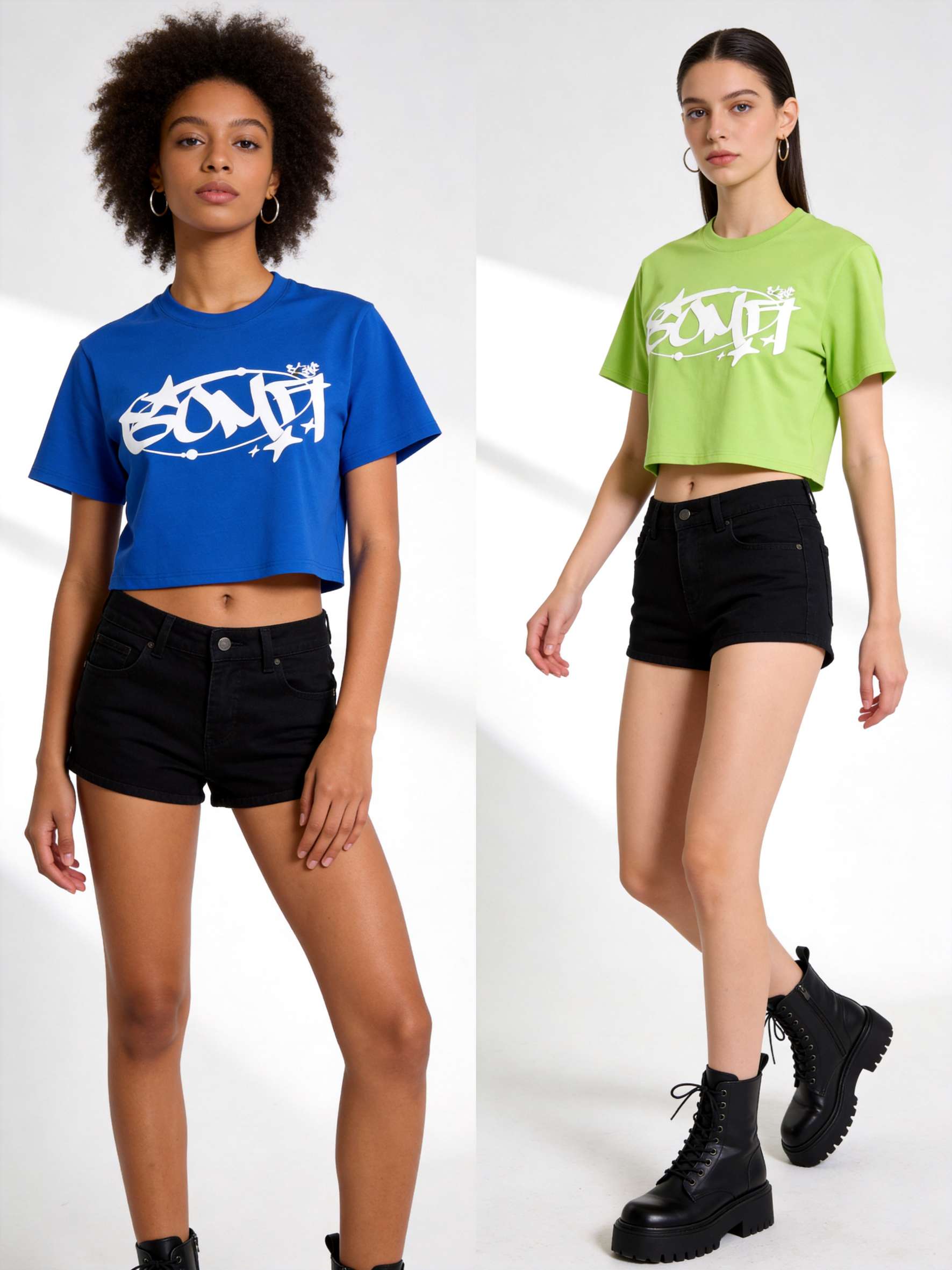
Print-on-Demand vs. Bulk Manufacturing
Print-on-demand offers zero inventory risk but 30–40% margins; bulk manufacturing demands upfront capital but delivers 50–85% margins and premium quality control.
| Factor | Print-on-Demand | Bulk Manufacturing |
|---|---|---|
| Startup Cost | $0–500 | $2,000–10,000+ |
| Profit Margin | 20–40% | 40–85% |
| Profit Per Shirt | $3–8 | $8–25 |
| MOQ (Minimum Order) | 1 unit | 50–500 units |
| Lead Time | 5–14 days | 7–21 days |
| Quality Control | Platform-dependent | Your control |
Start with POD if testing designs or running part-time. Switch to bulk manufacturing once you consistently sell 100+ units monthly and want premium quality. At ZORWILD, we’ve helped brands transition from POD to bulk when their monthly volume hits 150–200 units — that’s the threshold where bulk pricing cuts per-unit cost by 40–60%.
A hybrid approach works best: use POD for new designs, bulk manufacture bestsellers. One streetwear client tested 30 designs via POD in Q1 2026, identified 5 bestsellers, then ordered 500 units of each through ZORWILD. Their margin jumped from 35% to 72% on those five designs while maintaining POD flexibility for experimental drops.
5 Profit Optimization Strategies
1. Implement Dynamic Pricing (100–300% Markup)
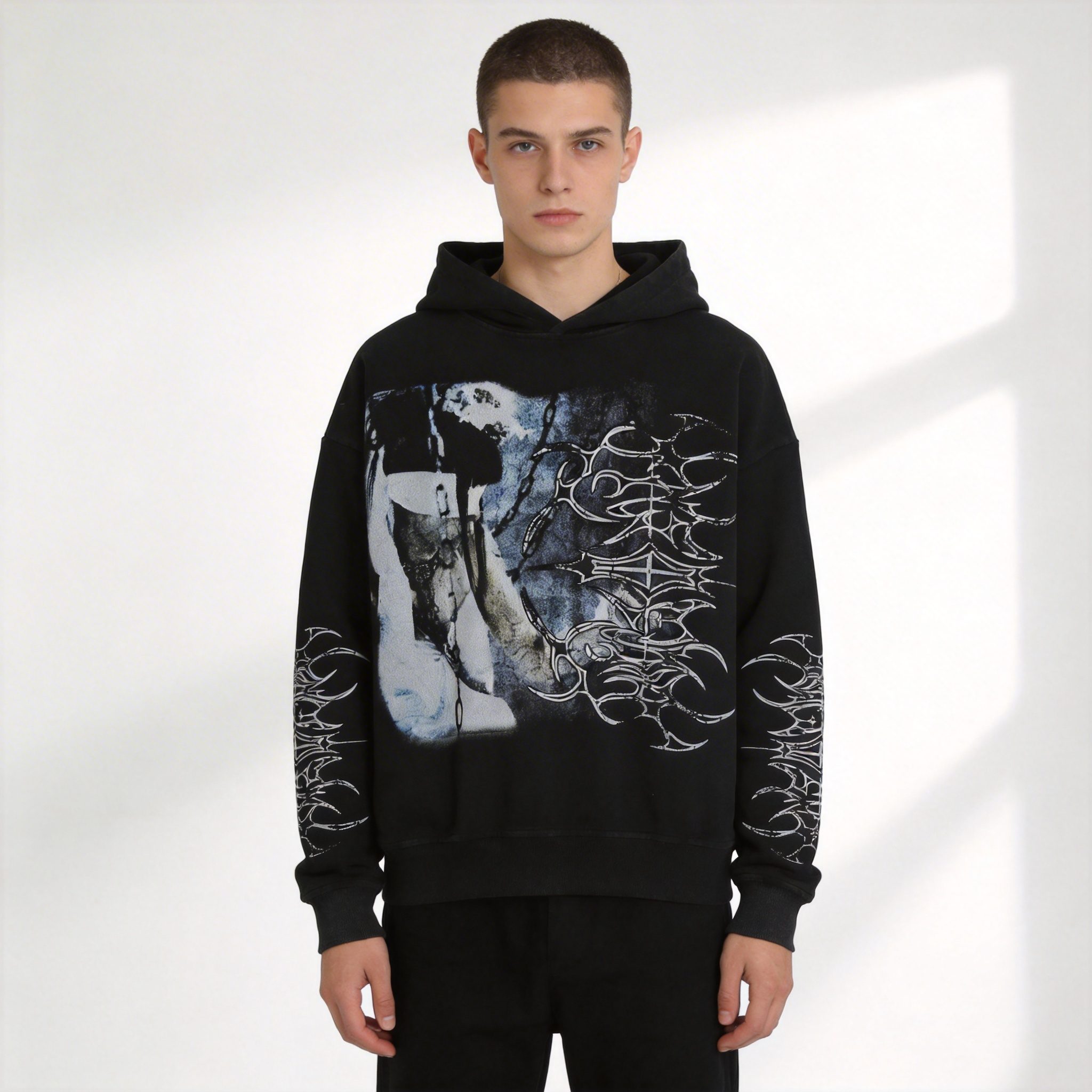
The average t-shirt markup ranges from 100% to 300%. If production cost is $10, sell for $20–$40. Test price elasticity: start at $25, measure conversion rate, then test $29.99 and $34.99. A $5 increase on 100 monthly sales adds $500 profit. According to Printify’s 2026 guide, premium blanks with original artwork command $34–55 retail pricing.
2. Release High-Velocity Designs (Weekly Drops)
Successful sellers release 1–3 new designs weekly instead of one monthly collection. This creates urgency, improves SEO through fresh content, and increases repeat visits. Sellers using weekly drops report 40–60% higher monthly revenue than monthly-release competitors. One Etsy seller we tracked released 12 designs monthly and earned $8,531/month versus competitors releasing 3 designs monthly averaging $2,100.
3. Scale Production at Volume Discounts
Bulk manufacturers offer tiered pricing: 50 units at $12/shirt, 100 units at $10/shirt, 500 units at $8/shirt. Ordering 500 units instead of 100 reduces per-unit cost by 33%, directly boosting margin from 50% to 65%. We’ve seen brands reduce their cost from $15 to $9 per unit by scaling from 100 to 500 units, adding $6 pure profit per sale.
4. Diversify Across Sales Channels
Single-channel sellers earn $1,000–3,000 monthly. Multi-channel sellers (Etsy + Shopify + Instagram + wholesale) earn $5,000–15,000 monthly. A verified Reddit case study showed a side business generating $150,000 annual profit through multi-channel distribution.
5. Build Customer Lifetime Value (Repeat Sales)
First-time customer acquisition costs $3–8 per sale. Repeat customers have 0% acquisition cost. Implement email capture (10–15% discount for signup), send monthly newsletters with new designs, and offer loyalty programs. Repeat customers spend 3–5x more than one-time buyers. We’ve watched brands grow from $2,000 to $12,000 monthly by building a 5,000-subscriber email list with 18% open rates.
Custom T-Shirt Market Growth & Opportunity (2026)
The custom t-shirt market reached $6.84 billion in 2025 and is projected to grow 11.5% annually through 2030, driven by personalization trends, social commerce, influencer merchandise, and corporate branding demand.
$10 billion — Market size projection — Merchize Research 2026
30–60% — Typical profit margin range — Gelato Industry Analysis
100–300% — Average markup on retail price — Swagify Pricing Guide
$8,531/month — Verified full-time Etsy seller revenue — YouTube Case Study, 2026
$150,000 — Annual profit from side t-shirt business — Reddit r/Entrepreneur
Getting Started: Startup Costs & ROI Timeline
Launch a custom t-shirt business for $500–$5,000 depending on model; expect ROI in 3–6 months with effective marketing and design quality.
Print-on-Demand Startup ($500 or less): Printful/Printify/Gelato account costs nothing. Shopify store runs $29–100 monthly after a 30-day free trial. Domain name: $12 annually. Canva Pro for design: $120/year. Facebook/Instagram initial ad budget: $200–300. Total: $350–500.
Bulk Manufacturing Startup ($2,000–$10,000+): First production run (100–500 units at $8–15/shirt): $800–$7,500. Shopify store plus domain: $100. Design and branding: $200–500. Photography: $200–500. Initial marketing: $500–$1,500. Total: $2,000–$10,000+.
ROI Timeline: POD sellers break even in 2–4 months due to low upfront cost. Bulk manufacturers break even in 3–8 months depending on sales velocity. At 100 shirts monthly with $12 profit each, you earn $1,200 monthly gross profit, recovering a $2,000 investment in 2 months. According to Printful’s 2026 profit guide, realistic sellers achieve profitability by month 3–6 with consistent marketing effort.
FAQ
Q1: How much profit can I realistically make selling custom t-shirts as a beginner?
Expect $300–$1,500 monthly in your first 3 months if you invest in marketing and design quality. By month 6–12, consistent sellers average $2,000–$5,000 monthly. The verified Etsy case study showed a seller reaching $8,531 monthly by month 8 through daily design releases and Instagram promotion.
Q2: What’s the difference between profit margin and markup?
Markup is the percentage added to cost (e.g., $10 cost + 100% markup = $20 sale price). Profit margin is profit as a percentage of revenue (e.g., $10 profit ÷ $20 revenue = 50% margin). Custom t-shirts typically have 30–60% margins and 100–300% markups.
Q3: Should I start with print-on-demand or bulk manufacturing?
Start with POD if you’re testing the market or running part-time — zero inventory risk and low startup cost make it ideal for validation. Switch to bulk manufacturing once you consistently sell 100+ units monthly and want premium quality and higher margins.
Q4: How do I increase earnings from $1,000/month to $5,000/month?
Five levers: (1) Increase design output (weekly releases versus monthly), (2) Diversify sales channels (Etsy + Shopify + Instagram + wholesale), (3) Optimize pricing ($25–$35 instead of $15–$20), (4) Scale production (bulk orders reduce per-unit cost 30–40%), (5) Build email list for repeat sales (repeat customers spend 3–5x more).
Q5: What production method gives the highest profit margin?
Bulk manufacturing with screen printing delivers 50–85% margins, beating POD (20–40%). However, bulk requires upfront capital ($2,000–10,000+) and inventory risk. At ZORWILD, we’ve helped brands achieve 72–85% margins on bulk orders of 500+ units versus 35–40% on POD.
Sources
- Printify Market Research 2025 — Global custom t-shirt market valuation ($6.84B) and 11.5% CAGR growth forecast through 2030
- Merchize Industry Analysis 2026 — Market size projections reaching $10 billion driven by personalization trends
- Printful Profit Guide 2026 — Realistic profit margins (30–60%) and pricing strategies for custom t-shirt sellers
- Gelato Industry Benchmarks — Production method comparison and profit margin analysis across POD and bulk manufacturing
- Swagify Pricing Analysis — Average markup ranges (100–300%) and startup cost breakdowns by production model
- ZORWILD Manufacturing Data — Bulk production MOQ, lead times, cost structures, and profitability thresholds from 2,000+ fashion brand partnerships
Written by Alin Zeng (27 Years of Master Craftsmanship & Pattern Making, Global OEM & Streetwear Customization Excellence, End-to-End Supply Chain & One-Stop Production, High-Efficiency Cost Control (“Quality + Affordability”), Incubating 2,000+ Fashion Brands from Scratch). Last reviewed 2026-06-11.